“In the midst of chaos, there is also opportunity”

A family crisis descended this week, yet, despite the chaos, I managed to keep up with my coursework and painting practice, and even made some progress. Here is a rundown of what I have been up to this week:

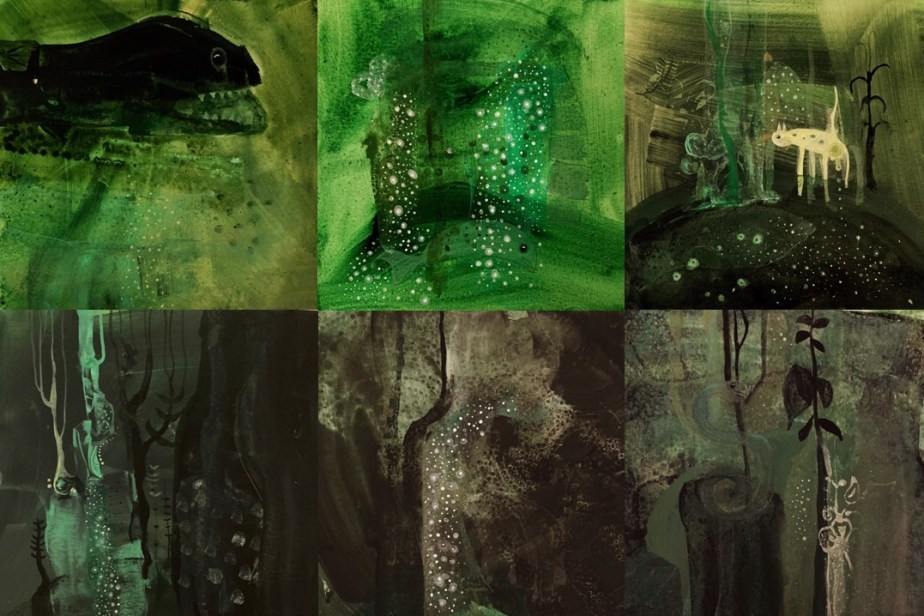
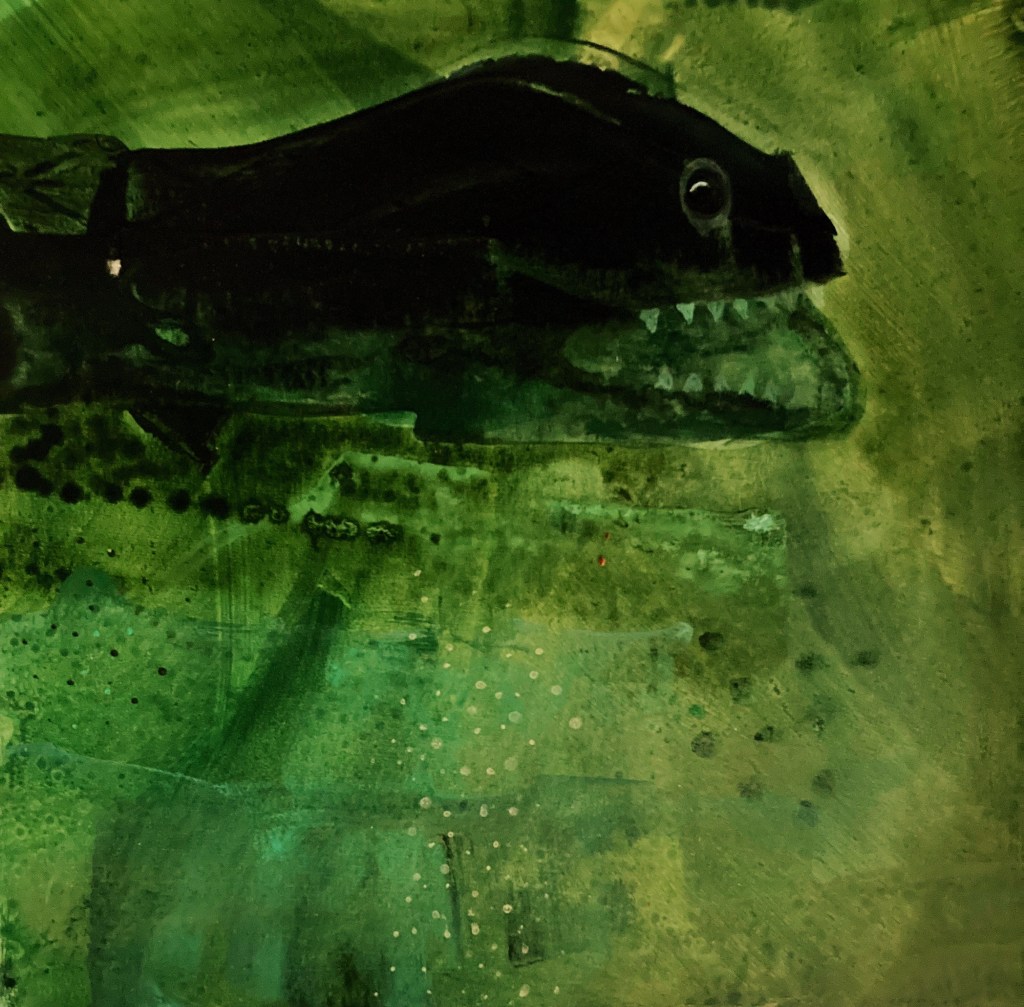
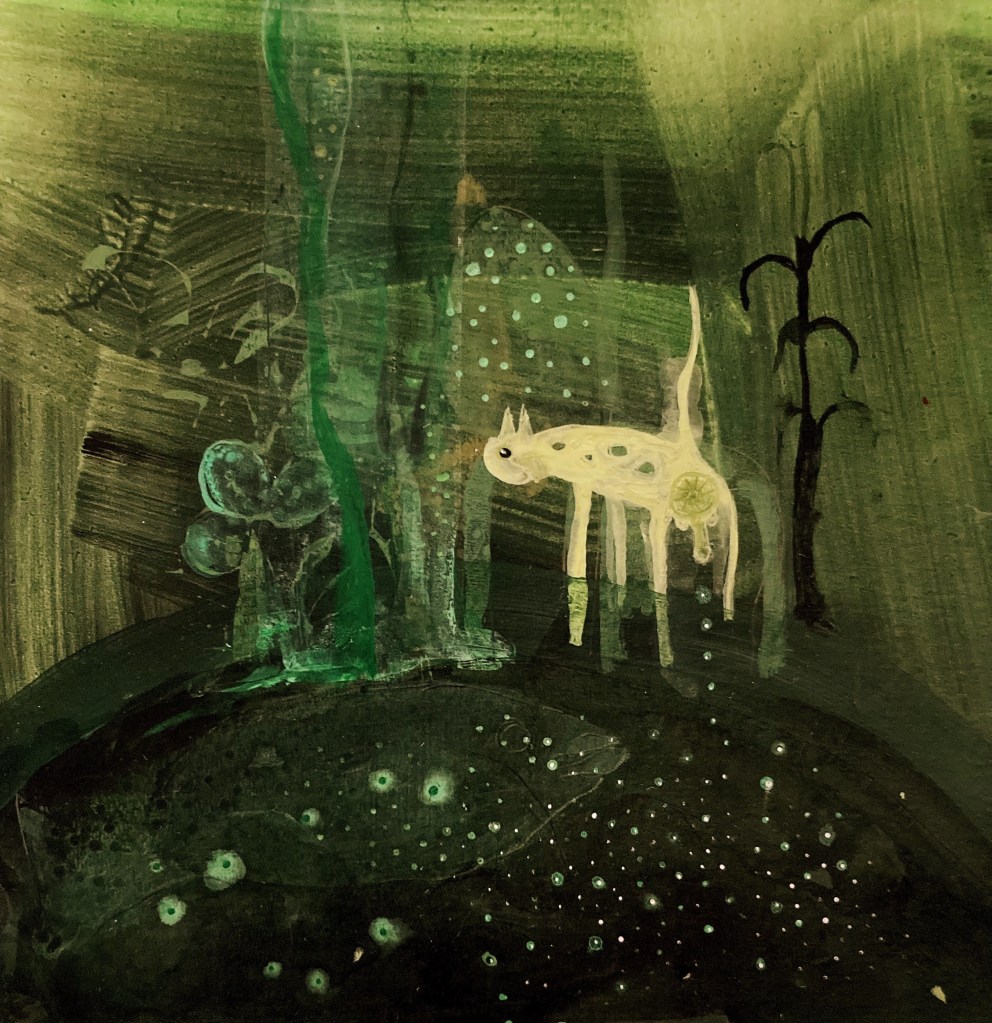
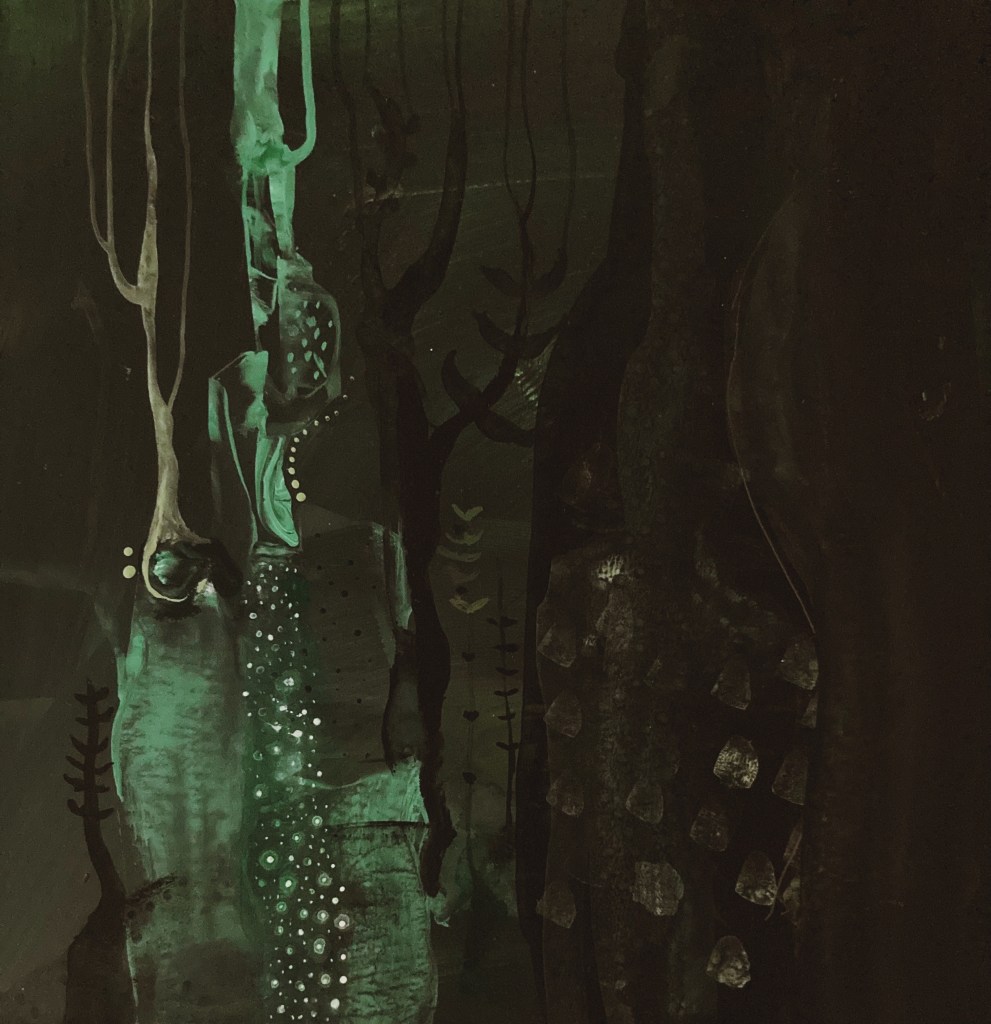
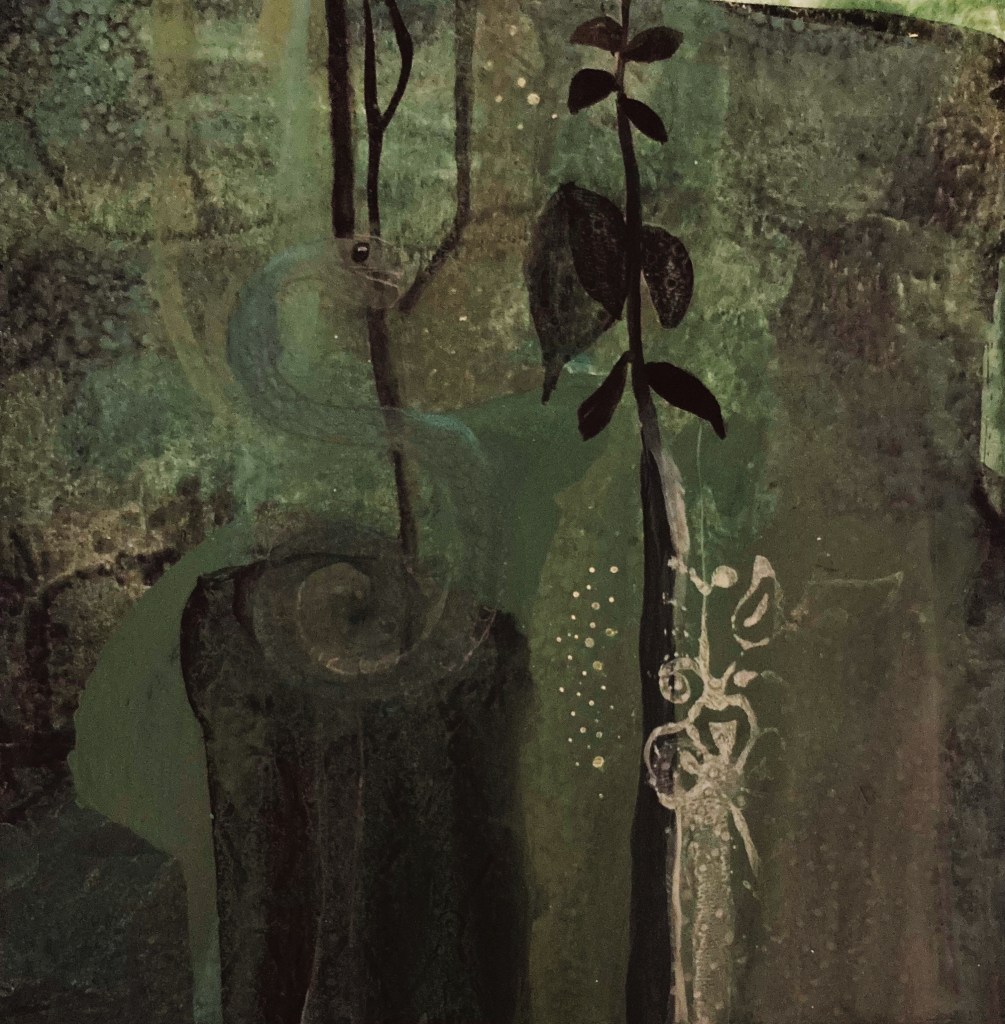
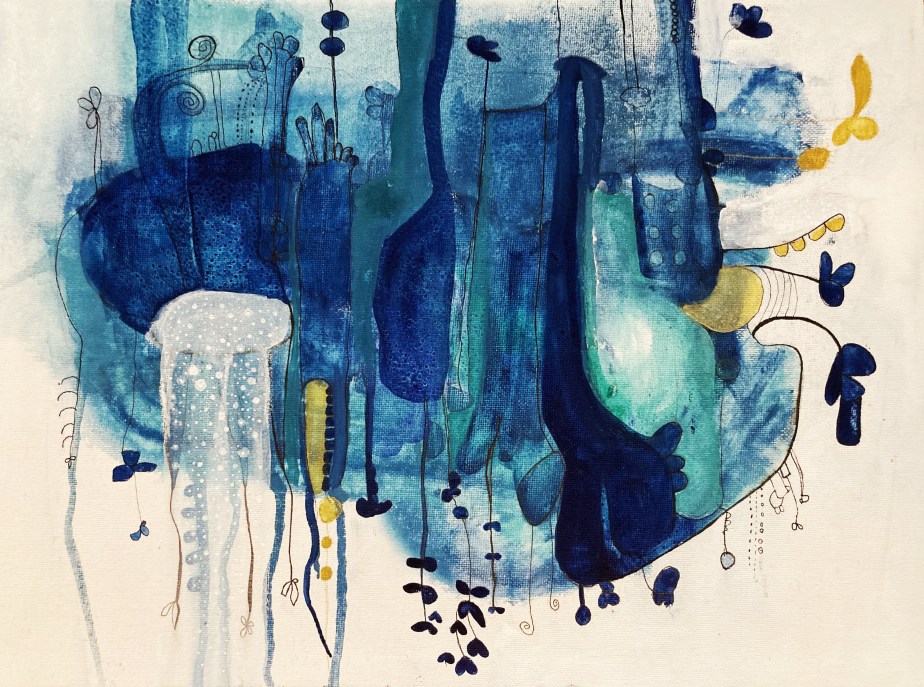
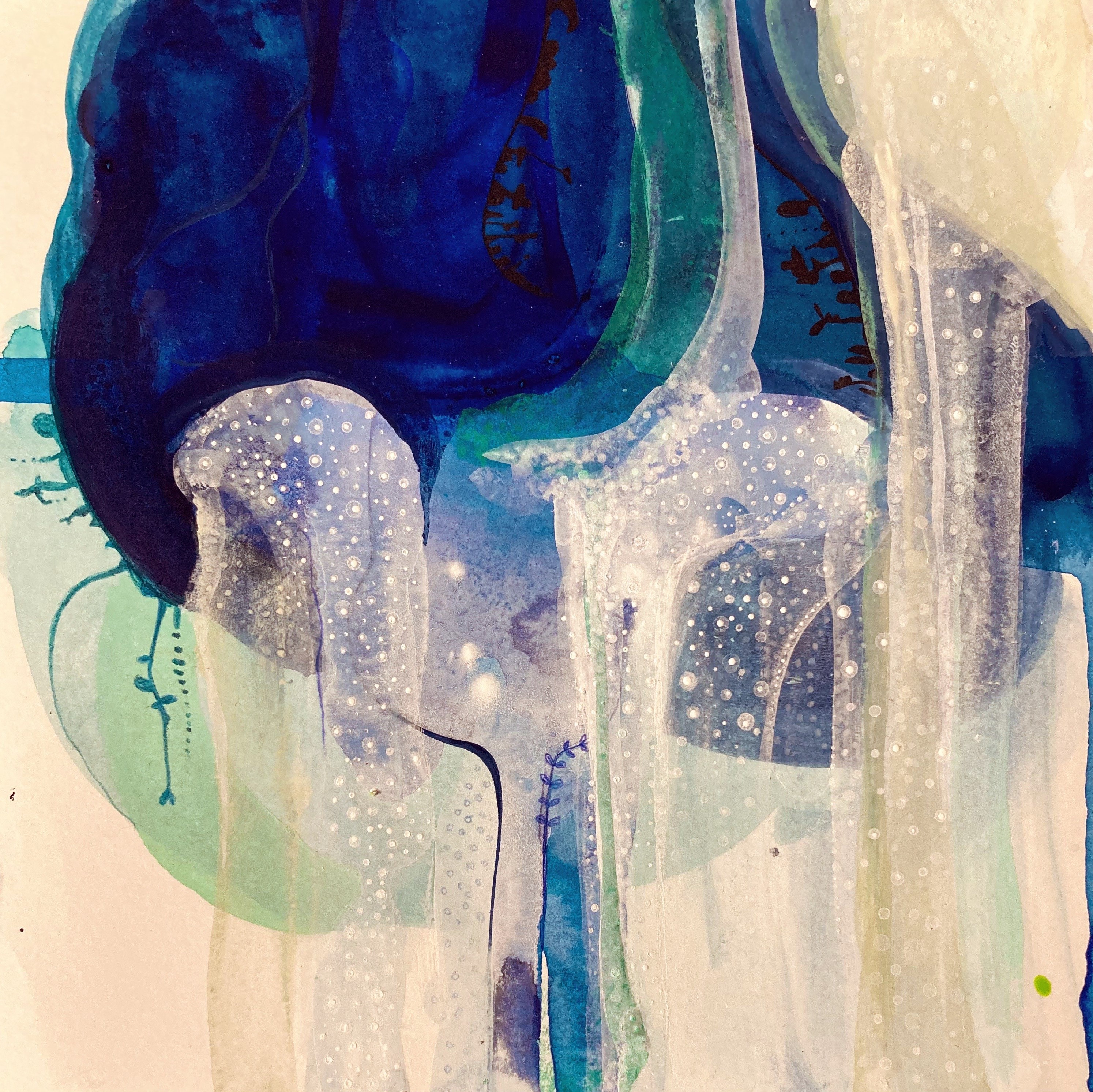
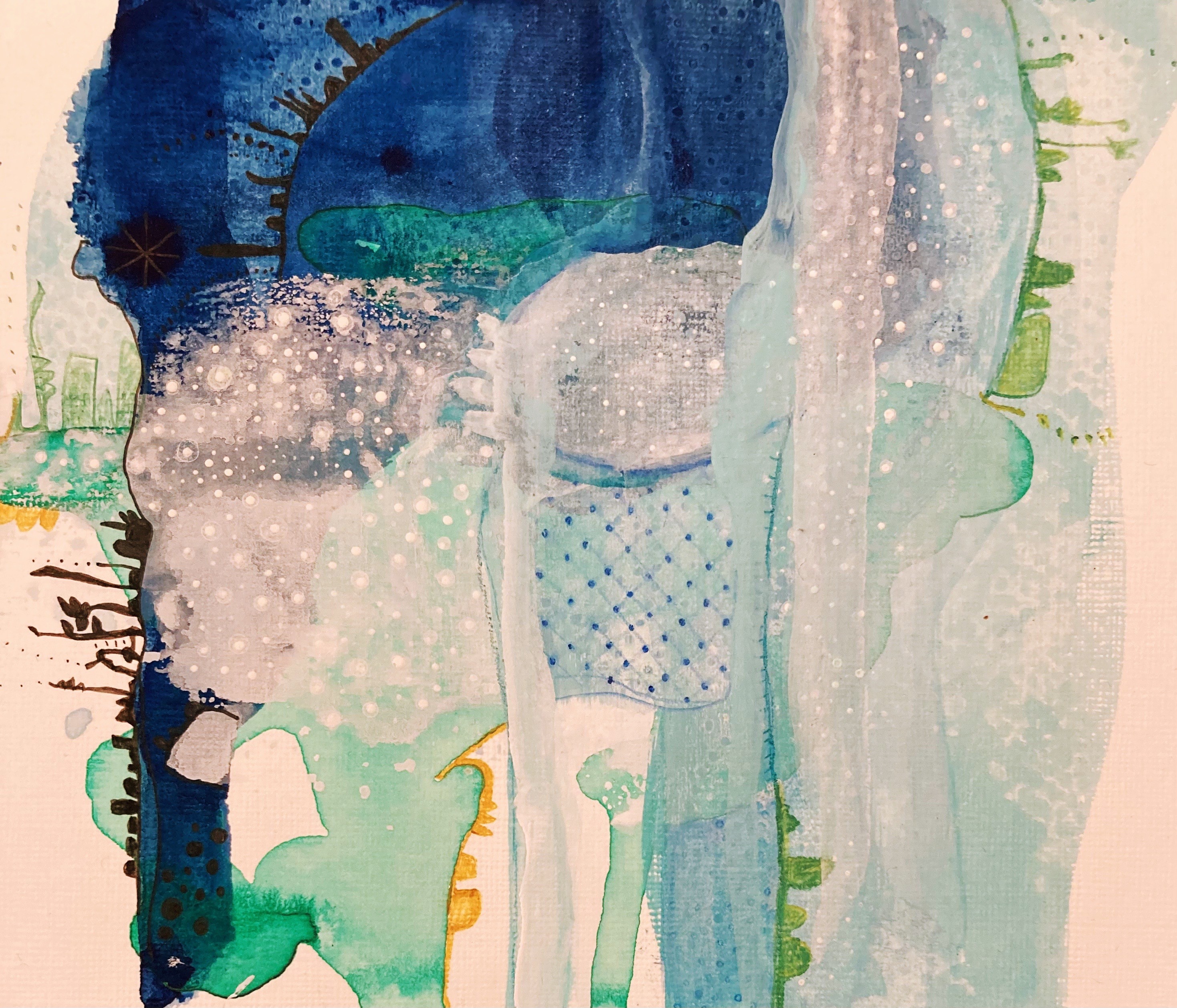
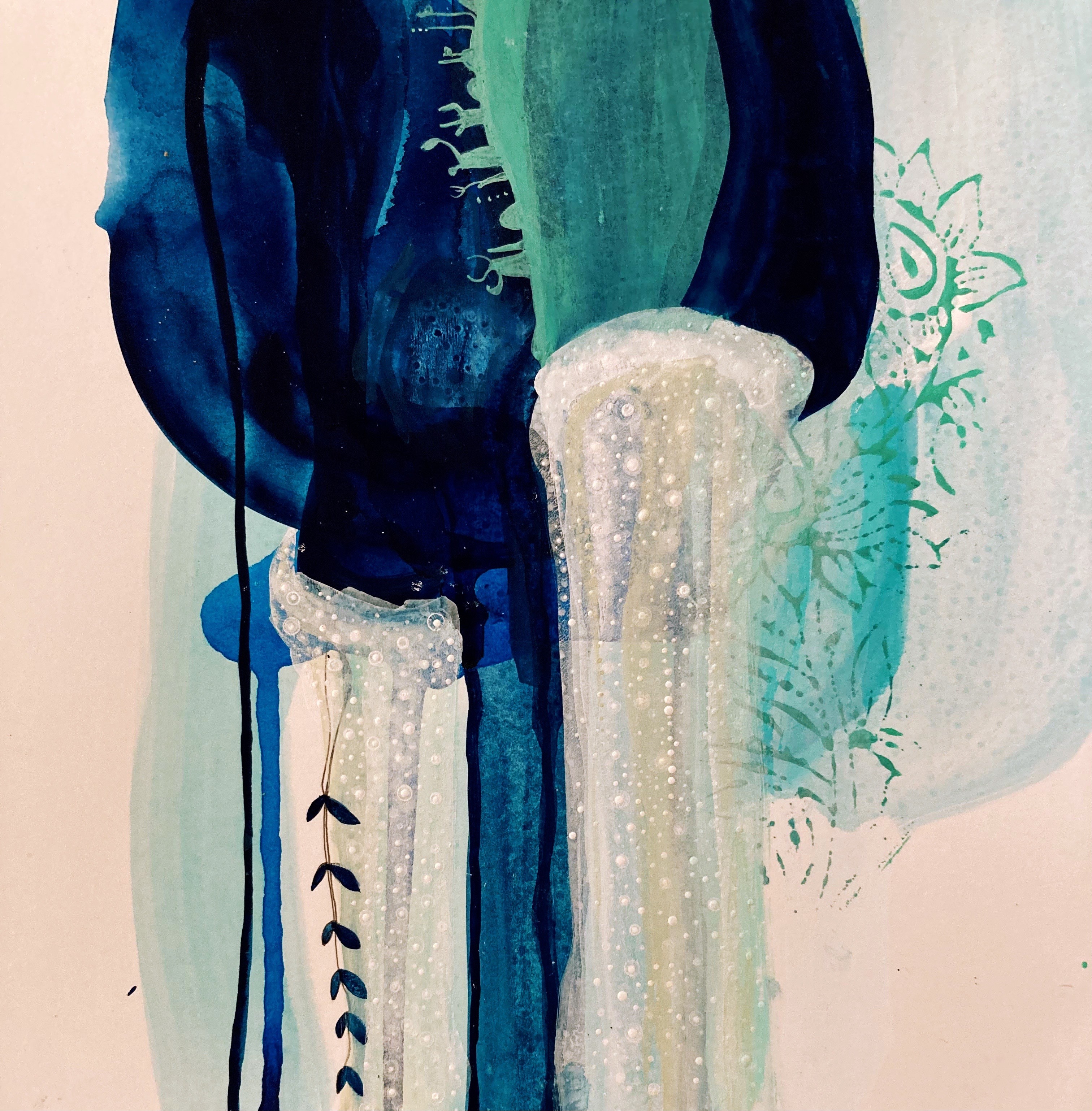
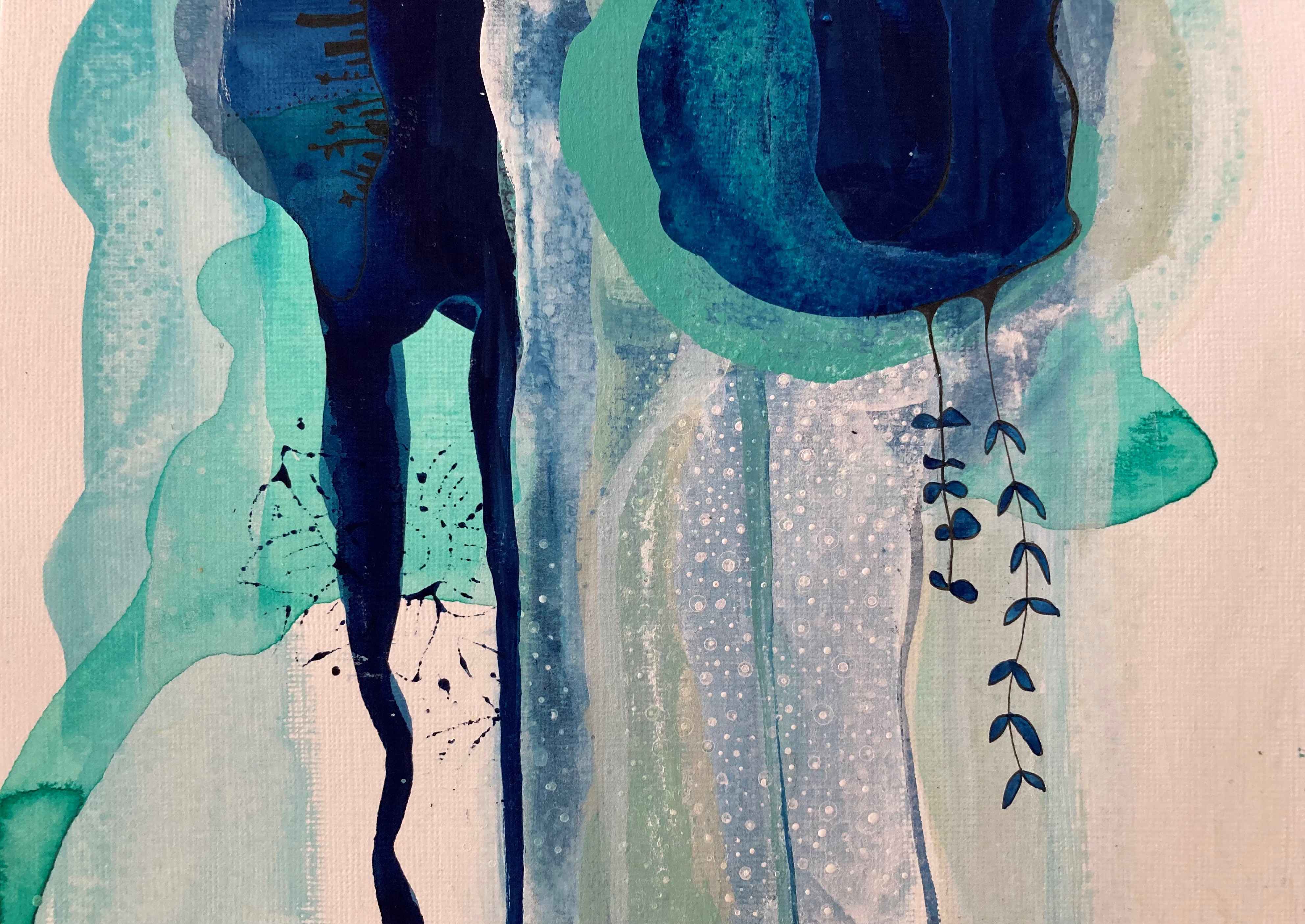
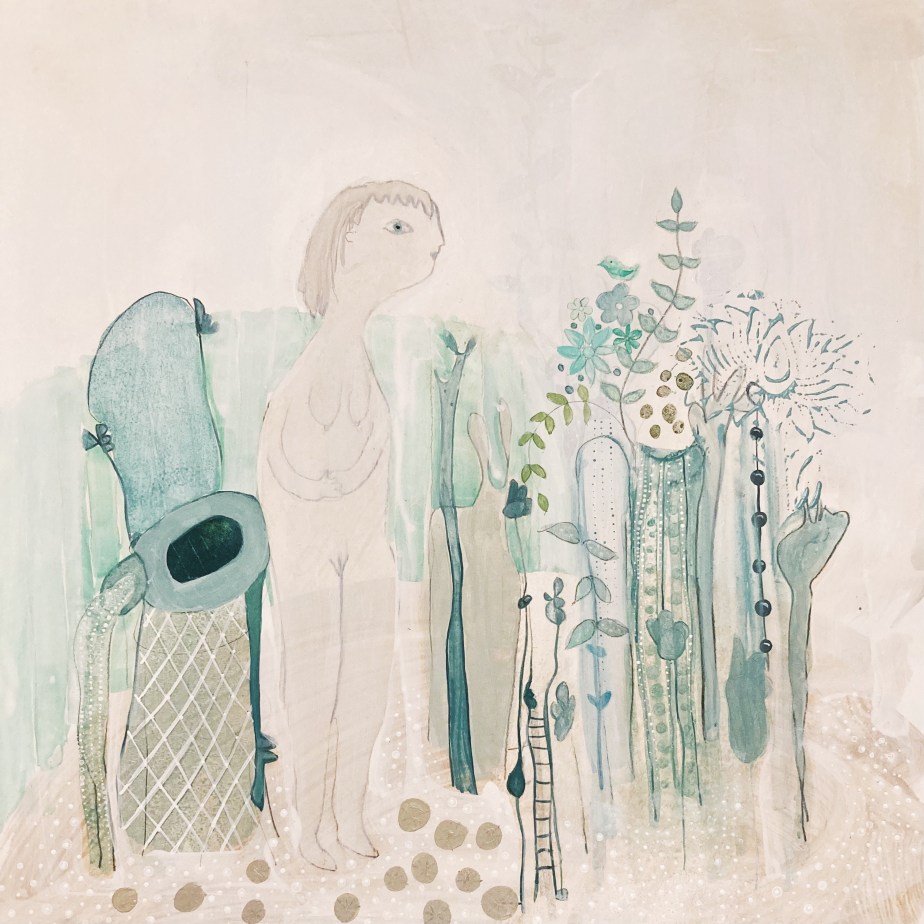
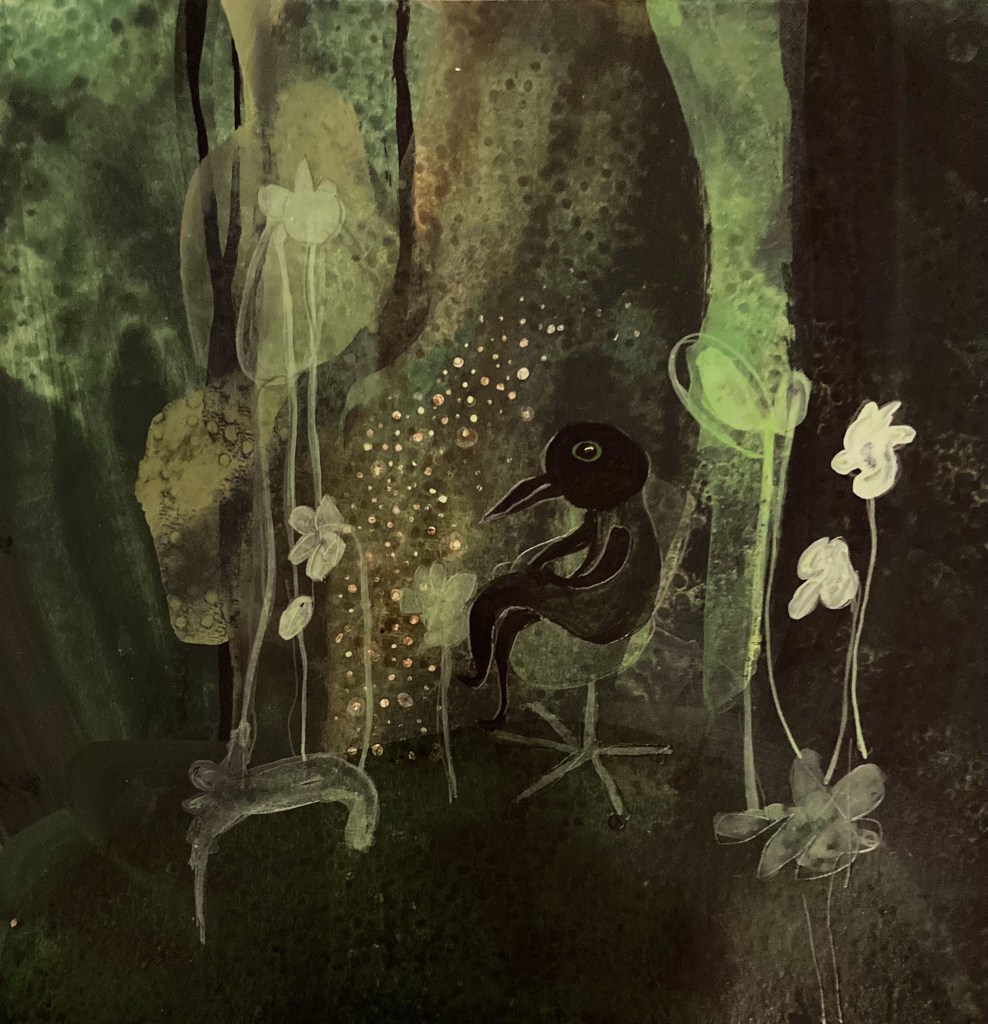
I have been loving the switch to a green pallet. It’s a very satisfying colour to paint with, and has plenty of scope for exploration. I am just painting small ‘acrylic on paper’ works, but hope to scale-up to large canvases once I have a handle on the pallet, and a better idea of the direction I want to go in. So far, I have found green to be a much better representative of “underwater/underground” than blue, and I like that it has a darker, more mysterious vibe. Here are a couple of successful paintings from this week:

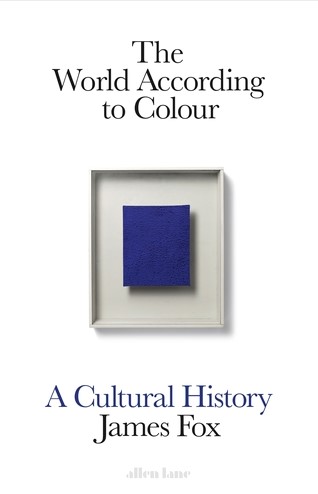
As well as painting with green, I have been reading all about it in two wonderful colour books my sister bought me. I highly recommend both books; they really get the juices flowing regarding colour.
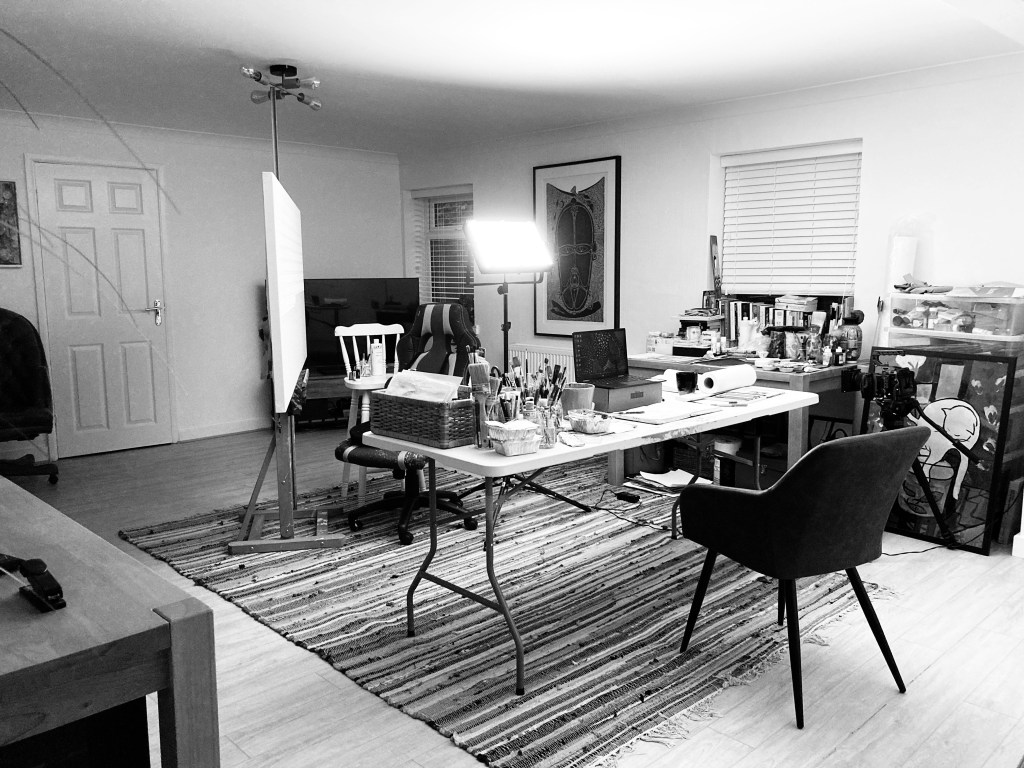
I have been settling into my new studio, and it now feels like home. It functions well for both of the painting projects I have on-the-go at the moment. One being the experimental underground/water paintings, as mentioned above, and the other, one of my big oil paintings (working title “Ann”) that I will go into more detail about at a later stage. Both require different things from a studio space, and I am now able to move between the two with ease.
I had book club (not the naughty one) again this week. This time we had a Ted Chiang reading “The Evolution of Human Science“. To be honest, I found it a bit confusing. It was written in the form of a scholarly, scientific article, and I wasn’t sure if it was fiction or not (which I’m guessing was the author’s aim), and which I was pleased to discover was, because it was about meta-humans superseding humans, and making the latter irrelevant. I also discovered that the reading group I have joined is a “post-humanist” one. I am not sure that I am a post-humanist, mostly because I don’t understand what post-humanism is. But, the other people in the group are clever and interesting, so I think I’ll keep going.

According to the Oxford Research Encyclopaedia:

Posthumanism is a philosophical perspective of how change is enacted in the world. As a conceptualization and historicization of both agency and the “human,” it is different from those conceived through humanism. Whereas a humanist perspective frequently assumes the human is autonomous, conscious, intentional, and exceptional in acts of change, a posthumanist perspective assumes agency is distributed through dynamic forces of which the human participates but does not completely intend or control.

Naturally, I am still none the wiser.

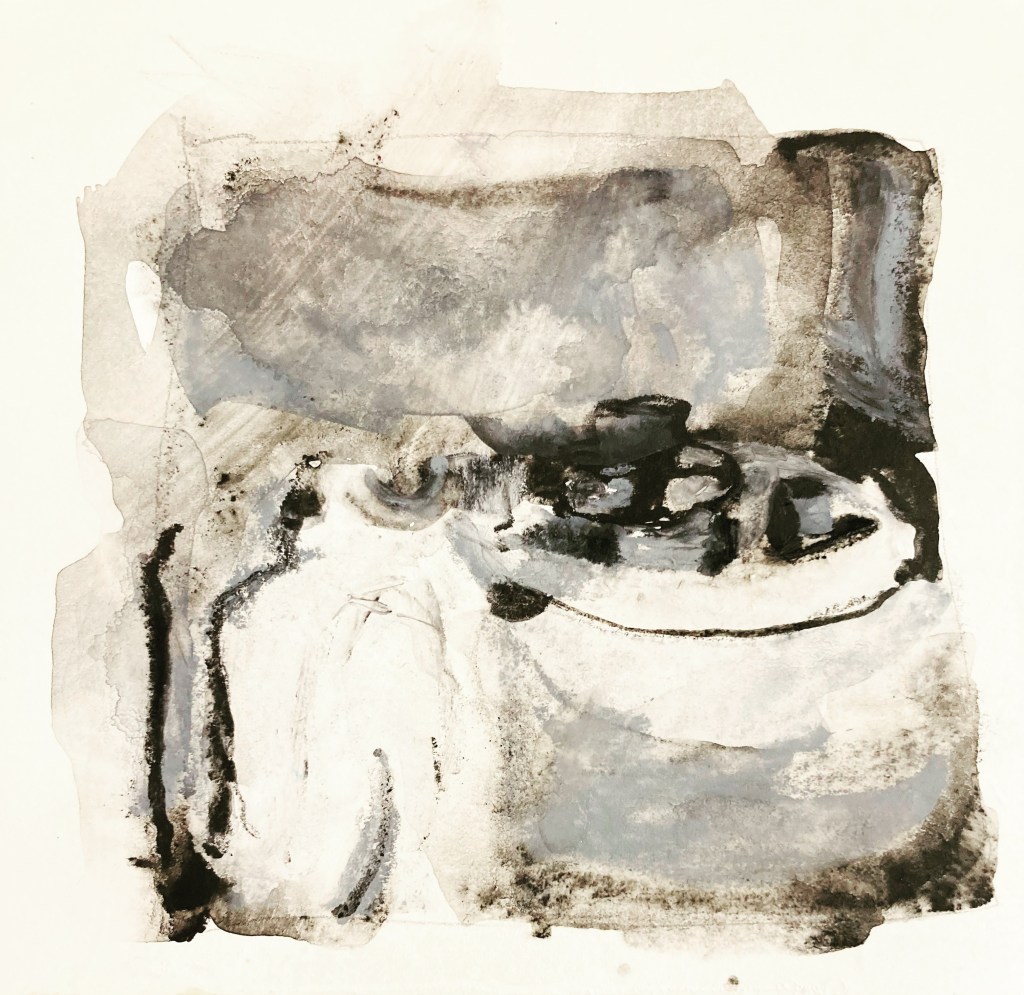
My drawing class this week was cancelled, I’m guessing due to the teacher strikes. However, here is something I drew in last week’s class on light and shade.
Despite how stressful the last week has been, 3 things have brought me great solace:

  1. Painting (naturally)
  2. My amazing, kind-hearted, supportive, patient, generous, capable (an undervalued but bloody fantastic quality), cute as a baby animal, and extremely funny boyfriend;
  3. Seeing Fonzie.

Seriously, watch this video and just see if all your troubles don’t melt away:

Wait for it..

Title quote: Sun Tzu
Raining cats and chemicals

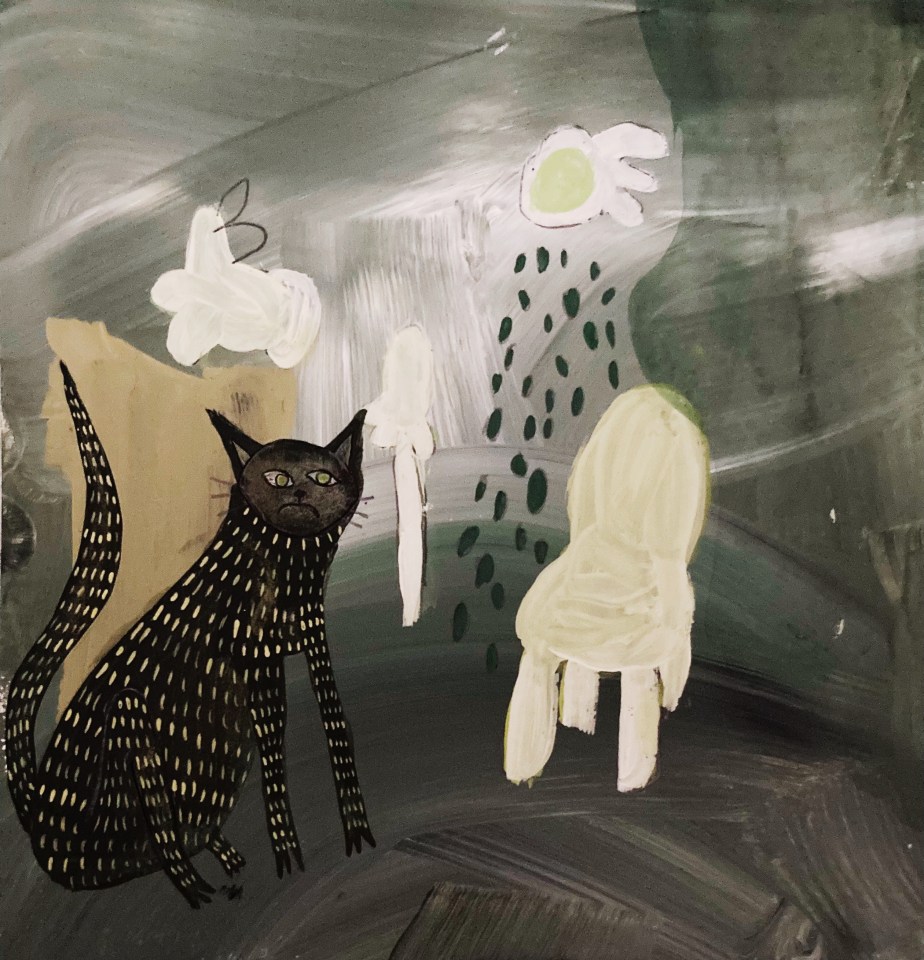
I love the rain – the sound, the visual, the feeling it gives me. When I was a kid, I loved tipping my head back and catching raindrops in my mouth. I wouldn’t do that now though. As lifegiving, refreshing, and purifying as rain may seem, it’s actually full of parasites, bacteria, and bugs. Plus, a new study out of Stockholm University has shown that rain all over the world is full of PFAS (polyfluoroalkyl substances), otherwise known as “forever chemicals” due to their longevity, which are toxic to humans and animals, and, well, everything. We may not be responsible for the bugs and things, but we are definitely responsible for the PFAS. We use them in non-stick pans, fire-fighting foam, and water-proofing furniture etc. It makes me sad to think we’ve poisoned the rain, along with the soil and the atmosphere. It’s true we can purify rainwater (at some expense), so that it’s drinkable. That’s fine for us (for the countries that can afford it that is), but what about the animals that consume rainwater, including our beloved puddle-drinking pets?   

“Come up and see my bower”…that’s a good one!

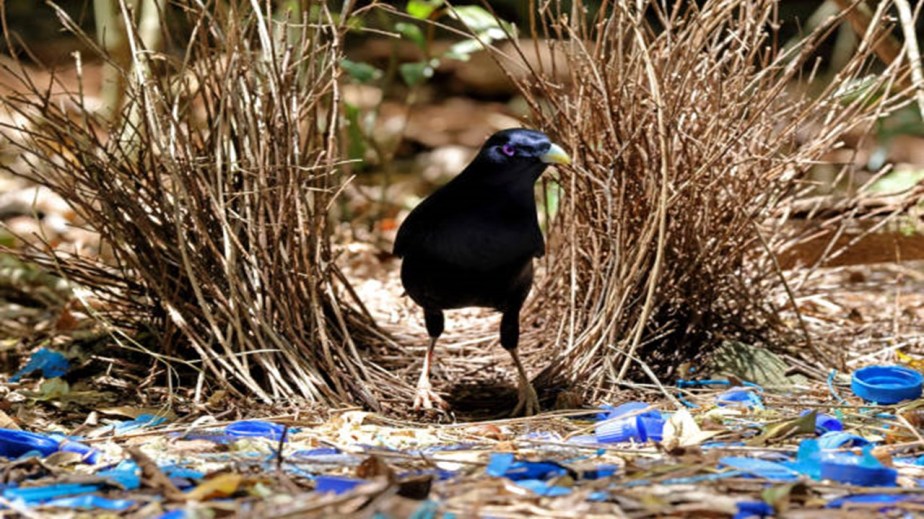
For our group tutorial this week, we each had to present and discuss something we had recently read. I chose the first chapter (“Come up and see my bower”) in a book that had been recommended in my reading group (not the naughty one), called “Survival of the Beautiful: Art, Science and Evolution” by David Rothenberg.

The chapter concerns satin bowerbirds and their complex courtship behaviour, which, for a male satin, appears to be as much about demonstrating their artistic ability, as it does their mating suitability and prowess. Their time-consuming and elaborate display is as fascinating as it is complex and poses intriguing questions of the role of beauty and aesthetic-selection in evolution.

I’ll have to read the rest of the book to judge whether Rothenberg successfully argues for his hypothesis that life did indeed evolve to be beautiful for the sake of being beautiful, however, my instincts and the courtship of the satin bowerbird tells me that he does.

It is interesting to note, that as fascinating and profound as their courtship is, in their home territory (north-eastern Australia), satin bowerbirds are considered by many to be a pest. Still, the birds were there long before humans, especially those of the manicured-lawn variety (which satin bowerbirds routinely destroy) – like 50 million years before – and will likely be there long after, unless we kill them off in the process of killing ourselves, or maybe take a few with us when we colonise other planets (we really should because they are amazing).

Anyway, I loved learning about the satin bowerbirds so much that I made a video about them for the online magazine I make a weekly video for.

Here is is:  

Out of the blue

Typically, blue is the dominant colour in my work. It would be turquoise, which I think is the most beautiful colour in the world, if it weren’t for the fact that too much turquoise is like too much sugar, so, I make do with blue.

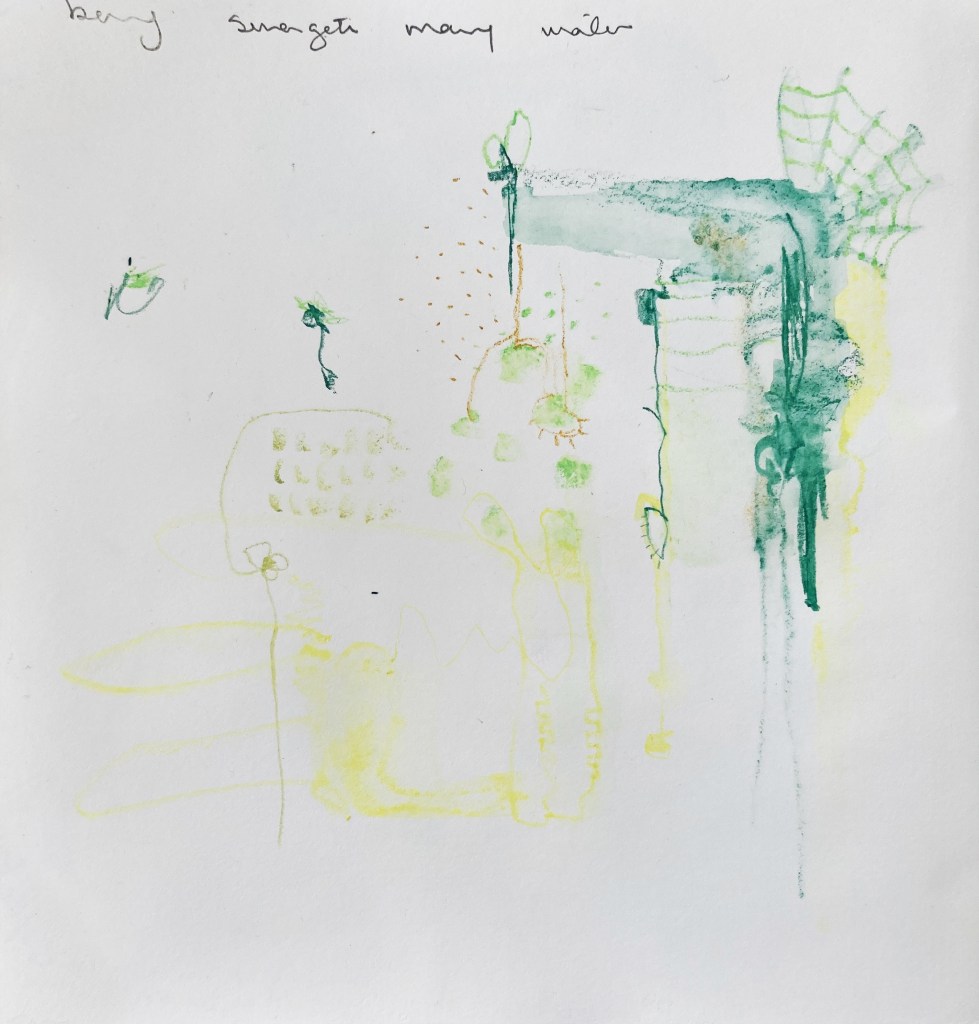
But I’m sick of it. Instead, the colour that is hitting my internal “ooo I love that” register, is green. Sure, it’s in the same colour family as blue, and makes up half of a good turquoise, but its completely different to blue, and I am really loving it. There is something deep and mysterious, primordial even, about its darker versions, and there is such a wonderful array of its lighter variations, that I feel I could explore it for a while. So, I’m going to.

Here are a few initial experiments:

Yep, I’m a word-nerd

I love words. I especially love words that are made up of other words, and have deeper, sometimes more profound meanings the more you dig into their etymology – i.e., their origin and history. I have only been depressed (beyond the standard being sad about sad events) once in my life, and the two things that sustained me during that time were painting and reading the dictionary. I would scour the pages of the huge two-volume Oxford dictionary I bought at a charity shop, to find words that matched the ache in my soul and tumble down the rabbit hole of connected words and their meaning. That was in the days before I had access to all the dictionaries in the world. Now my favourite word-nerd thing to do is look words up online.

This week in our group tutorial, we were asked to consider the words elusive and taxonomies in relation to our art practice. Of the two words, I thought elusive to be the most interesting.

The suffix ive makes adjectives from verbs, and means “pertaining to, tending to etc.,”

elus is from the Latin eludere – “finish play, win at play; escape from or parry (a blow)”

parry – “to turn aside or ward off (an attack or blow of a weapon) with a counter move; a defensive or deflective action; pushing a weapon away or putting something between your body and the weapon.

I really like this deeper understanding of the word elusive. Beyond its modern definition “difficult to describe, find or achieve”, its earlier meaning suggests the intentional and defensive act of ending a potentially damaging encounter. In combination with its modern understanding then, elusive could rightly be used in the sense of deliberately obscuring something in order to protect it.

We were also asked to think of a word that is currently pertinent to our practice.

The word I chose was intuition:

From Middle French – “the ability to understand something instinctively, without the need for conscious reasoning.”

From medieval Latin Intuicioun – “insight, direct or immediate cognition, spiritual perception,” originally theological, from Late Latin intuitionem (nominative intuitio) “a looking at, consideration.”

I chose intuition because of something I had read by the film director David Lynch earlier that day:

Intuition is the key to everything, in painting, filmmaking, business – everything. I think you could have an intellectual ability, but if you can sharpen your intuition, which they say is emotion and intellect joining together, then a knowingness occurs.

Although Lynch’s definition is a departure from its medieval counterpart, both have given me something to chew on the past couple of days and, along with the word elusive, have helped illuminate something that has been frustrating my practice for a while now. Such is the power of words.

As I was writing this entry, I came across a quote by Edgar Allen Poe, I’m not sure it’s pertinent, but it sure is delicious:

Words have no power to impress the mind without the exquisite horror of their reality.

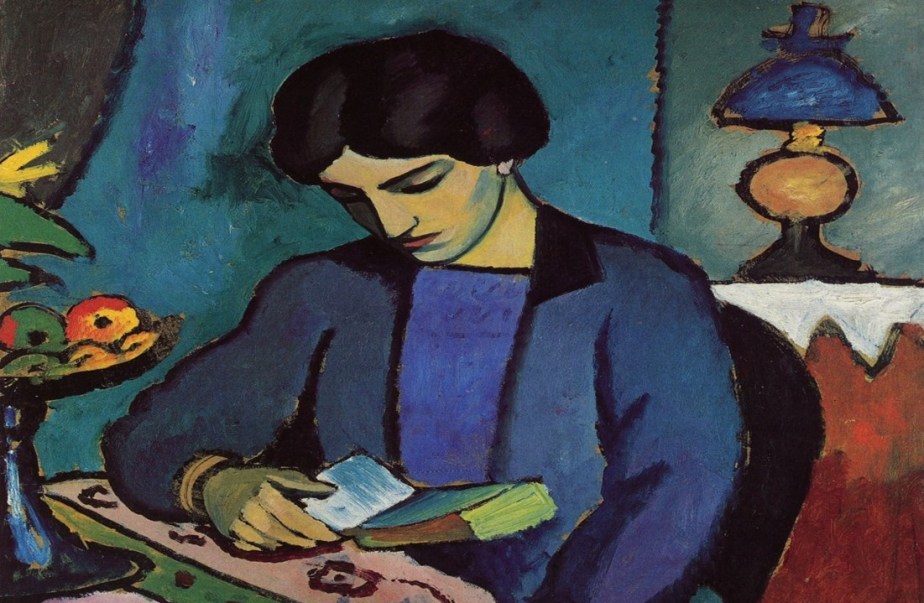
Image: Blue Girl Reading (1912) August Macke

Not quite as much fun as The Naughty Book Club

I once belonged to a reading group called The Naughty Book Club, which consisted of drinking mojitos and reading such literary classics as Goldilocks and the Three Barons. I thoroughly enjoyed the experience, so, when the opportunity to join a UAL reading group arose, I jumped at the chance.

The first instalment was last week, and despite the absence of liquor and X-rated reading material, I really enjoyed it. It was a mixed group of students and alum from the various UAL art schools, including my own, Central Saint Martins. The reading in question was a chapter from Robin Wall Kimmerer’s celebrated book Braiding Sweetgrass.

The chapter was titled Learning the Grammar of Animacy. A simple definition of animacy is the state of being alive and animate. When animacy is understood in the context of language, it gets more complicated, as Wikipedia describes:

Animacy is a grammatical and semantic feature, existing in some languages, expressing how sentient or alive the referent of a noun is.

It was this latter definition of animacy that the reading in question was concerned with. The main thrust of the chapter concerned what the author saw as the arrogance and failure of English to describe nature as sentient, and the consequent disconnection from animals/nature. Rather, English differentiates between humans (sentient) and animals and nature (non-sentient) primarily through the use of pronouns – such as she/he and it respectively. Not all languages do this, including the Anishinaabe language she has ancestral connections to, and which she talks about learning in the chapter.

I liked the author’s lyrical way of writing and found the points she made very thought provoking. Although I don’t share her antagonism towards English, I can relate to her struggle with learning her ancestral language. I am currently learning one of mine, Manx, which is part of the Gaelic language family. As anyone who has tried to learn Irish or Scottish can attest, Gaelic languages are not for the faint hearted! I could also relate to the sadness she expressed regarding the deliberate measures taken to destroy her cherished language and its assured death if future generations do not take up the mantel and learn it.

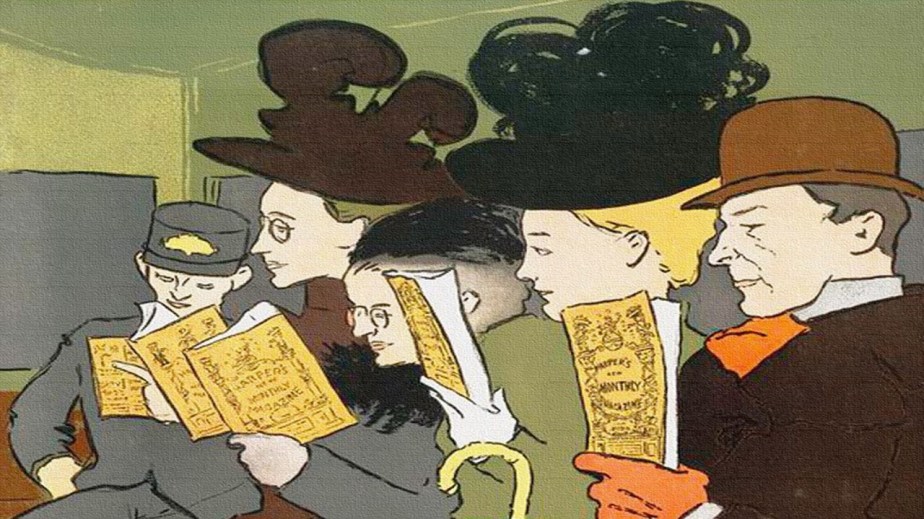
Header Image: People reading books (1895) by Edward Penfield.

“When the student is ready…”

I read an article today that compared a good teacher to an enzyme, which it described as “Nature’s go-to facilitator of change”. The article went on to explain:

“Enzymes don’t create change in and of themselves. Rather, enzymes lower the threshold activation energy required for a reaction to proceed. Lower activation energy = vastly increased rate of change.”

The reason I wanted to do a Masters in Fine Art (MFA) was to bring about a state of change in my art practice that I am unable to bring about on my own. Originally, I had thought I would go to London to do my MFA, but COVID, and the experience of doing online art courses it facilitated (in lieu of the ones I had previously been doing in London), opened me up the possibility and benefits of doing it online.

When I discovered that Central Saint Martins offer an MFA online, I was thrilled, and when I met the course leader, Jonathan Kearney, I was convinced it was the right course for me. It was clear from that first meeting that Jonathan is an exceptional teacher, an impression that was confirmed during my first one-to-one tutorial with him yesterday. Far from merely being an imparter of knowledge, Jonathan is that rare breed of teacher who is a catalyst for change and growth, able to bring forth the latent potential that resides within the student. Simply put, he is a super-charged enzyme!

Back to the drawing board

Humans have been drawing for a very long time. The oldest evidence, etched on rock, of this most human of activities is estimated to be 40 to 50 thousand years for figurative drawing, and twice that for geometric drawing. Of course, long before we went to the trouble of drawing on rock, we were no doubt drawing on the ground and each other. Our ability to communicate using pictures and diagrams sets us apart from other animals and is the key to the progress we have made as a species. Drawing is at the centre of all human creativity, ingenuity, and endeavour.

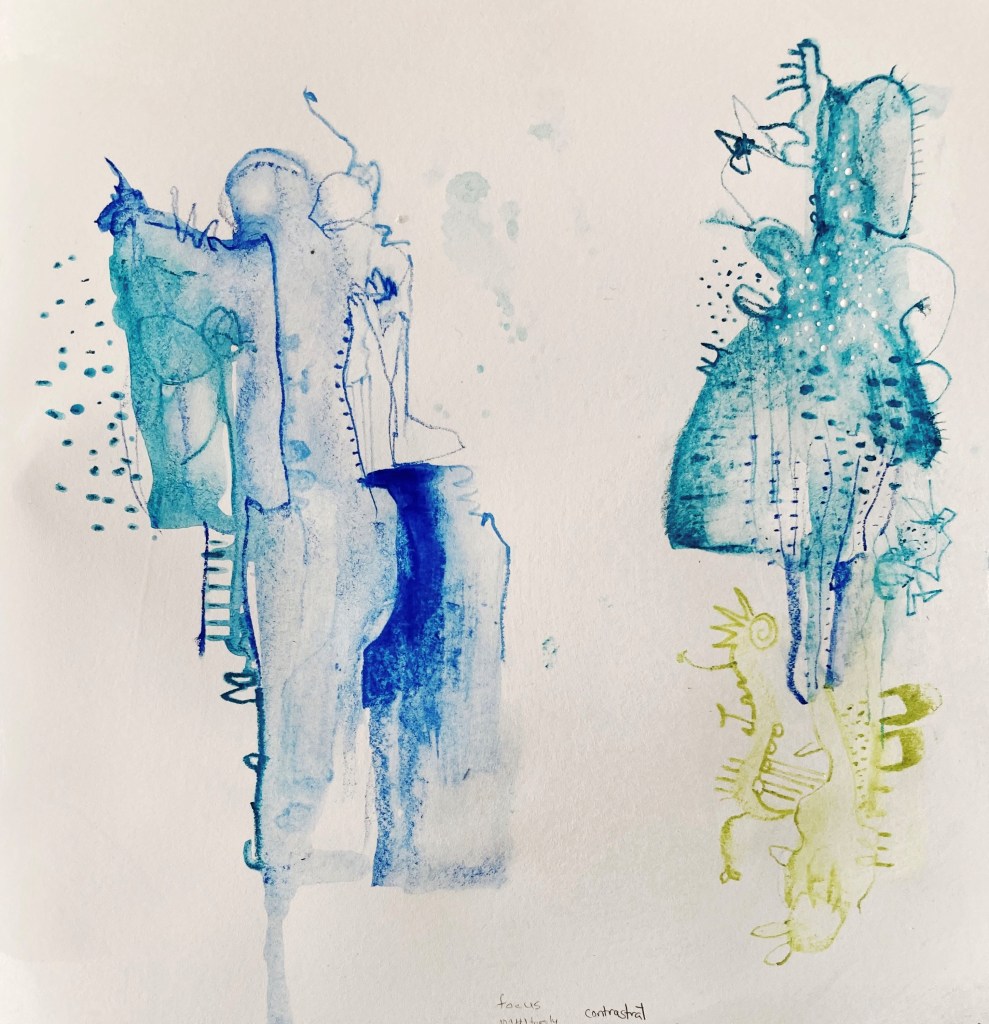
I have been thinking a lot about drawing this past week, due to the 2 drawing classes I attended. One was a one-off intensive workshop, and the other an on-going weekly course. Interestingly, both were very similar, and could be best described as a modern, somewhat abstract approach to drawing. Personally, I like this approach, especially the results it produces. Unconstrained by the limits of depicting reality, it allows for freedom of expression, and a greater sense of emotionality. It is a beautiful and satisfying way to draw, and one I will continue to practice and incorporate into my paintings.  

Here is some drawing did this past week:

Water Water Everywhere

One of the requirements of the Central Saint Martins’ MFA programme, is selecting a research subject – i.e., an avenue of intellectual and artistic enquiry that will be the subject of one’s dissertation and body of work produced while on the course. Broadly, the topic I have chosen is water. I am particularly interested in humanity’s relationship with water, be it historical, religious, emotional, practical, political, or future implications etc. I have swung my net wide to begin with but, eventually, I will likely focus on a particular aspect.

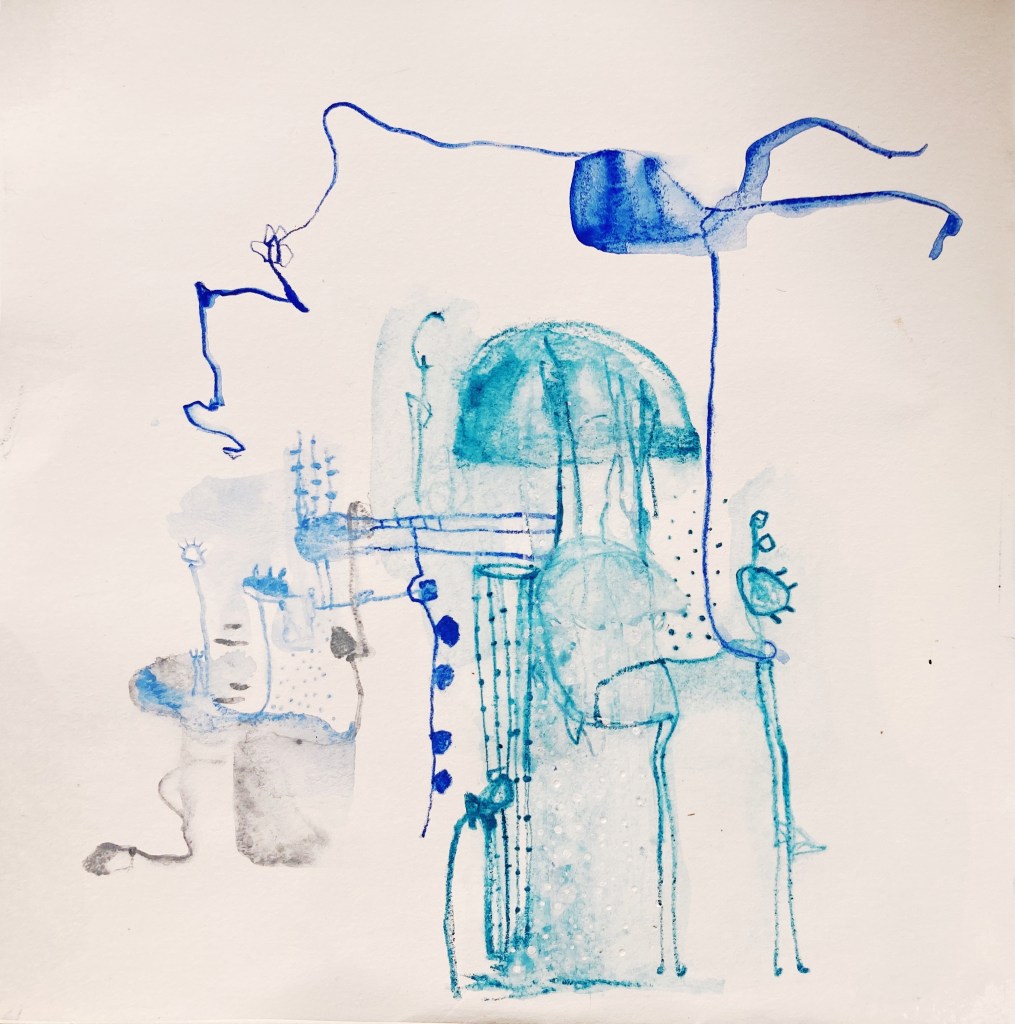
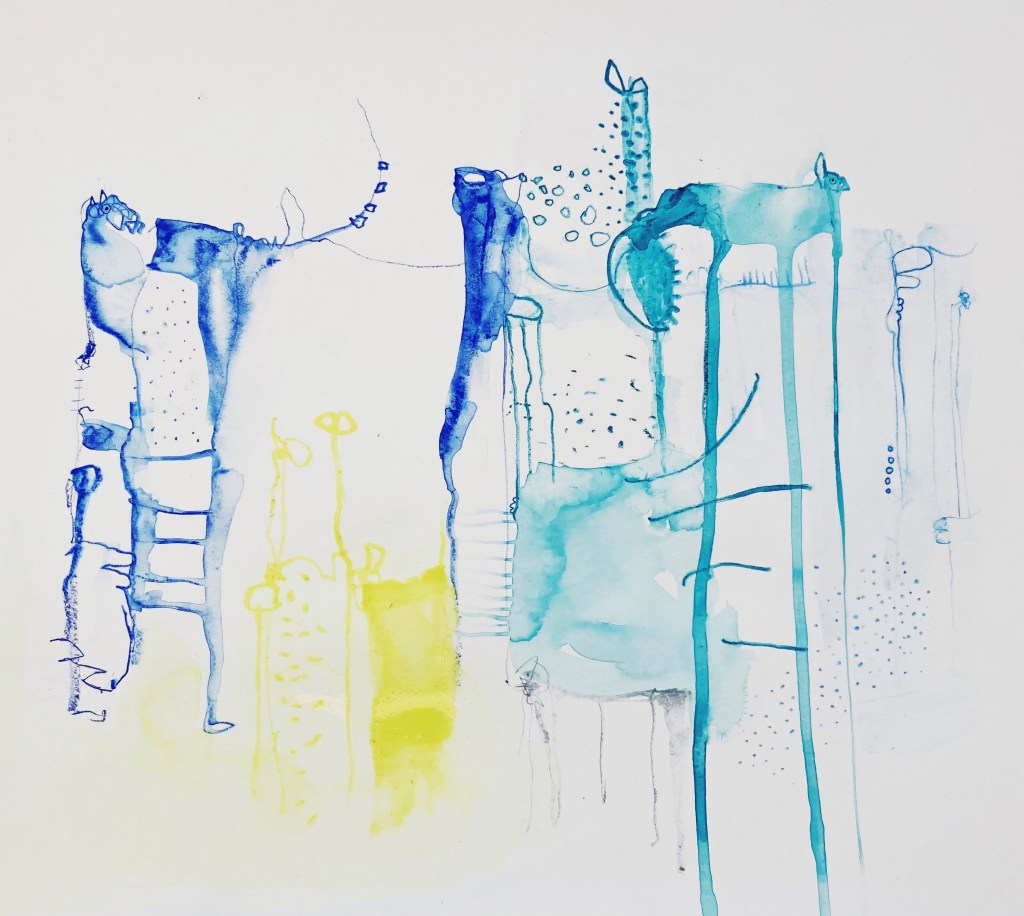
For this reason, my focus this week (as in the coming weeks) has been water related. Practically, I have been experimenting further with the rain painting technique I employed for last week’s assignment (as below).

Bodjal fliaghee (rain cloud) – gouache on paper

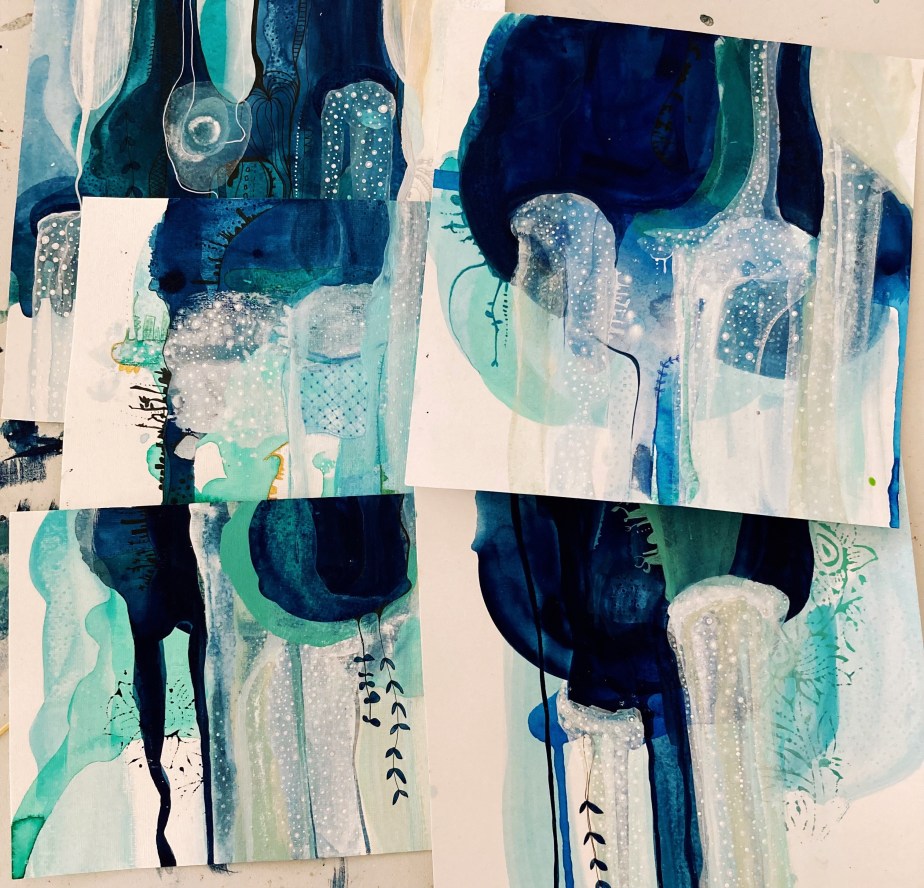
I found this week’s experiments very frustrating. I like some of the results but, overall, I prefer the original painting (above). I used the same techniques this week, all except leaving the paintings out in the rain. Instead, I painted on some old pour paintings (where I’d poured watery acrylic paint on paper). I am now wondering if leaving them in the rain is the missing ingredient. So, before abandoning this line of enquiry completely, I’ll continue with the experiments next week and include the rain aspect – fortuitously, it is due to rain every day! So, we’ll see what happens.

Here are this week’s offerings:

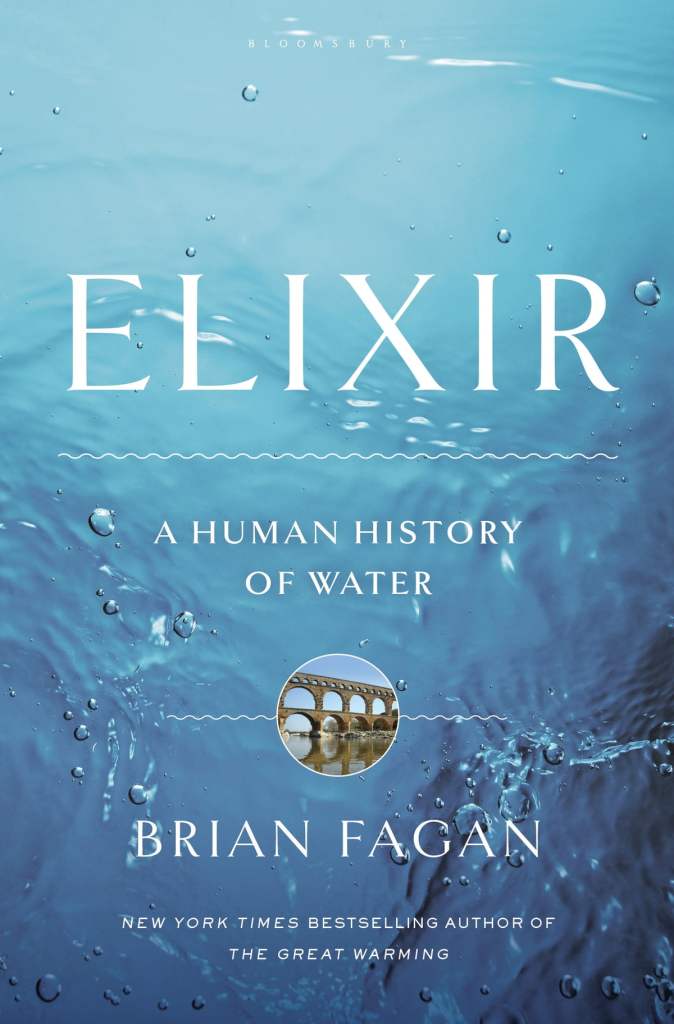
As far as research is concerned, I am reading a wonderful book about water at the moment – Elixir: a human history of water by Brian Fagan. It is proving to be a brilliant starting point for my research, and I am finding it utterly fascinating. Here is a particular nugget I liked:

“History teaches us that the societies that last longest are those that treat water with respect, as an elixir of life, a gift from the gods. We seem to have forgotten this compelling lesson.”

pg: xxvii

Oh Crap!

The old adage “you don’t know what you’ve got till it’s gone”, is very true of a functional home plumbing system. Mine completely broke down last week…and boy have I missed it. It began with the shower water not draining, and quickly moved on to the toilet being blocked. Lucky my fella was on hand, with a plunger in his, which he quickly regretted, and pleaded with me not to enter the bathroom. I could tell by the strangled tone in his voice that he was witnessing something unholy. Naturally, I had to see the unholy thing for myself. I’ll be wearing wellies in the shower from now on.

We were both changed by the experience, but teamwork, two bottles of extra-strength draino, and a bumper pack of industrial cleaning wipes later, and we at least had the bathroom smelling like we might get away with murder. Of course that wasn’t the end, more like the crescendo at the beginning.

A cracked drainpipe was the culprit. A cracked drainpipe under the concrete driveway. Its “nearly fixed” status, more than a week later, has meant more unholiness, a huge pile of dirty clothes, and my already untameable hair being boofier than ever. On the bright side, it has also meant frequent trips to the local pub (when my fella’s been around to drive me, otherwise it’s an hour away on foot along unlit country roads), as well as the chance to ruminate on the wonders of a functional home plumbing system, and what it lends to our perception of ourselves. In all, the experience has left me wondering if distancing ourselves from our waste so efficiently is a key factor in what has long been our sense of superiority over other animals?

Image: It’s only natural – acrylic on paper