Category: Assignment
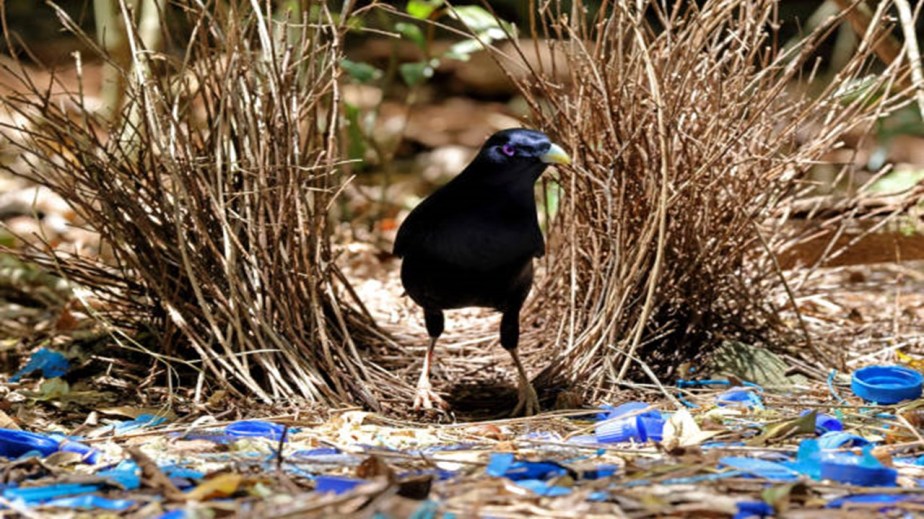
“Come up and see my bower”…that’s a good one!
For our group tutorial this week, we each had to present and discuss something we had recently read. I chose the first chapter (“Come up and see my bower”) in a book that had been recommended in my reading group (not the naughty one), called “Survival of the Beautiful: Art, Science and Evolution” by David Rothenberg.
The chapter concerns satin bowerbirds and their complex courtship behaviour, which, for a male satin, appears to be as much about demonstrating their artistic ability, as it does their mating suitability and prowess. Their time-consuming and elaborate display is as fascinating as it is complex and poses intriguing questions of the role of beauty and aesthetic-selection in evolution.
I’ll have to read the rest of the book to judge whether Rothenberg successfully argues for his hypothesis that life did indeed evolve to be beautiful for the sake of being beautiful, however, my instincts and the courtship of the satin bowerbird tells me that he does.
It is interesting to note, that as fascinating and profound as their courtship is, in their home territory (north-eastern Australia), satin bowerbirds are considered by many to be a pest. Still, the birds were there long before humans, especially those of the manicured-lawn variety (which satin bowerbirds routinely destroy) – like 50 million years before – and will likely be there long after, unless we kill them off in the process of killing ourselves, or maybe take a few with us when we colonise other planets (we really should because they are amazing).
Anyway, I loved learning about the satin bowerbirds so much that I made a video about them for the online magazine I make a weekly video for.
Here is is:
Not every painting needs a salmon
One of the most challenging aspects of being a painter, is staring at a blank canvas/sheet of paper and wondering what to paint. To overcome this anxiety-inducing challenge, many artists, myself included, use tried and tested methods, formulas and/or rituals when approaching the creation of new work.
This week we were given the following assignment:
- do something with your art practice that might not work.
- Take the risk
- Post about it on your blog
Such a proposition would strike fear in the heart of any self-respecting perfectionist. To risk attempting something that “might not work” is the very thing the methods etc., mentioned above seek to avoid. Although I am one such perfectionist, I experimented with a couple of new methods of picture-making this week, and here are the results:
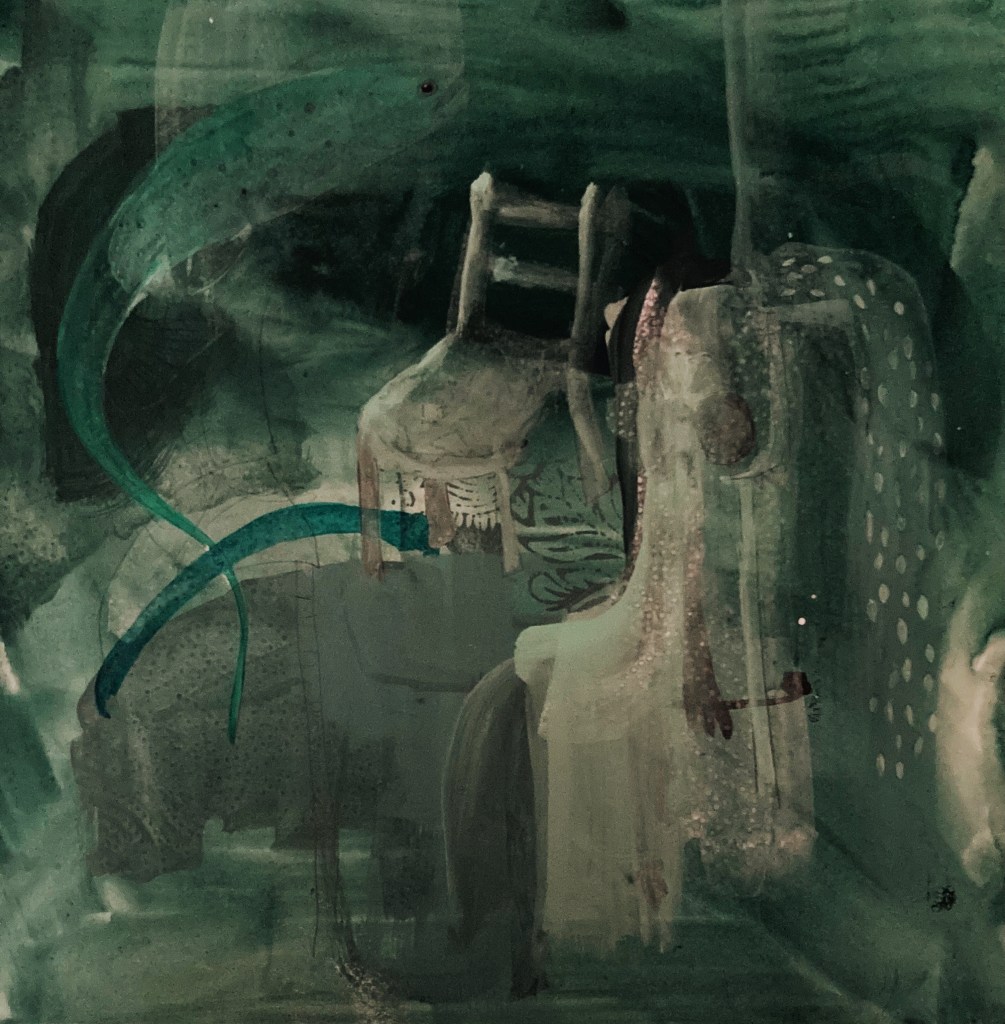
The first painting was the result of a set of coincidences I decided to follow in search of a subject to paint, which is not something I normally do.
- I was watching a programme that had a section about lave net salmon fishing.
- This got me thinking about the “Salmon of Knowledge” story of Irish mythology (of which I had made a little painting about earlier in the week)
- Just as I was thinking about this, a lady called Hazel appeared in another section of the programme, which I thought was a lovely coincidence, as the Salmon in the myth gained all the knowledge in the world by eating hazelnuts.
- I messaged my fella to tell him about this lovely coincidence, and he messaged back that he had a relative called Hazel who had been was a Hollywood movie star.
- I decided to watch one of Hazel’s movies – The Raven (directed by Roger Corman in 1963) – a comedy gothic horror extravaganza.
- My favourite bit was the flying chair near the end of the movie.
- Hey presto, a painting of a flying chair (and a blimmin salmon that I couldn’t resist including, but now regret I did).
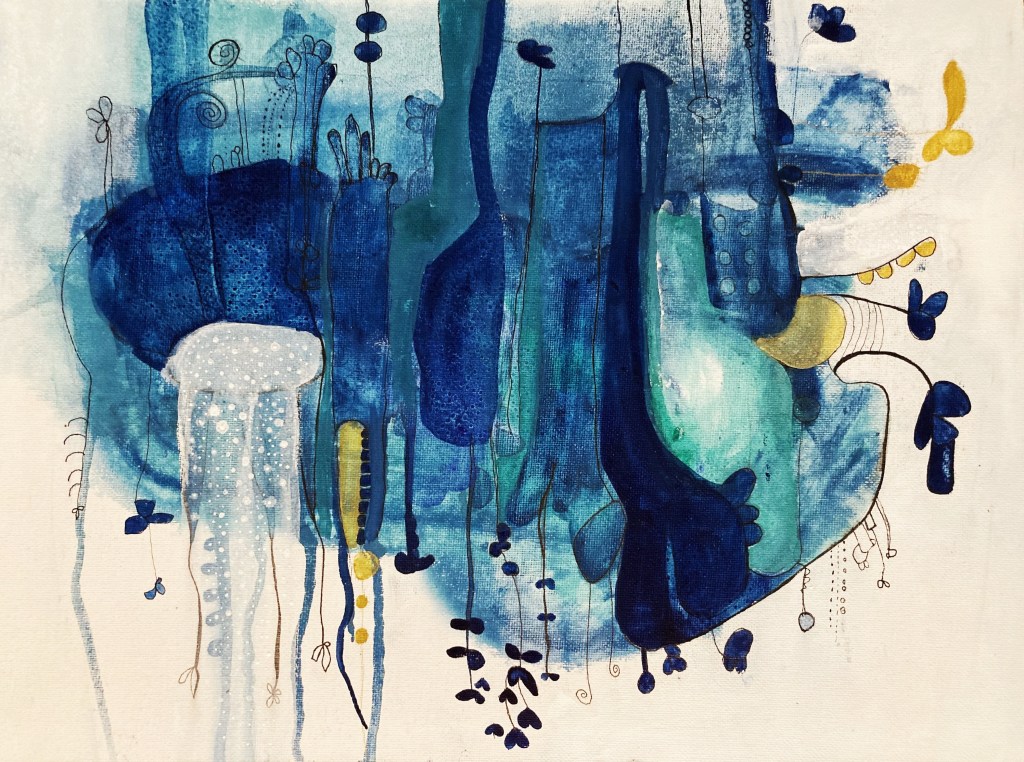
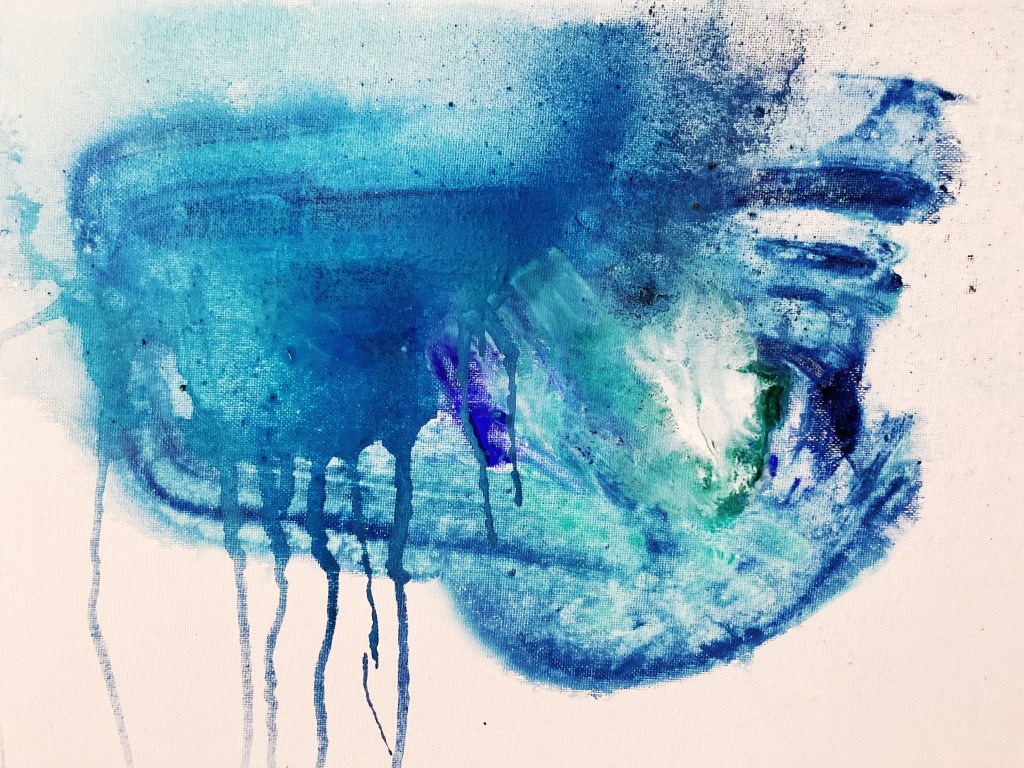
The second experiment I tried, had to do with the thing I am currently most interested in, both intellectually and aesthetically, and that is water. Water features a lot in my work, and I am open to exploring new ways to represent it. So, for this experiment, I decided to veer away from my usual mediums and techniques, and try something new. I also decided that I wanted the work to interact with a natural source of water in some way. So, I smeared gouache (opaque watercolour type paint with a matt finish) on a canvas board and put it out in the rain. Once it was retrieved and dried, I doodled on it a bit (ok, a lot), and here is the result (along with the various stages along the way).

I really enjoyed the assignment this week. It is always good to explore different techniques, that can then be integrated into work down the line. Personally, I don’t find such exploration easy to do when left to my own devices. So, to have a little push is helpful, as roaming out of one’s comfort zone is almost always worth the risk.
 bexODESSA