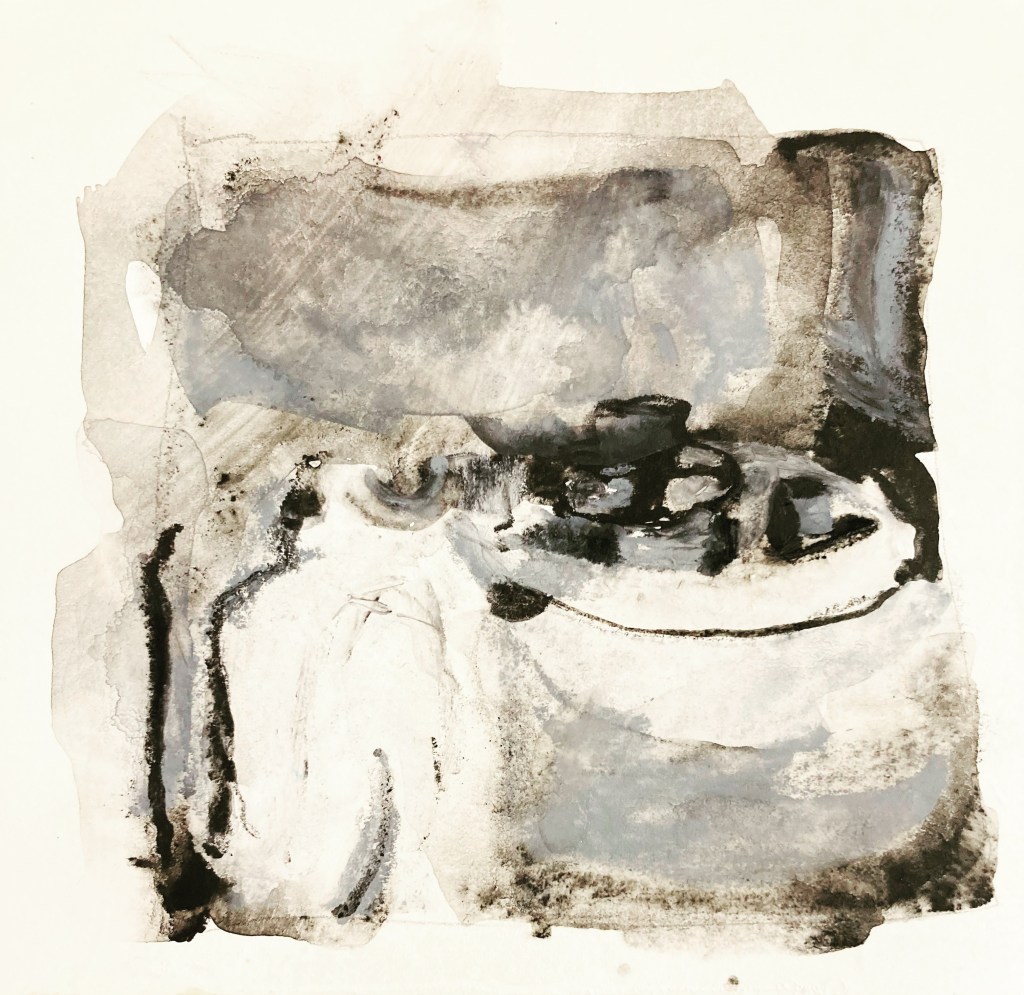
I got chubby again

For Winterval (our so named Hanukkah/Christmas/Solstice holiday mishmash) this year, I asked my fella for a 3 months subscription to Weight Watchers, which he kindly offered to extend to 6 months after witnessing (wide-eyed) my solo “box of chocolates, several magnums, entire Baileys Yule Log weekend extravaganza”.

To be honest, I don’t really mind being chubby. I spend most of my time alone in the studio, seeing no one but Fonzi and my fella (neither of whom are in a position to throw stones), and I don’t own a full-length mirror. What I do mind is not being able to do up my coat and being a sugar-fiend – of which I am of the highest order.

I am currently reading James Walvin’s excellent book “Sugar”, about the history of sugar and it’s cultural, economic, and physical impact on humanity. It’s a cracking read (or listen, if like me you’re an Audible user), and is one of a collection of books I gathered a while ago that will form the research component of a painting I’ve had milling around in the back of my mind for some time now, and for which I recently had a bit of a creative breakthrough with regards to its conceptualisation. It will be a few years before the painting is realised, but I couldn’t resist, while on holiday, exploring the subject further to see if I am on the right track (which I am pleased to say, I think I am), and to keep the milling juices flowing around the idea.

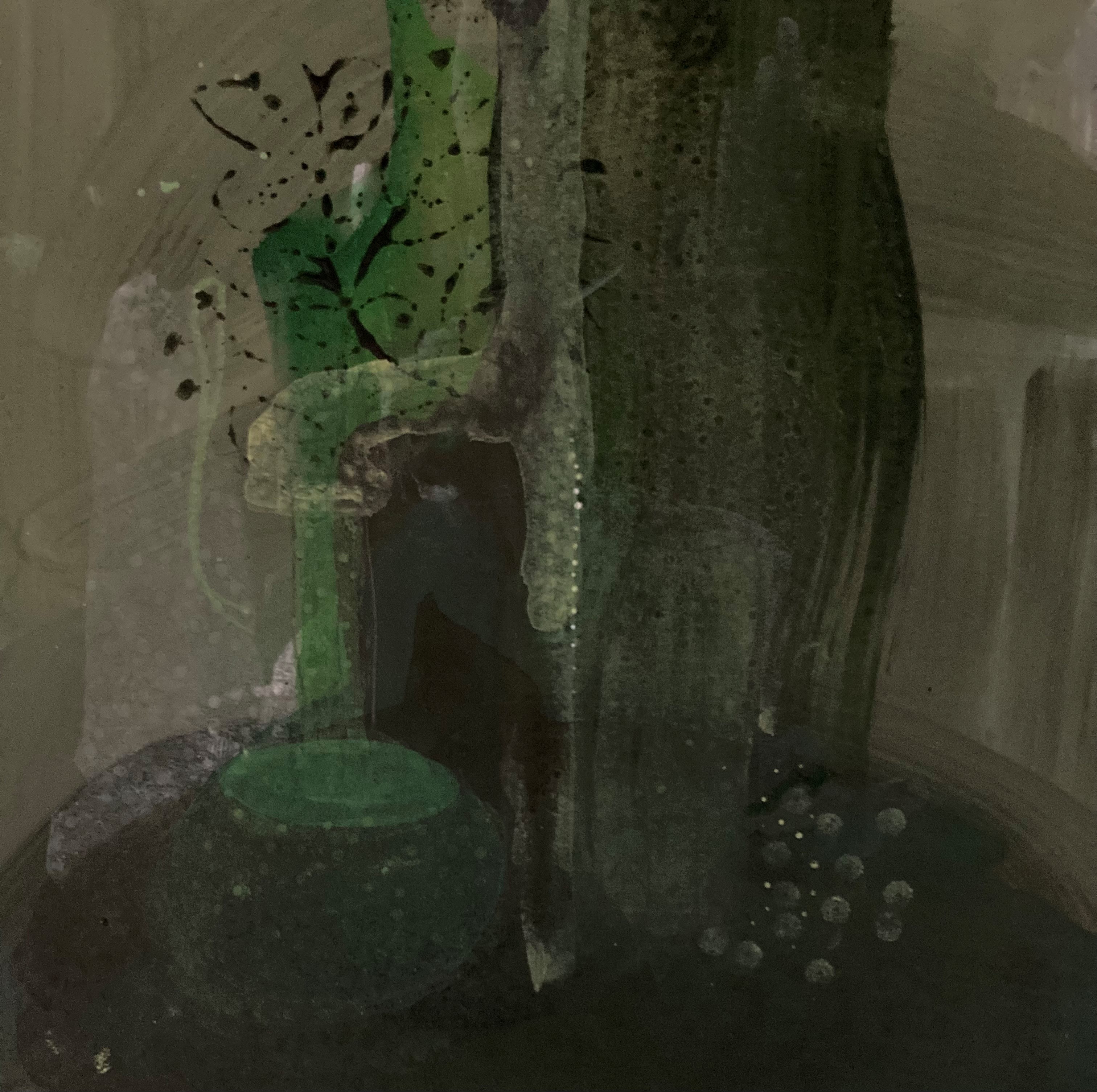
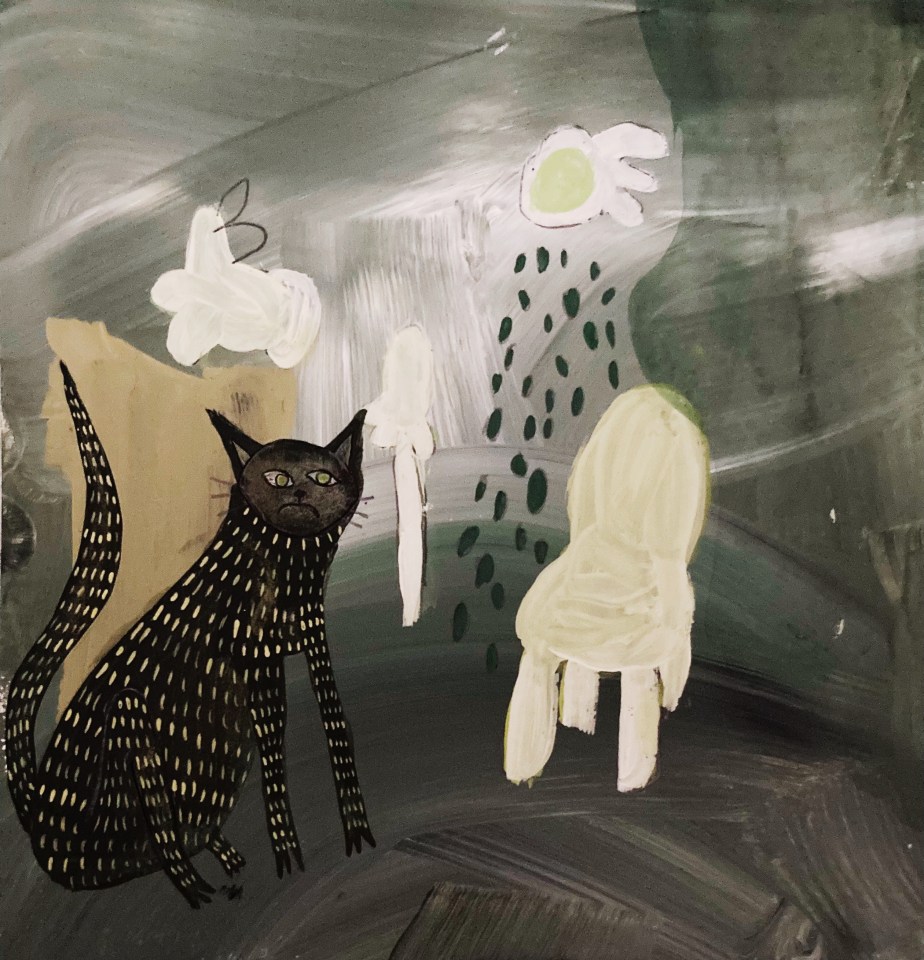
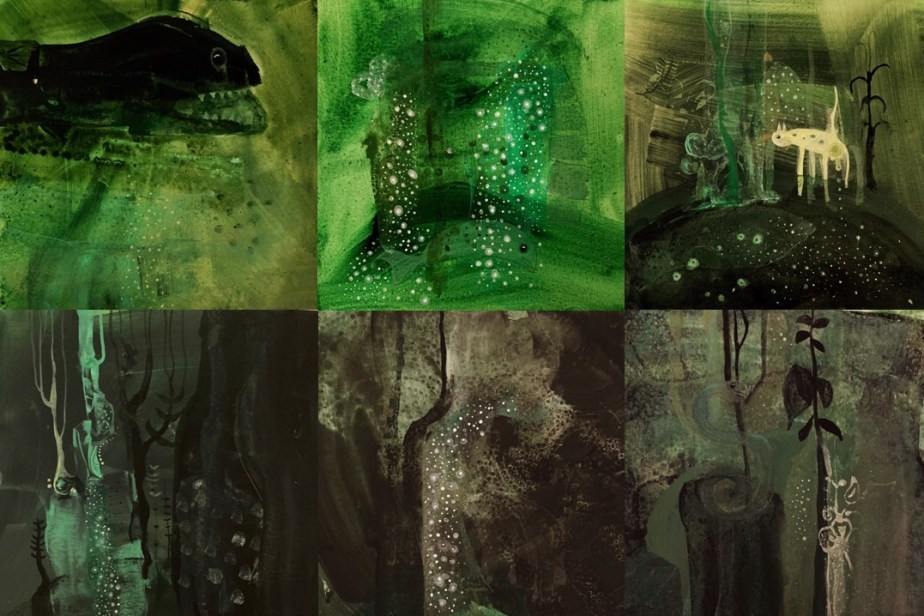
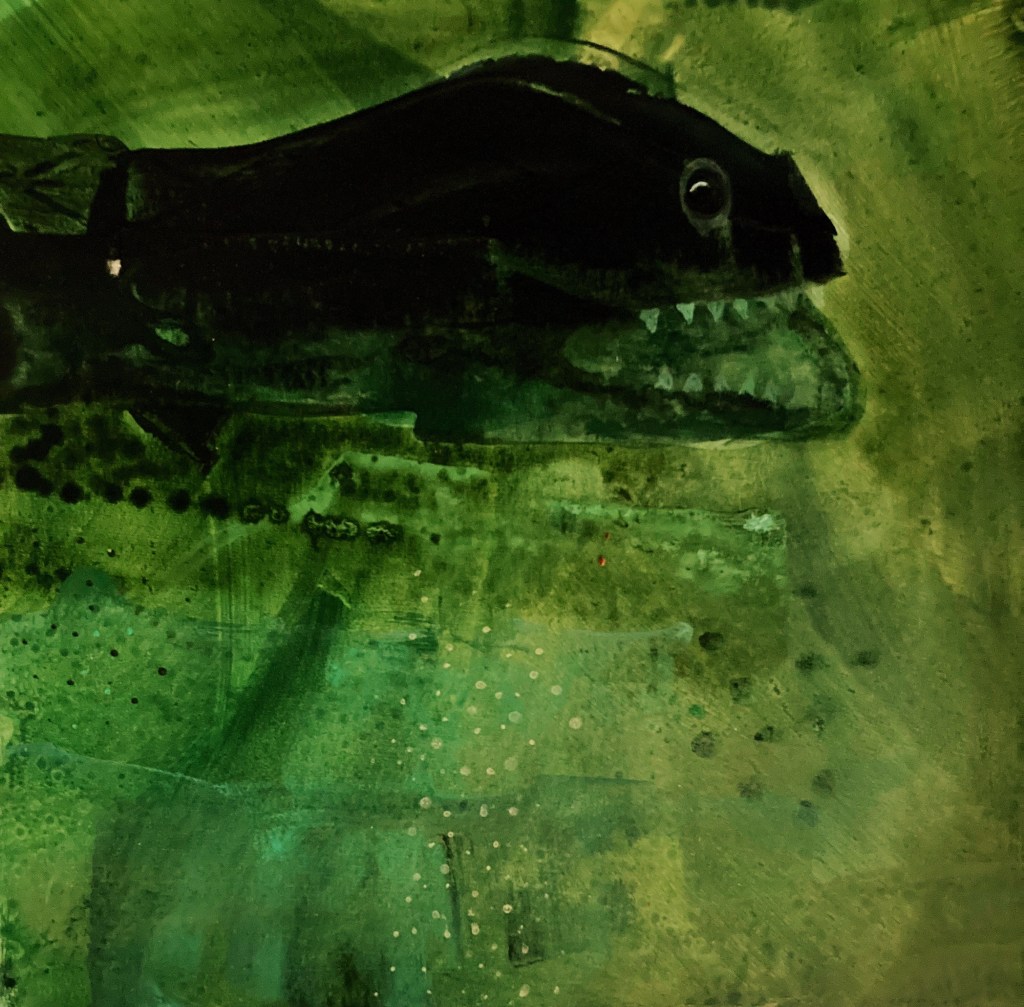
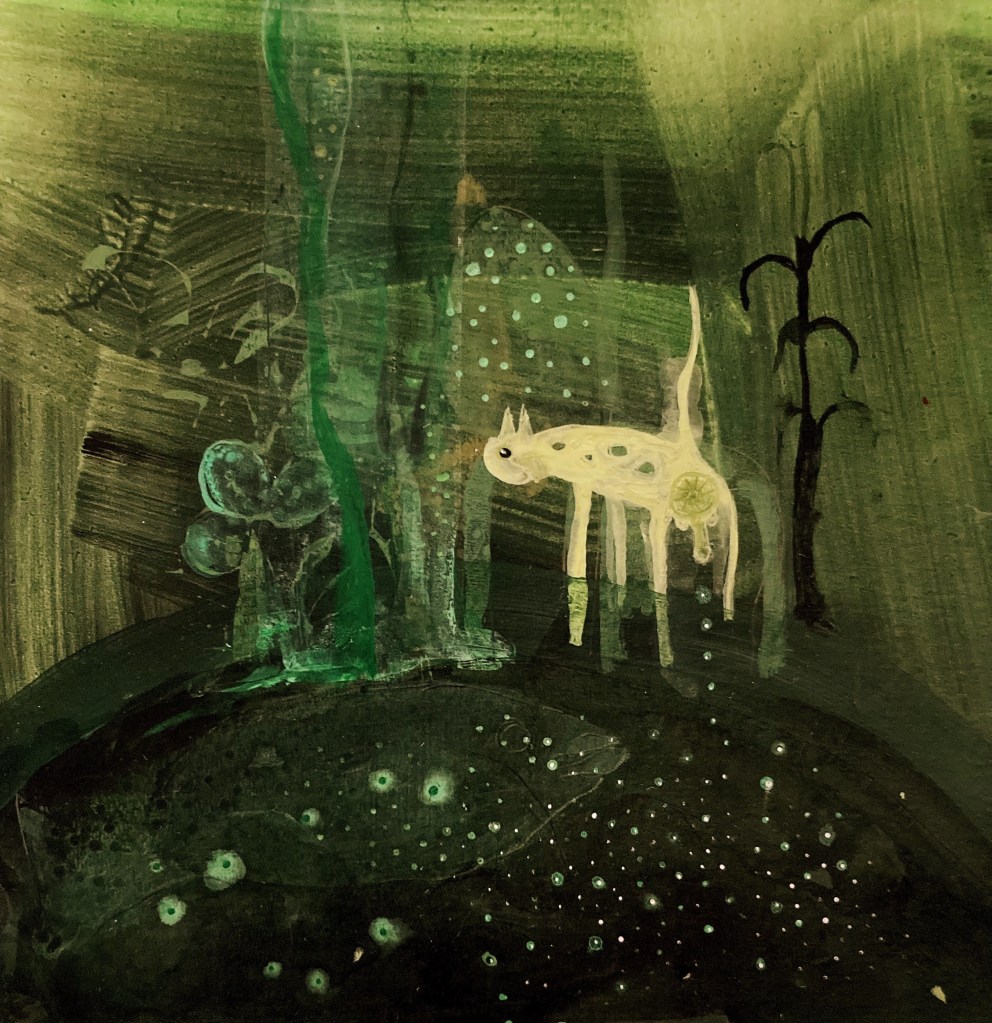
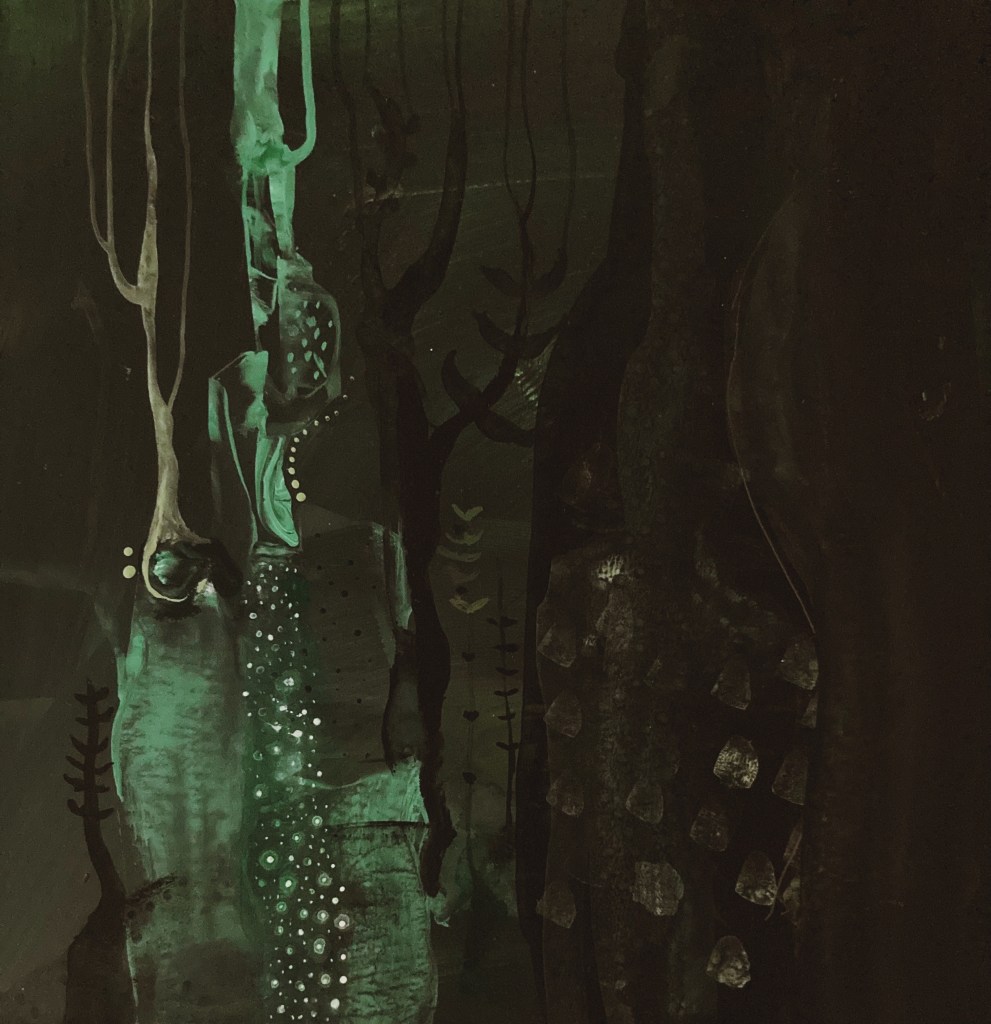
Term two starts tomorrow, so the above idea will have to mill on its own, as I have to refocus my creative energy on my research project about water. I did a few more of the green paintings during the holidays, but, I kind-a lost the thread (god knows why I started putting cats in them, let alone donkeys) and felt like abandoning the idea altogether. However, thanks to a recent meeting with a creative-strategist (aka a pub visit with my fella), I have gained clarity as to how I will proceed. Basically, instead of trying to knock-out completed paintings (a strategy that typically results in a repetitive creative loop in which the paintings tend to get worse not better), I am going to break the paintings down into their constituent parts, and work on developing those parts separately. Beginning with figuration, which will be my primary focus in term two (as well as finishing the Ann painting).

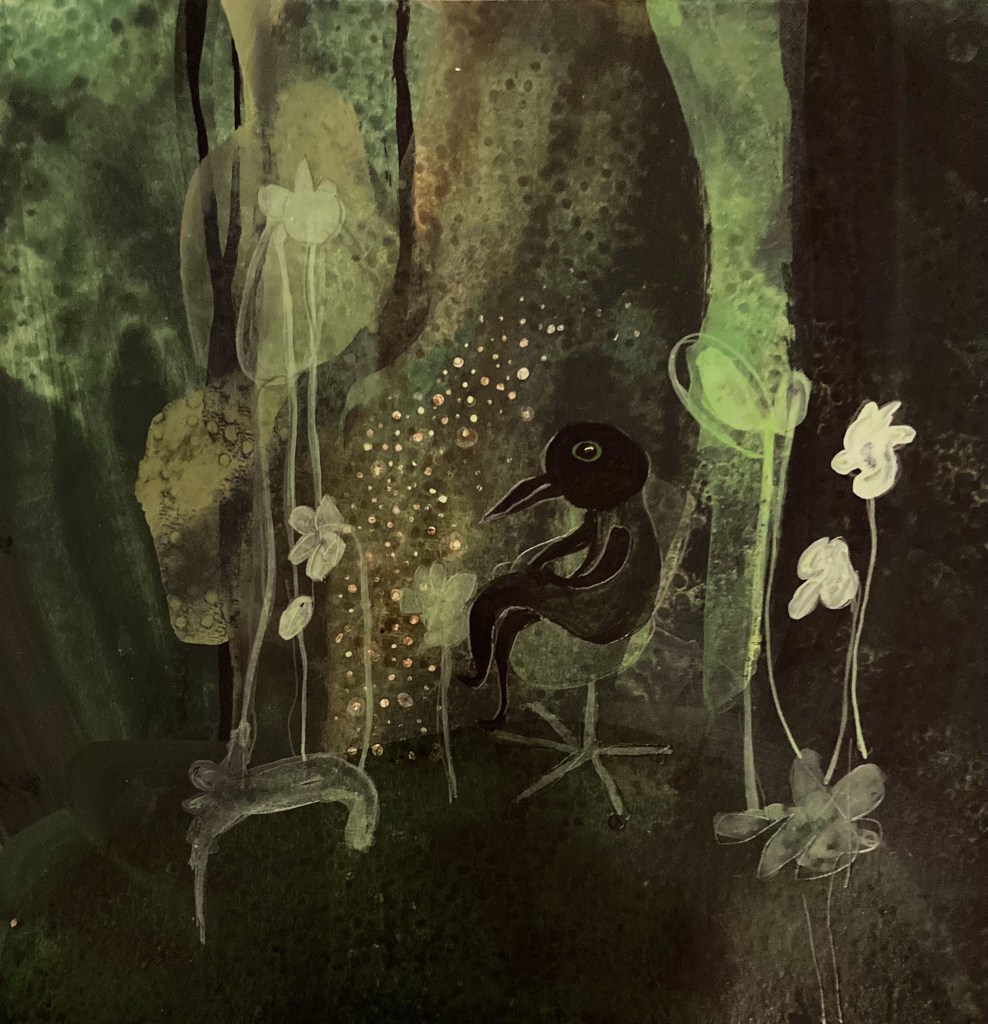
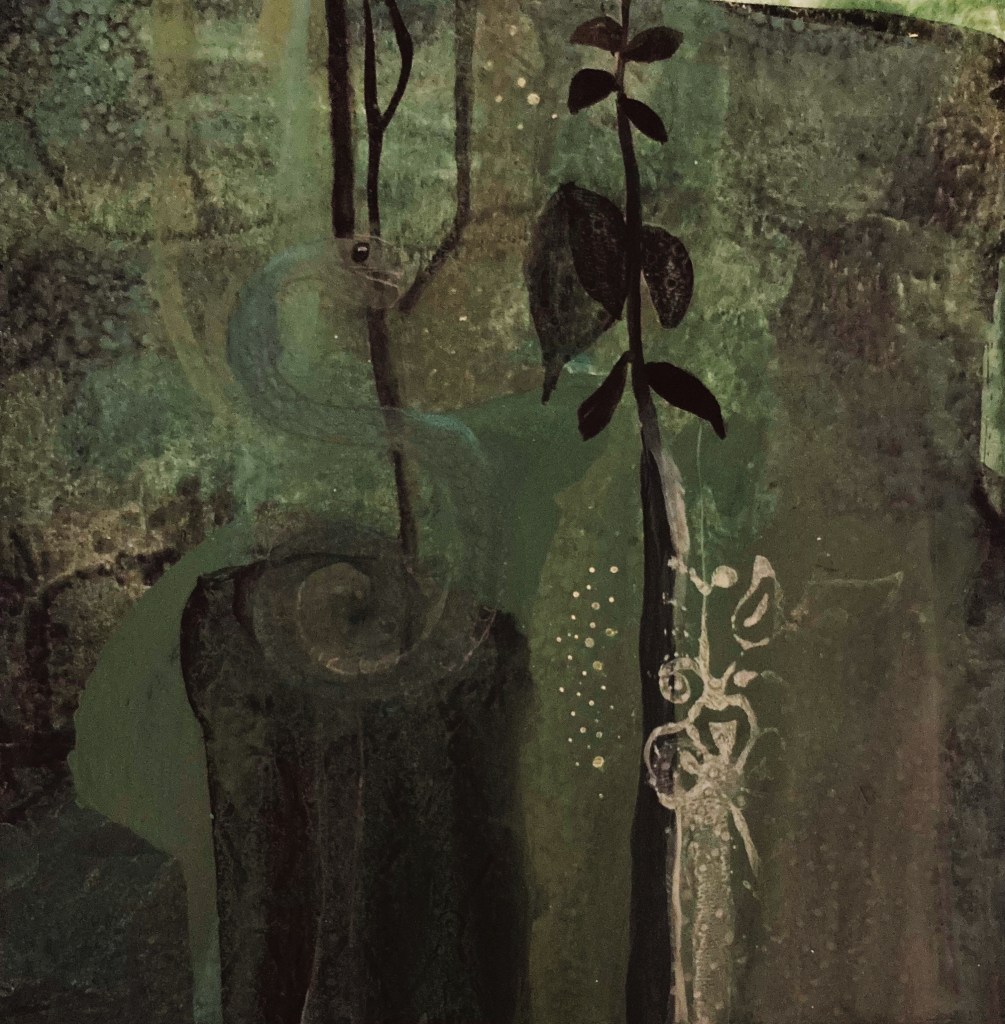
In the meantime, here are a few of the green paintings I did during the holidays.
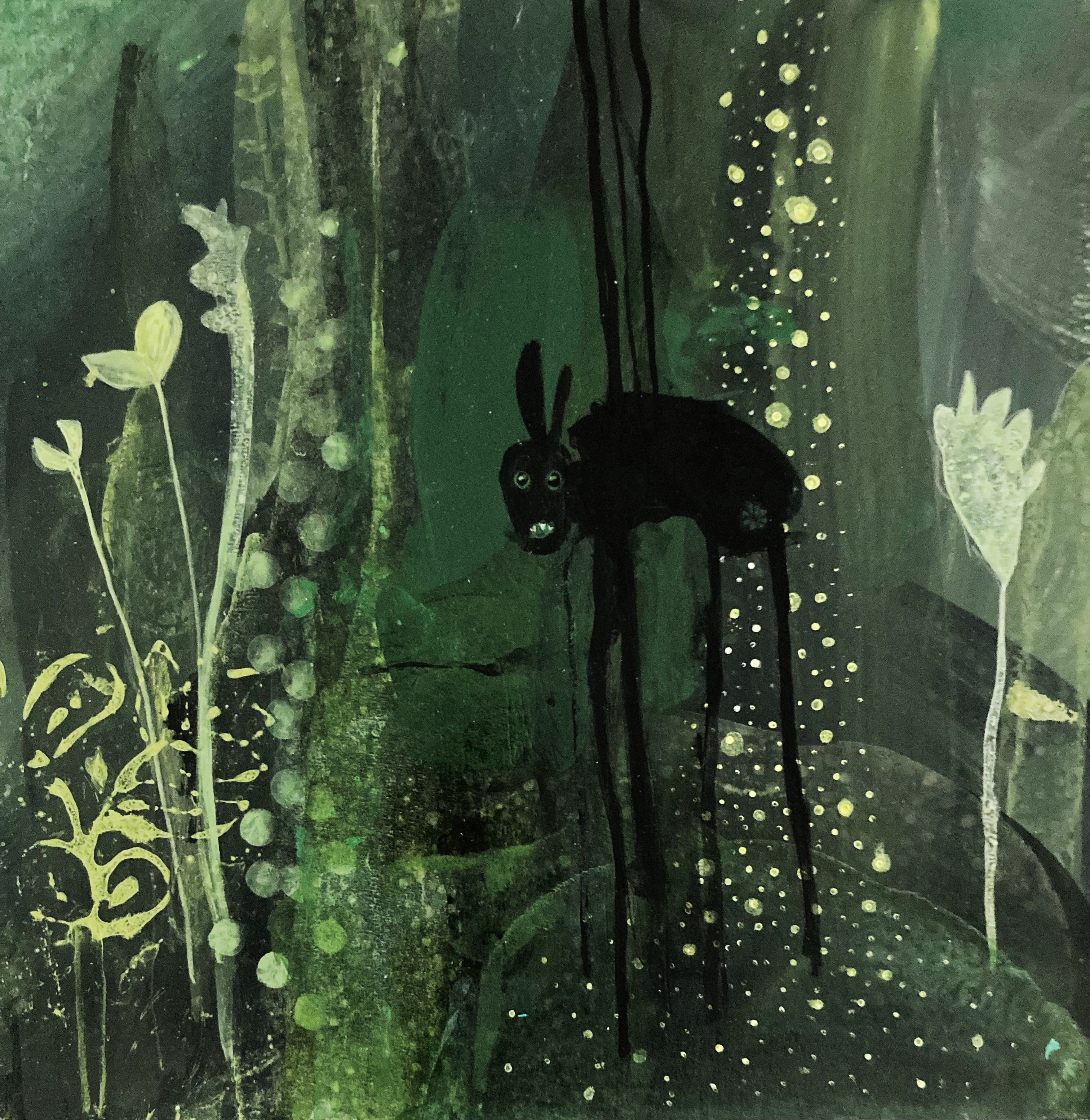
A lesson in mercy

Like most people, I have vivid memories of momentous historical events, such as Princess Diana’s death, 9:11, and the time Poi e made #1 on the New Zealand music charts. It was 1984, and we were staying at Nana’s house in Tokoroa. It must have been a Saturday because Ready to Roll was on, and we were due to watch Poi e, by Patea Maori Club, for the first time. Tragically, moments prior, I was banished to Nana’s bedroom for some long-forgotten misdemeanour (likely sibling battery). As the now familiar music began play, I gingerly pushed the bedroom door open, allowing me a direct view of the television. Unfortunately, I was also in mum’s direct line of sight. Feeling sure I was about to be told-off and re-banished, I was astounded when mum pretended not to see me, and instead let me watch the song in its entirety. It was a momentous event for me, not because of Poi e – as awesome as it is (I still well-up when I hear it) – but because it was the first time I experienced mercy. Mercy (aka undeserved kindness) is rare in this world, most likely due to the human penchant for giving other people their just desserts. As such, when you’re on the receiving end of it, it tends to stick in your memory.

I was reminded of my mum’s mercy the other day. I had decided to take up running…again, and there I was, running (read shuffling) around the Point of Ayre, when Poi e popped up on my playlist. The obligatory tears that fell down my cheeks, invigorated my strides, and before I knew it, I had been running for almost an hour. Naturally, I paid for my vigour in the days that followed, which caused my fella, when in my vicinity, to hum the tune to Raw Hide and ask as to the whereabouts of my horse.

I had already been thinking a lot about mercy, as it is the crux of the Ann painting. When I consider the trajectory of what happened to her – grinding poverty (she lived in the Manx equivalent of a slum), getting caught stealing 37 yards of lace (technically, she was caught trying to sell it, likely to feed herself), entrapment (don’t even get me started on the callous woman who deliberately entrapped and betrayed her), prison (in a literal medieval castle that a contemporary report deemed the worst prison in Europe), followed by her grizzly death in a shipwreck, the details of which scandalised the world and nearly bought a premature end to Britain’s penal-transportation system (but didn’t, because it was too convenient/lucrative) – I can’t help thinking that her fate could have been altered if just one of the people involved had shown her mercy.

I think its worth looking out for those opportunities when we ourselves can show mercy. Those times when we know someone has done something wrong, but instead of calling them to account, and seeing to it that they suffer the humiliation and attendant consequences of their wrong doing, we look the other way, sure in the knowledge they know we know. Showing mercy confers dignity, which, in turn, can have a transformative effect, as dignity is more rehabilitative than humiliation.

The true romantics

I’ve often thought that engineers and scientists, especially those of the aerospace variety, are the world’s true romantics. Watching the documentary “Good Night Oppy“, about the Mars-rover, Opportunity, confirmed this thought. The engineers and scientists who built and operated Oppy (as they affectionately called her) during her 15 year mission on Mars, came to love her passionately, and were heartbroken when she finally gave up the ghost. I challenge you to watch their final farewell to their dear Oppy with dry eyes.

Sticking with things romantic, my fella caught the dreaded COVID this week. It’s his first time getting it, and he has been a sick bunny indeed. We’re not sure where he got it from, though spending the previous weekend dancing outside Santa’s grotto dressed as a snowman and coming in contact with the town’s child population is the chief suspect. There’s no need to tell you how adorable he was as Ramsey’s dancing snowman, you can see for yourself in the video:

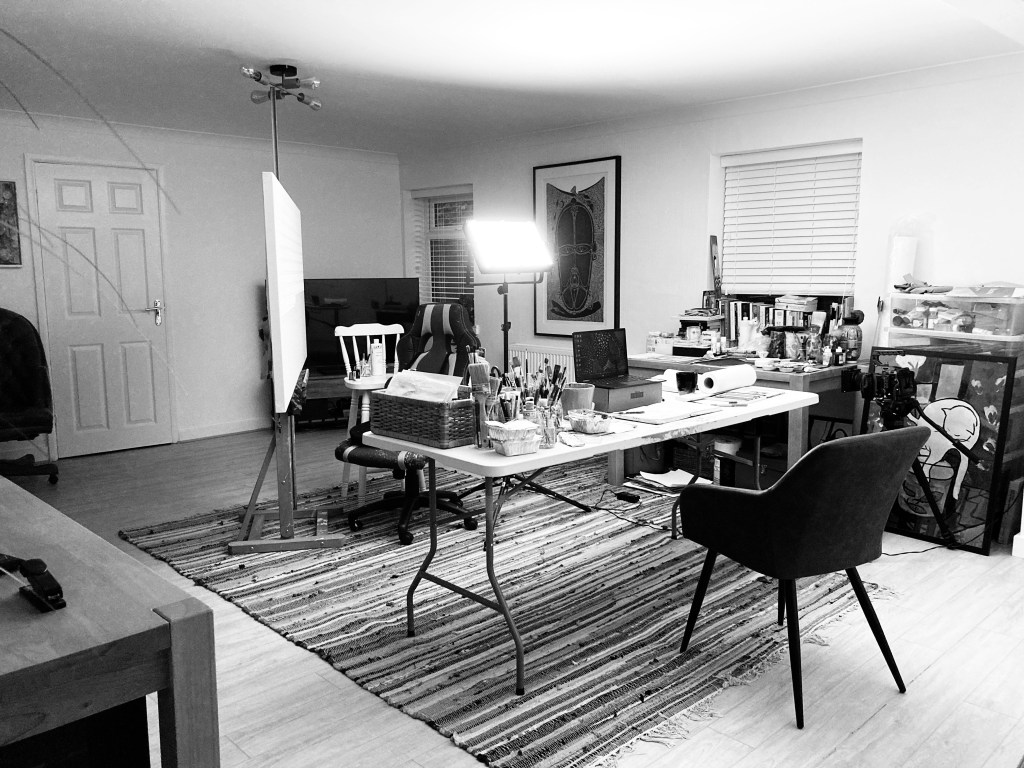
With my fella in quarantine at his house, I spent a solitary week in my studio at the Point of Ayre, working exclusively on the Ann painting (as mentioned in my last post). I am close to finishing it, and as always when the end of a painting like this is in sight, working on it is an irresistible pleasure. When I say close to finishing it, I reckon I’m looking at 2 months if I work on it exclusively, 3 if I work on some of my other projects as well. The latter is preferable, though it will be hard to tear myself away from Ann.

Because working on a painting like Ann is meditative, and therefore conducive to thinking through creative ideas, and due to the emotional turmoil of our current family crisis, as well as the added solitude, and, who knows, perhaps even the presence of the full moon, I was thrilled to find myself in a state of super-charged creativity, so I took the opportunity to think through and (imaginatively) resolve major aspects of my next (Ann-like) painting. I say imaginatively resolve, as I am yet test out my ideas to see if they will work; even so, it is an exciting step forward.

I reached another milestone this week – I have completed my first term of art school. It’s hard to believe how fast it has gone. Although I am effectively on holiday, there are a number of art opportunities in the New Year that I would like to make the most of, so I have a lot of work to do between now the resumption of classes in mid-January.

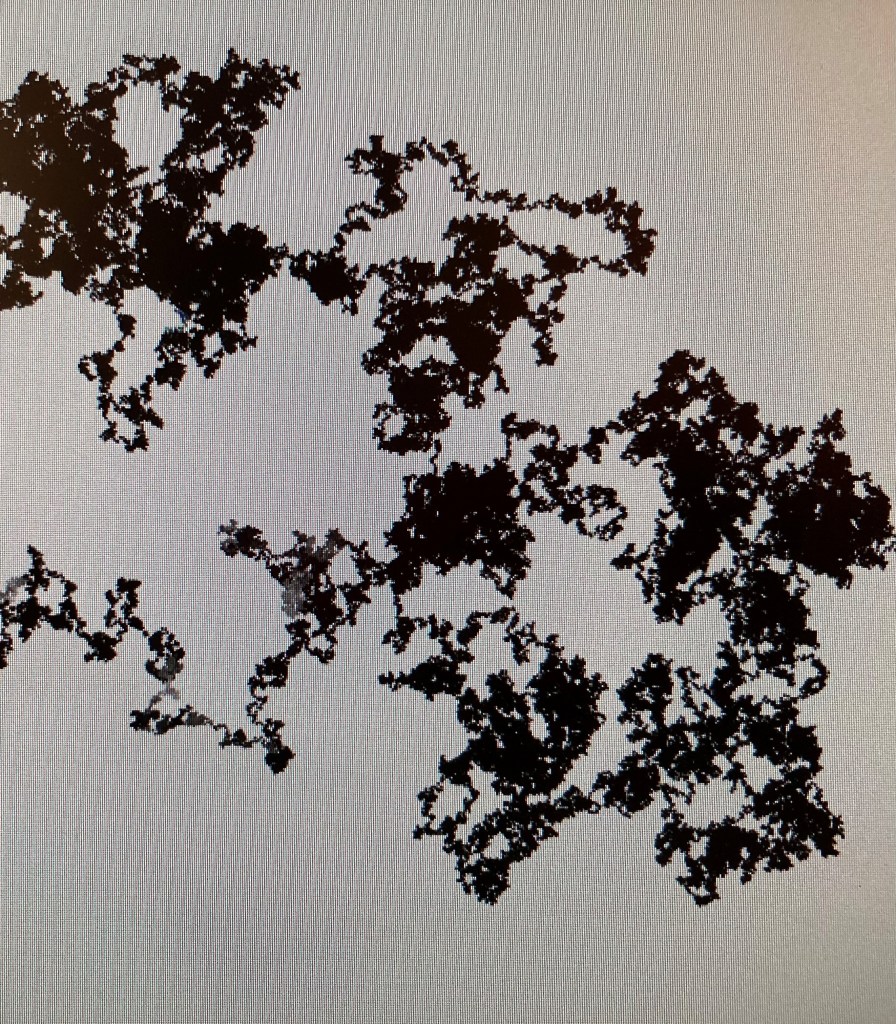
I had some interesting classes for my final week, including one in which I learnt how to code. I doubt Microsoft will be headhunting me anytime soon, however, I did manage to ask the computer to draw a face and some squiggly lines.

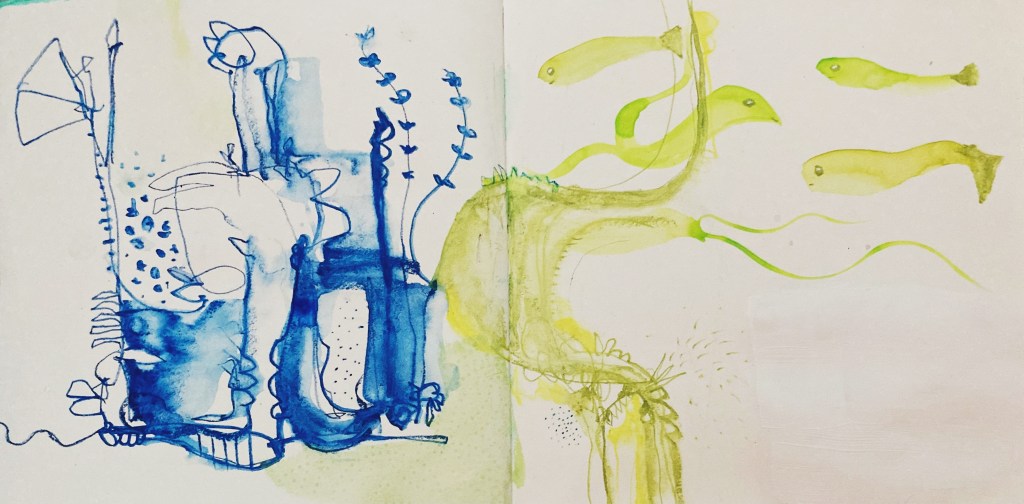
And in another class about sensory access to the imagination, I painted while listening to Spanish poetry – an exercise I thoroughly enjoyed.

Dem dry bones

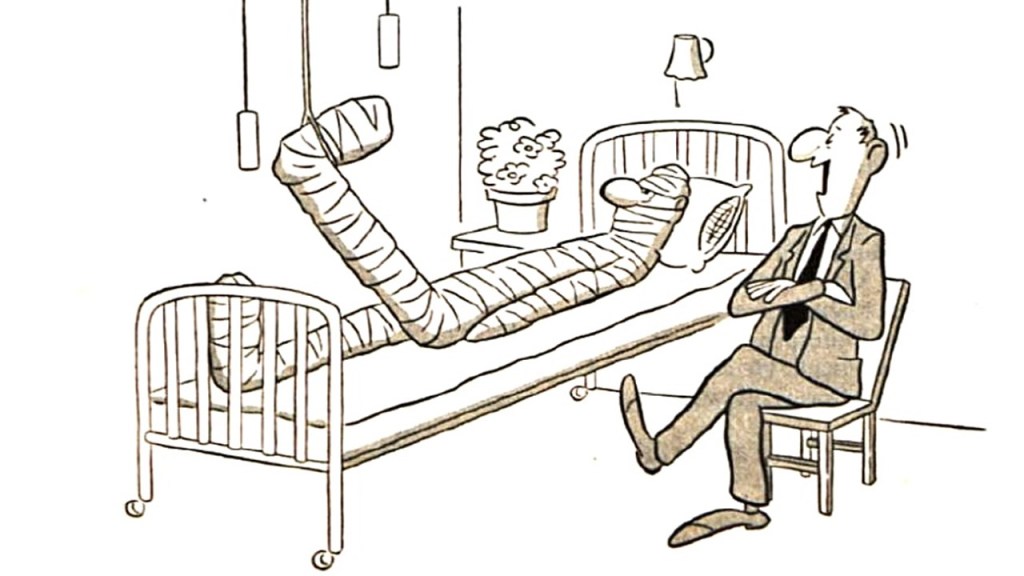
My dad broke his leg last week, his femur to be precise. The femur is not an easy bone to break, and is typically the result of a serious traffic accident or a fall from a great height. Dad broke his setting the table. Quite how he did it, we’re not sure, though it’s possible a sudden drop in blood-pressure and subsequent blackout-fall did the trick, as evidenced by the fact he was found on his back with cutlery lodged in the bookcase behind him. It’s not the first time Dad has broken a bone. Indeed, it is no exaggeration to say that if he had a bandage on for every bone he’s broken over the years, he’d look something like this:

Dad’s a trooper though, and always gets back up on his feet. It’s a laborious, painful process, but he will doubtless meet it with the good grace he always does, and will be back, pottering around his allotment come Spring. Dad loves his allotment, and it’s no wonder, it’s a little slice of Manx paradise, that he tends and coaxes with his magic touch, producing an abundance of leeks, giant cucumbers, towering rhubarb, delicate flowers, and lots and lots of potatoes.

With the fall-out from dad’s fall, I’ve been a bit distracted this week, and haven’t made much progress with the green paintings. Instead, I have taken refuge in painting Ann (Ann being the large oil painting I mentioned in my last post). I call it Ann (its working title) because it is about a Manx woman called Ann Thompson, who was transported to Australia, on a ship called the Amphitrite, in 1833, for stealing 37 yards of lace. Tragically, she died in a shipwreck on the way, as did all the other female prisoners transported with her. It is a compelling, convoluted story which I have been researching for the past 2 years, with the help of my Mum (whom, coincidently, has the same middle and maiden name – Anne Thompson), and ever supportive fella. Ann now feels like a dear companion, and it envokes a deep sense of pathos to paint something beautiful and delicate in her memory, in the hope that in some cosmic realm it offsets the terrifying misery that was the last few months of her short life.

Ann’s Transportation Order – Book of Pleas, Manx Museum
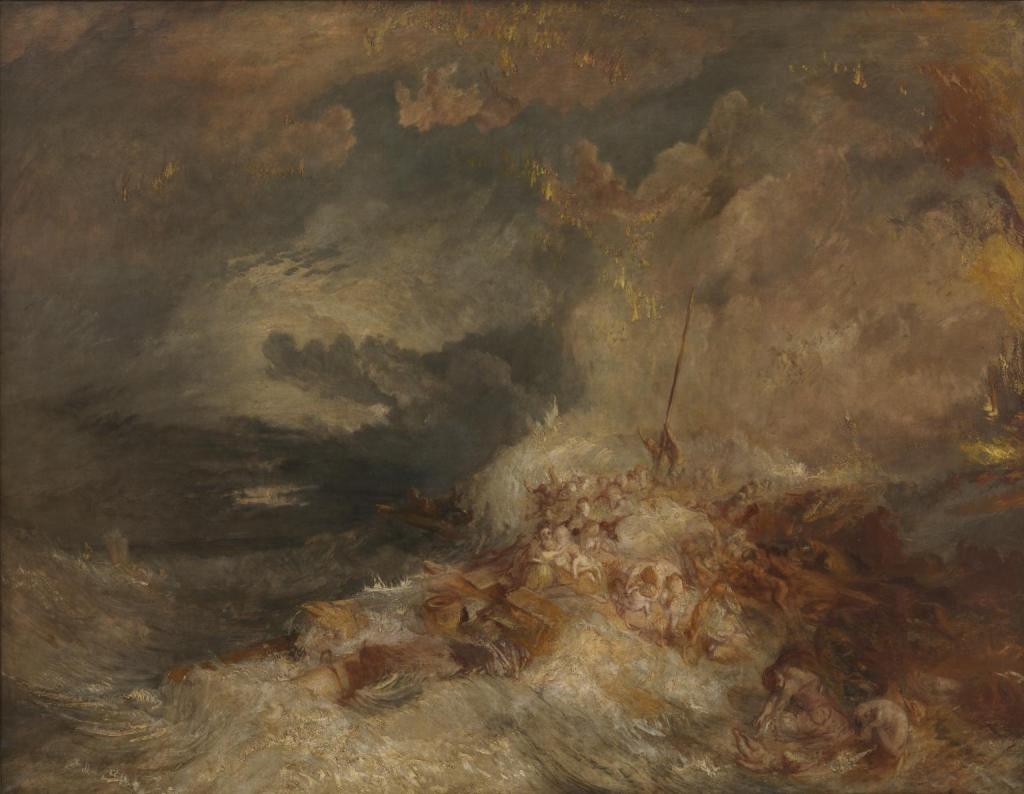
A Disaster at Sea c.1835 Joseph Mallord William Turner – based on the loss of the Amphitrite 1833

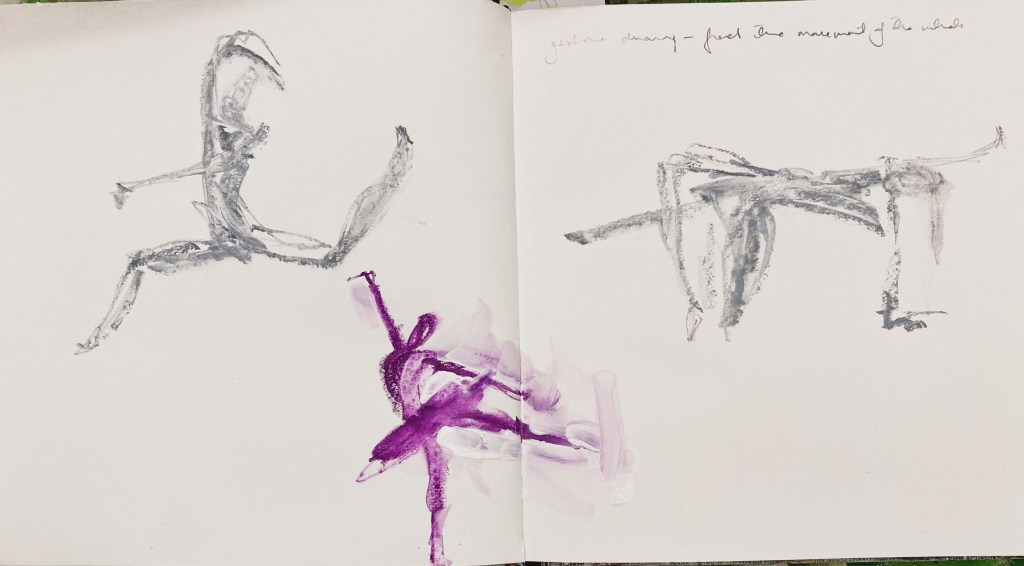
This week, I also attended the last instalment of our drawing workshop, which was all about gestural drawing. As the name suggests, gestural drawing focuses on capturing the gesture or action of a figure, rather than the details (Turner’s painting above could be described as gestural). This kind of drawing, which is typically quick and expressive and, I think, very beautiful, is definitely something I would like to practice more. In the meantime, here are my initial attempts from the workshop:

To end, I thought I’d share the song I have been humming to myself since dad broke his leg…the harmonies are exquisite.

“In the midst of chaos, there is also opportunity”

A family crisis descended this week, yet, despite the chaos, I managed to keep up with my coursework and painting practice, and even made some progress. Here is a rundown of what I have been up to this week:

I have been loving the switch to a green pallet. It’s a very satisfying colour to paint with, and has plenty of scope for exploration. I am just painting small ‘acrylic on paper’ works, but hope to scale-up to large canvases once I have a handle on the pallet, and a better idea of the direction I want to go in. So far, I have found green to be a much better representative of “underwater/underground” than blue, and I like that it has a darker, more mysterious vibe. Here are a couple of successful paintings from this week:

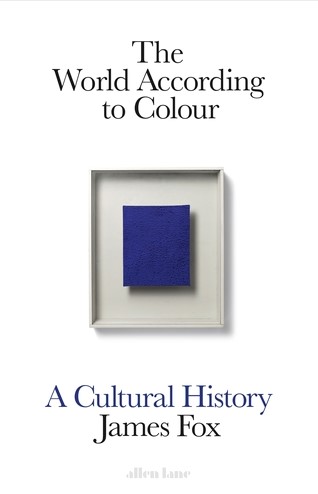
As well as painting with green, I have been reading all about it in two wonderful colour books my sister bought me. I highly recommend both books; they really get the juices flowing regarding colour.

I have been settling into my new studio, and it now feels like home. It functions well for both of the painting projects I have on-the-go at the moment. One being the experimental underground/water paintings, as mentioned above, and the other, one of my big oil paintings (working title “Ann”) that I will go into more detail about at a later stage. Both require different things from a studio space, and I am now able to move between the two with ease.

I had book club (not the naughty one) again this week. This time we had a Ted Chiang reading “The Evolution of Human Science“. To be honest, I found it a bit confusing. It was written in the form of a scholarly, scientific article, and I wasn’t sure if it was fiction or not (which I’m guessing was the author’s aim), and which I was pleased to discover was, because it was about meta-humans superseding humans, and making the latter irrelevant. I also discovered that the reading group I have joined is a “post-humanist” one. I am not sure that I am a post-humanist, mostly because I don’t understand what post-humanism is. But, the other people in the group are clever and interesting, so I think I’ll keep going.

According to the Oxford Research Encyclopaedia:

Posthumanism is a philosophical perspective of how change is enacted in the world. As a conceptualization and historicization of both agency and the “human,” it is different from those conceived through humanism. Whereas a humanist perspective frequently assumes the human is autonomous, conscious, intentional, and exceptional in acts of change, a posthumanist perspective assumes agency is distributed through dynamic forces of which the human participates but does not completely intend or control.

Naturally, I am still none the wiser.

My drawing class this week was cancelled, I’m guessing due to the teacher strikes. However, here is something I drew in last week’s class on light and shade.

Despite how stressful the last week has been, 3 things have brought me great solace:

  1. Painting (naturally)
  2. My amazing, kind-hearted, supportive, patient, generous, capable (an undervalued but bloody fantastic quality), cute as a baby animal, and extremely funny boyfriend;
  3. Seeing Fonzie.

Seriously, watch this video and just see if all your troubles don’t melt away:

Wait for it..

Title quote: Sun Tzu

Raining cats and chemicals

I love the rain – the sound, the visual, the feeling it gives me. When I was a kid, I loved tipping my head back and catching raindrops in my mouth. I wouldn’t do that now though. As lifegiving, refreshing, and purifying as rain may seem, it’s actually full of parasites, bacteria, and bugs. Plus, a new study out of Stockholm University has shown that rain all over the world is full of PFAS (polyfluoroalkyl substances), otherwise known as “forever chemicals” due to their longevity, which are toxic to humans and animals, and, well, everything. We may not be responsible for the bugs and things, but we are definitely responsible for the PFAS. We use them in non-stick pans, fire-fighting foam, and water-proofing furniture etc. It makes me sad to think we’ve poisoned the rain, along with the soil and the atmosphere. It’s true we can purify rainwater (at some expense), so that it’s drinkable. That’s fine for us (for the countries that can afford it that is), but what about the animals that consume rainwater, including our beloved puddle-drinking pets?   

“Come up and see my bower”…that’s a good one!

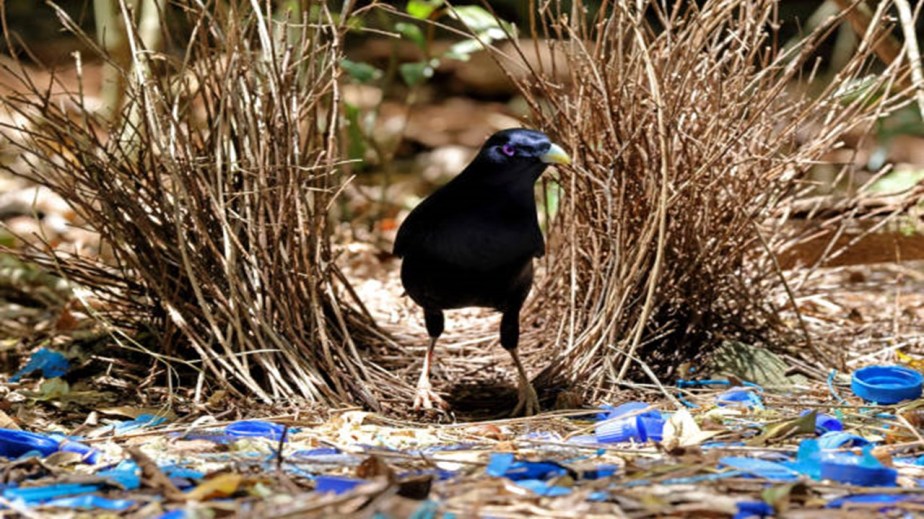
For our group tutorial this week, we each had to present and discuss something we had recently read. I chose the first chapter (“Come up and see my bower”) in a book that had been recommended in my reading group (not the naughty one), called “Survival of the Beautiful: Art, Science and Evolution” by David Rothenberg.

The chapter concerns satin bowerbirds and their complex courtship behaviour, which, for a male satin, appears to be as much about demonstrating their artistic ability, as it does their mating suitability and prowess. Their time-consuming and elaborate display is as fascinating as it is complex and poses intriguing questions of the role of beauty and aesthetic-selection in evolution.

I’ll have to read the rest of the book to judge whether Rothenberg successfully argues for his hypothesis that life did indeed evolve to be beautiful for the sake of being beautiful, however, my instincts and the courtship of the satin bowerbird tells me that he does.

It is interesting to note, that as fascinating and profound as their courtship is, in their home territory (north-eastern Australia), satin bowerbirds are considered by many to be a pest. Still, the birds were there long before humans, especially those of the manicured-lawn variety (which satin bowerbirds routinely destroy) – like 50 million years before – and will likely be there long after, unless we kill them off in the process of killing ourselves, or maybe take a few with us when we colonise other planets (we really should because they are amazing).

Anyway, I loved learning about the satin bowerbirds so much that I made a video about them for the online magazine I make a weekly video for.

Here is is:  

Out of the blue

Typically, blue is the dominant colour in my work. It would be turquoise, which I think is the most beautiful colour in the world, if it weren’t for the fact that too much turquoise is like too much sugar, so, I make do with blue.

But I’m sick of it. Instead, the colour that is hitting my internal “ooo I love that” register, is green. Sure, it’s in the same colour family as blue, and makes up half of a good turquoise, but its completely different to blue, and I am really loving it. There is something deep and mysterious, primordial even, about its darker versions, and there is such a wonderful array of its lighter variations, that I feel I could explore it for a while. So, I’m going to.

Here are a few initial experiments:

Yep, I’m a word-nerd

I love words. I especially love words that are made up of other words, and have deeper, sometimes more profound meanings the more you dig into their etymology – i.e., their origin and history. I have only been depressed (beyond the standard being sad about sad events) once in my life, and the two things that sustained me during that time were painting and reading the dictionary. I would scour the pages of the huge two-volume Oxford dictionary I bought at a charity shop, to find words that matched the ache in my soul and tumble down the rabbit hole of connected words and their meaning. That was in the days before I had access to all the dictionaries in the world. Now my favourite word-nerd thing to do is look words up online.

This week in our group tutorial, we were asked to consider the words elusive and taxonomies in relation to our art practice. Of the two words, I thought elusive to be the most interesting.

The suffix ive makes adjectives from verbs, and means “pertaining to, tending to etc.,”

elus is from the Latin eludere – “finish play, win at play; escape from or parry (a blow)”

parry – “to turn aside or ward off (an attack or blow of a weapon) with a counter move; a defensive or deflective action; pushing a weapon away or putting something between your body and the weapon.

I really like this deeper understanding of the word elusive. Beyond its modern definition “difficult to describe, find or achieve”, its earlier meaning suggests the intentional and defensive act of ending a potentially damaging encounter. In combination with its modern understanding then, elusive could rightly be used in the sense of deliberately obscuring something in order to protect it.

We were also asked to think of a word that is currently pertinent to our practice.

The word I chose was intuition:

From Middle French – “the ability to understand something instinctively, without the need for conscious reasoning.”

From medieval Latin Intuicioun – “insight, direct or immediate cognition, spiritual perception,” originally theological, from Late Latin intuitionem (nominative intuitio) “a looking at, consideration.”

I chose intuition because of something I had read by the film director David Lynch earlier that day:

Intuition is the key to everything, in painting, filmmaking, business – everything. I think you could have an intellectual ability, but if you can sharpen your intuition, which they say is emotion and intellect joining together, then a knowingness occurs.

Although Lynch’s definition is a departure from its medieval counterpart, both have given me something to chew on the past couple of days and, along with the word elusive, have helped illuminate something that has been frustrating my practice for a while now. Such is the power of words.

As I was writing this entry, I came across a quote by Edgar Allen Poe, I’m not sure it’s pertinent, but it sure is delicious:

Words have no power to impress the mind without the exquisite horror of their reality.

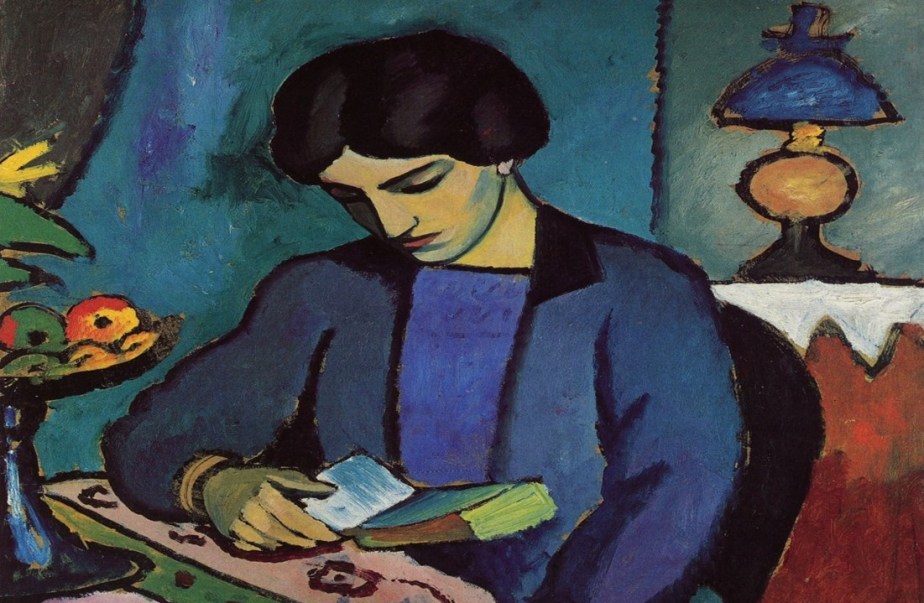
Image: Blue Girl Reading (1912) August Macke

Not quite as much fun as The Naughty Book Club

I once belonged to a reading group called The Naughty Book Club, which consisted of drinking mojitos and reading such literary classics as Goldilocks and the Three Barons. I thoroughly enjoyed the experience, so, when the opportunity to join a UAL reading group arose, I jumped at the chance.

The first instalment was last week, and despite the absence of liquor and X-rated reading material, I really enjoyed it. It was a mixed group of students and alum from the various UAL art schools, including my own, Central Saint Martins. The reading in question was a chapter from Robin Wall Kimmerer’s celebrated book Braiding Sweetgrass.

The chapter was titled Learning the Grammar of Animacy. A simple definition of animacy is the state of being alive and animate. When animacy is understood in the context of language, it gets more complicated, as Wikipedia describes:

Animacy is a grammatical and semantic feature, existing in some languages, expressing how sentient or alive the referent of a noun is.

It was this latter definition of animacy that the reading in question was concerned with. The main thrust of the chapter concerned what the author saw as the arrogance and failure of English to describe nature as sentient, and the consequent disconnection from animals/nature. Rather, English differentiates between humans (sentient) and animals and nature (non-sentient) primarily through the use of pronouns – such as she/he and it respectively. Not all languages do this, including the Anishinaabe language she has ancestral connections to, and which she talks about learning in the chapter.

I liked the author’s lyrical way of writing and found the points she made very thought provoking. Although I don’t share her antagonism towards English, I can relate to her struggle with learning her ancestral language. I am currently learning one of mine, Manx, which is part of the Gaelic language family. As anyone who has tried to learn Irish or Scottish can attest, Gaelic languages are not for the faint hearted! I could also relate to the sadness she expressed regarding the deliberate measures taken to destroy her cherished language and its assured death if future generations do not take up the mantel and learn it.

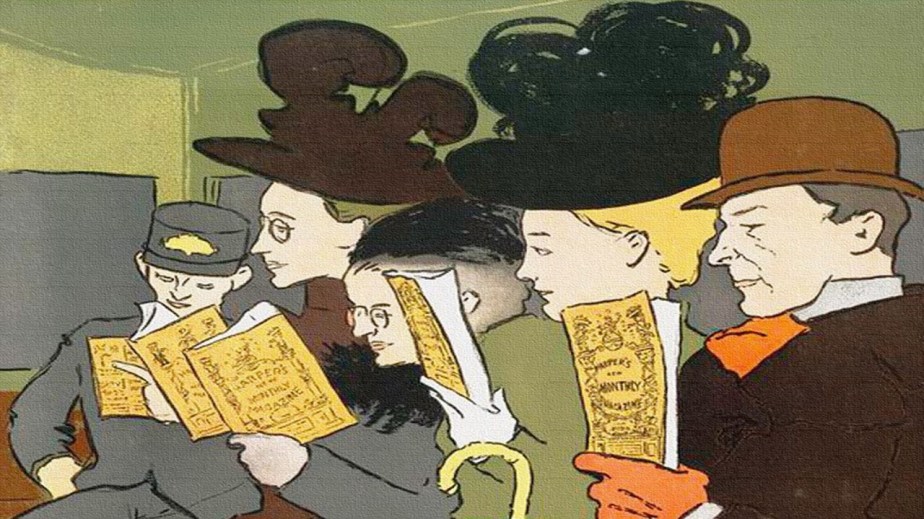
Header Image: People reading books (1895) by Edward Penfield.