I read an article today that compared a good teacher to an enzyme, which it described as “Nature’s go-to facilitator of change”. The article went on to explain:
“Enzymes don’t create change in and of themselves. Rather, enzymes lower the threshold activation energy required for a reaction to proceed. Lower activation energy = vastly increased rate of change.”
The reason I wanted to do a Masters in Fine Art (MFA) was to bring about a state of change in my art practice that I am unable to bring about on my own. Originally, I had thought I would go to London to do my MFA, but COVID, and the experience of doing online art courses it facilitated (in lieu of the ones I had previously been doing in London), opened me up the possibility and benefits of doing it online.
When I discovered that Central Saint Martins offer an MFA online, I was thrilled, and when I met the course leader, Jonathan Kearney, I was convinced it was the right course for me. It was clear from that first meeting that Jonathan is an exceptional teacher, an impression that was confirmed during my first one-to-one tutorial with him yesterday. Far from merely being an imparter of knowledge, Jonathan is that rare breed of teacher who is a catalyst for change and growth, able to bring forth the latent potential that resides within the student. Simply put, he is a super-charged enzyme!
Humans have been drawing for a very long time. The oldest evidence, etched on rock, of this most human of activities is estimated to be 40 to 50 thousand years for figurative drawing, and twice that for geometric drawing. Of course, long before we went to the trouble of drawing on rock, we were no doubt drawing on the ground and each other. Our ability to communicate using pictures and diagrams sets us apart from other animals and is the key to the progress we have made as a species. Drawing is at the centre of all human creativity, ingenuity, and endeavour.
I have been thinking a lot about drawing this past week, due to the 2 drawing classes I attended. One was a one-off intensive workshop, and the other an on-going weekly course. Interestingly, both were very similar, and could be best described as a modern, somewhat abstract approach to drawing. Personally, I like this approach, especially the results it produces. Unconstrained by the limits of depicting reality, it allows for freedom of expression, and a greater sense of emotionality. It is a beautiful and satisfying way to draw, and one I will continue to practice and incorporate into my paintings.
One of the requirements of the Central Saint Martins’ MFA programme, is selecting a research subject – i.e., an avenue of intellectual and artistic enquiry that will be the subject of one’s dissertation and body of work produced while on the course. Broadly, the topic I have chosen is water. I am particularly interested in humanity’s relationship with water, be it historical, religious, emotional, practical, political, or future implications etc. I have swung my net wide to begin with but, eventually, I will likely focus on a particular aspect.
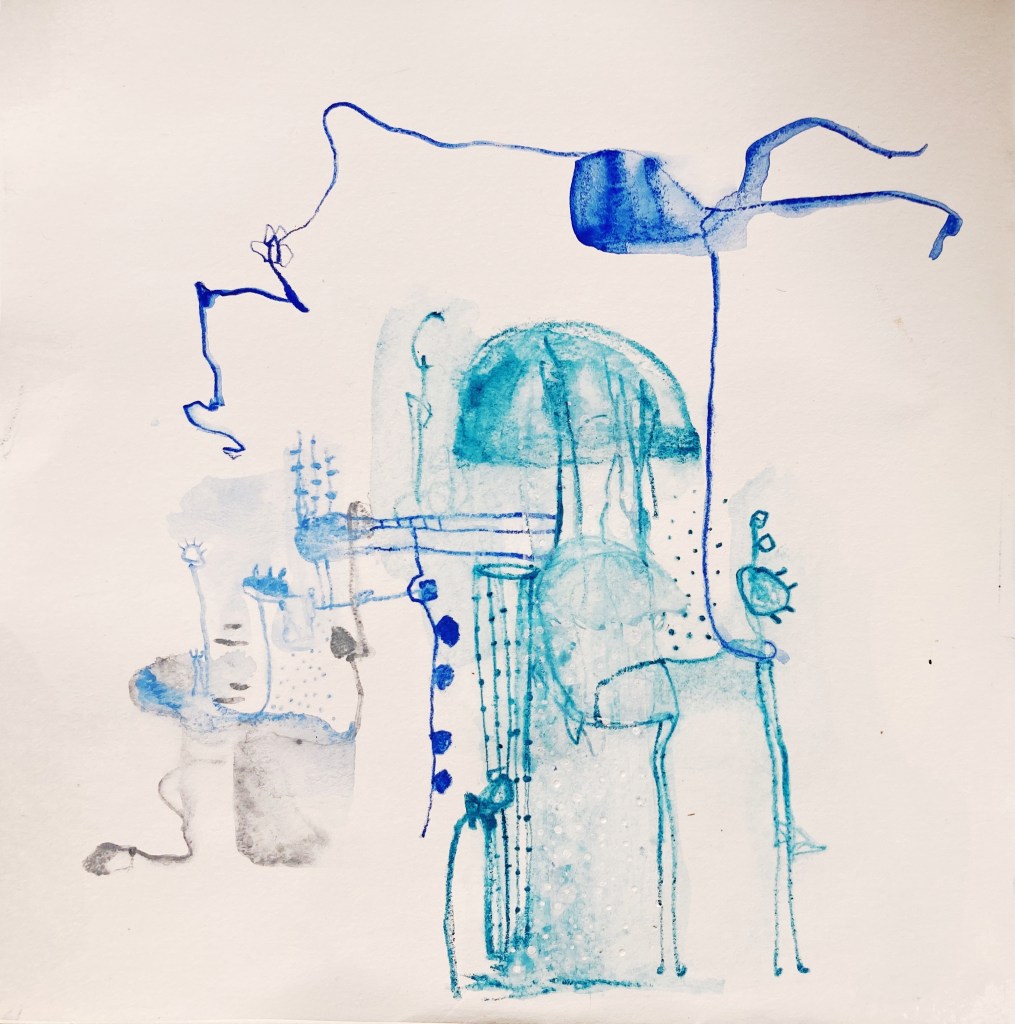
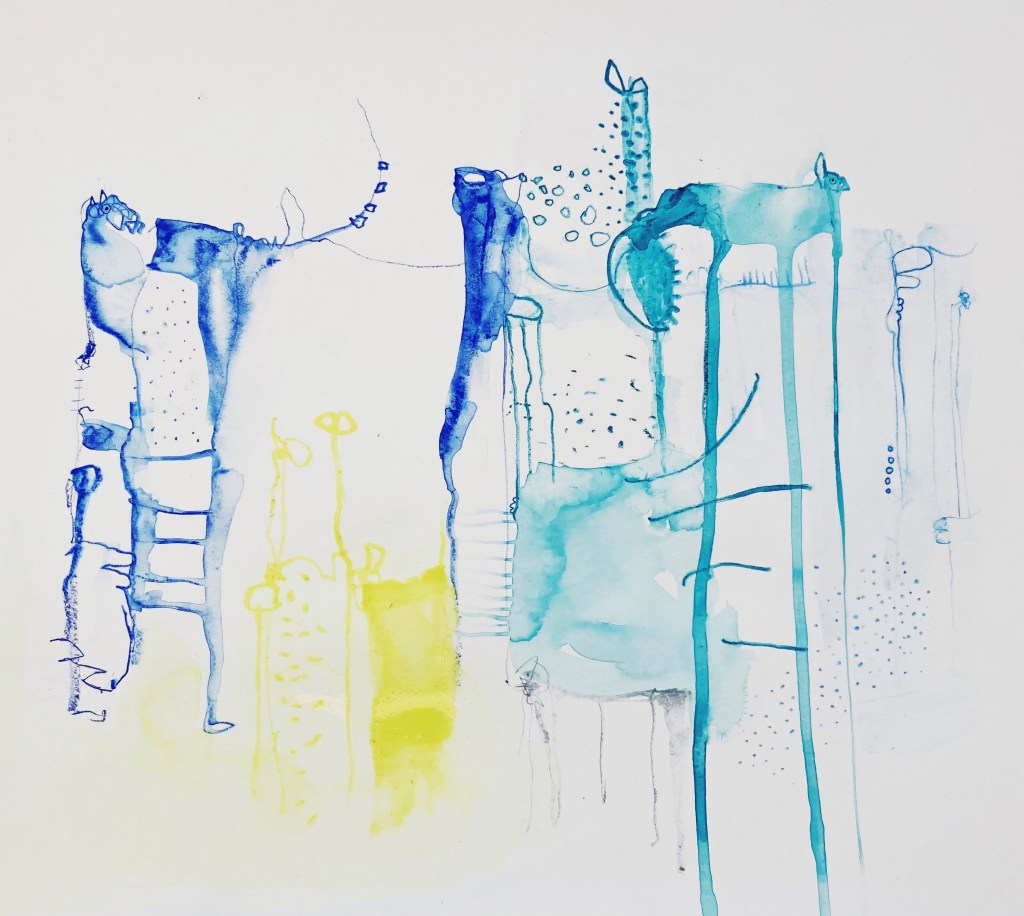
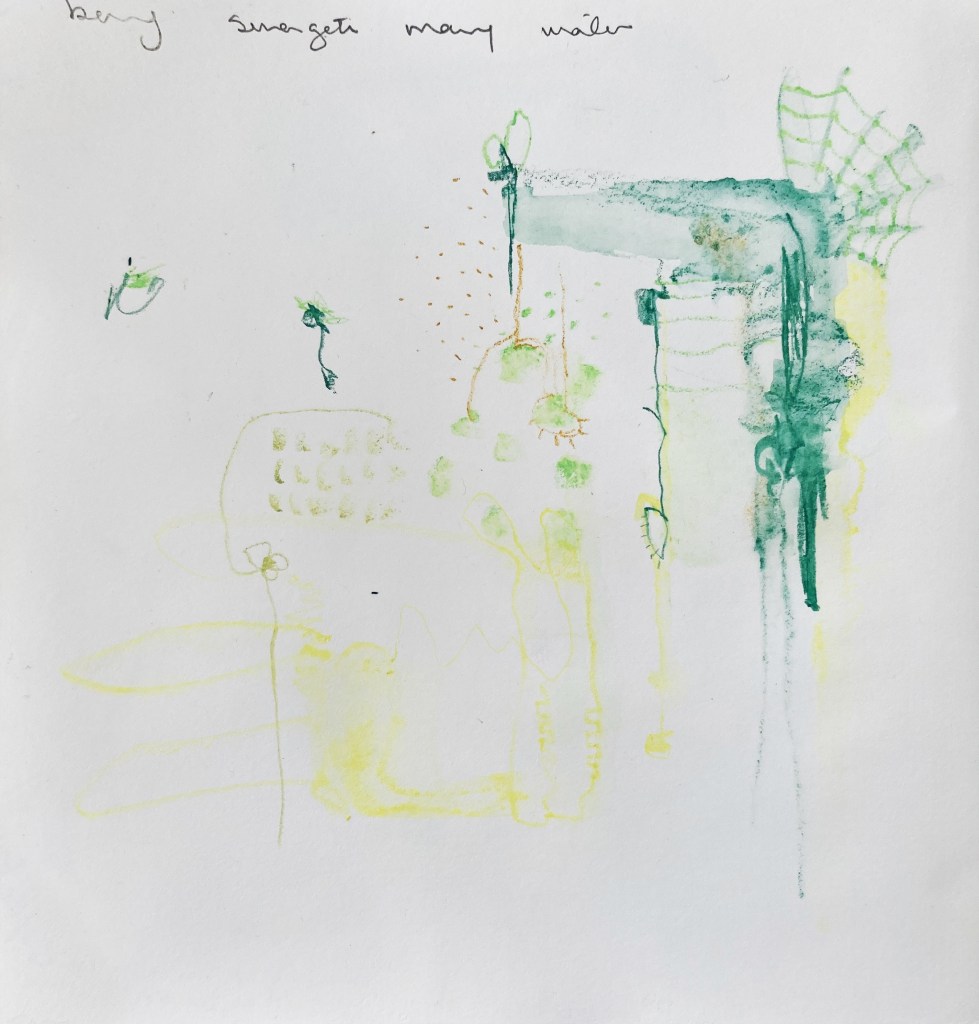
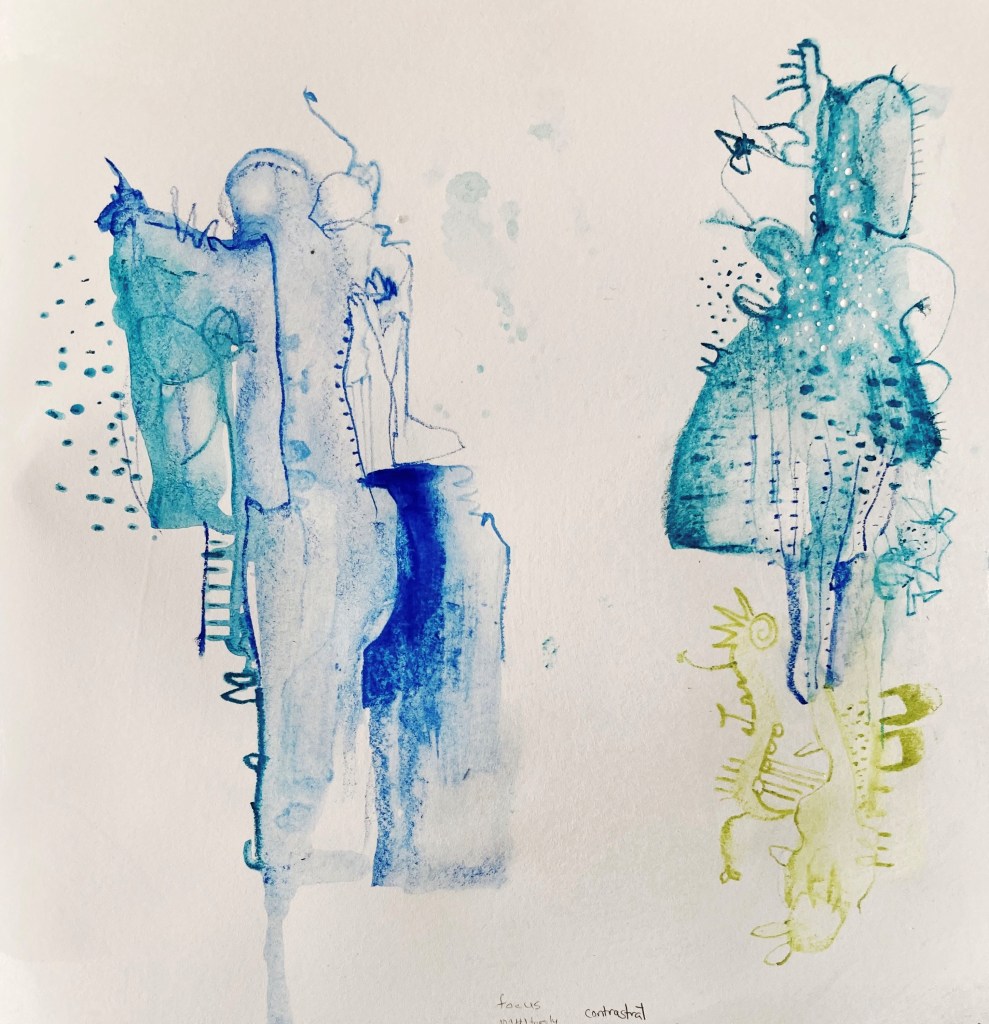
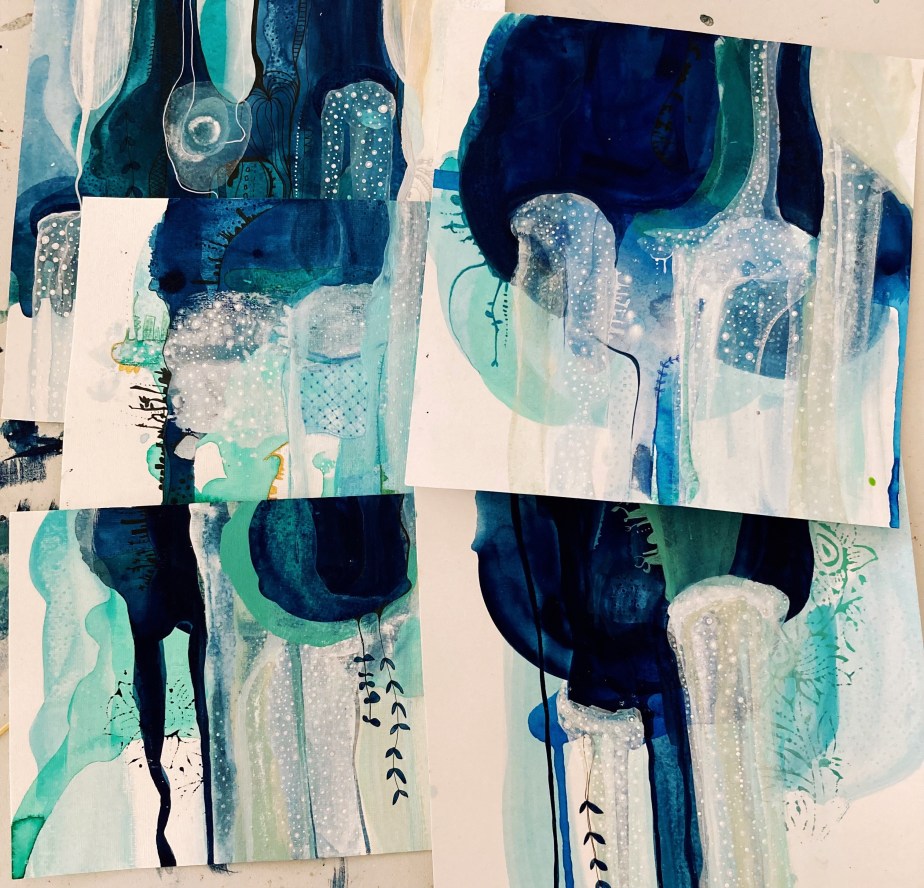
For this reason, my focus this week (as in the coming weeks) has been water related. Practically, I have been experimenting further with the rain painting technique I employed for last week’s assignment (as below).
Bodjal fliaghee (rain cloud) – gouache on paper
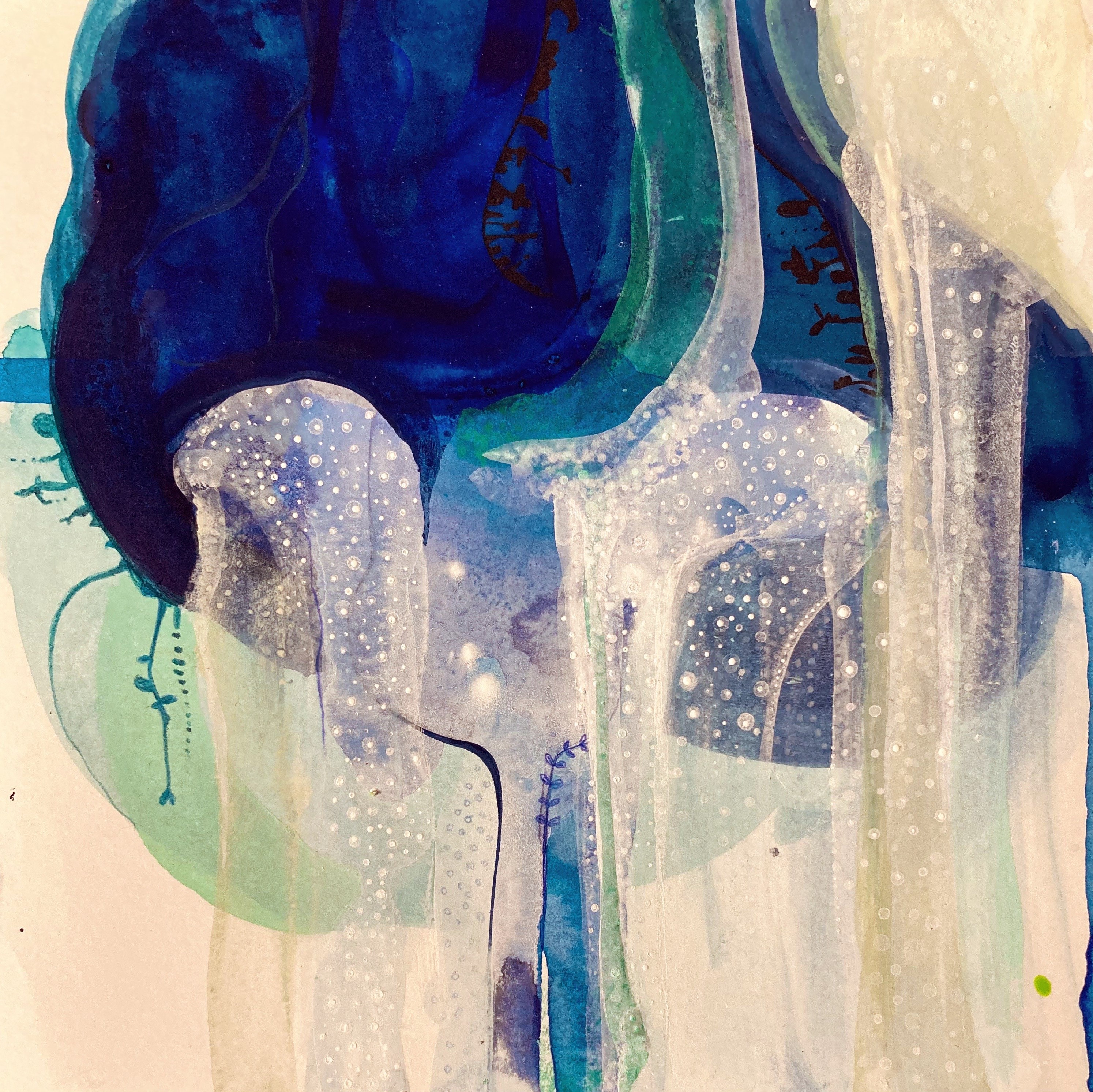
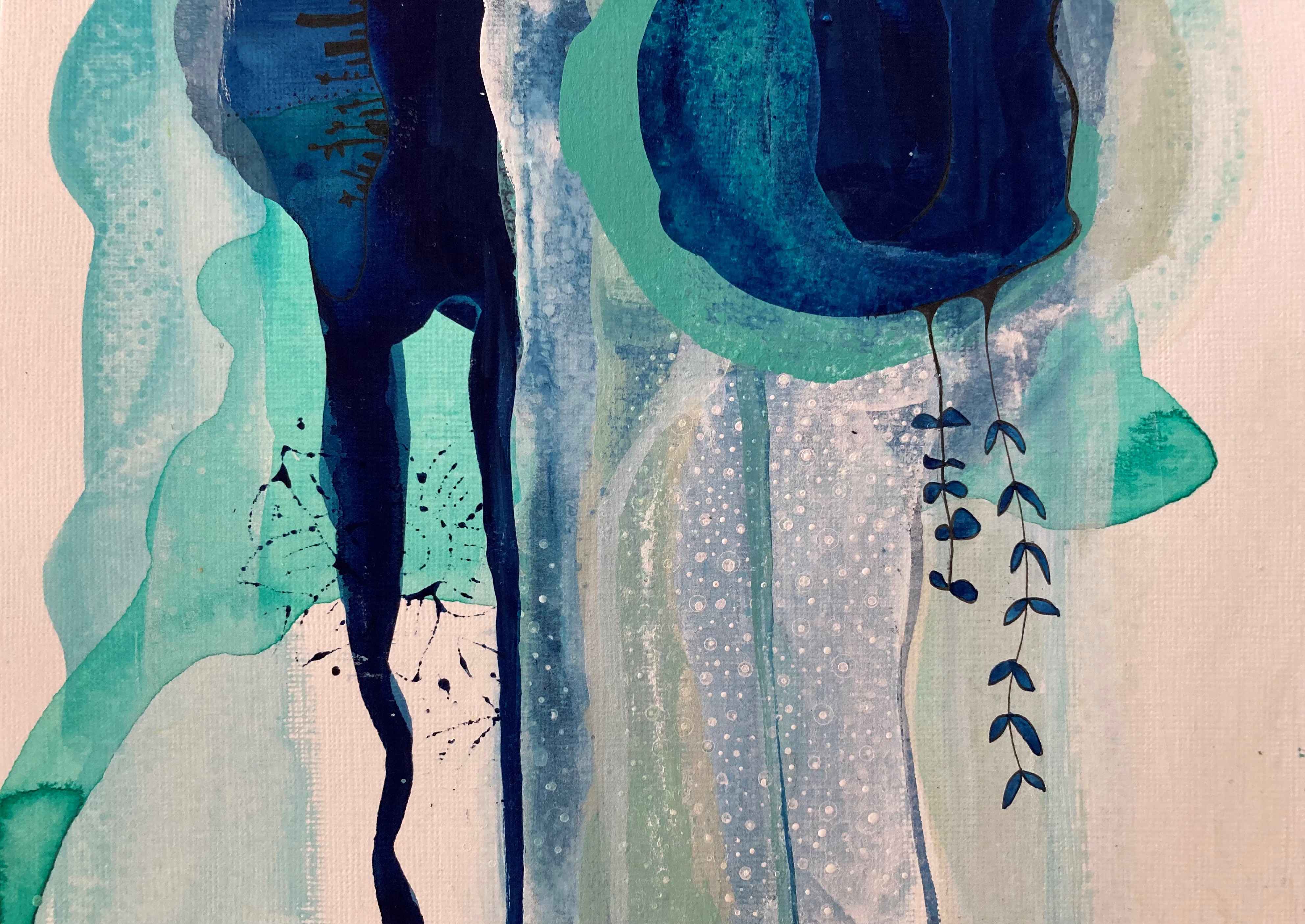
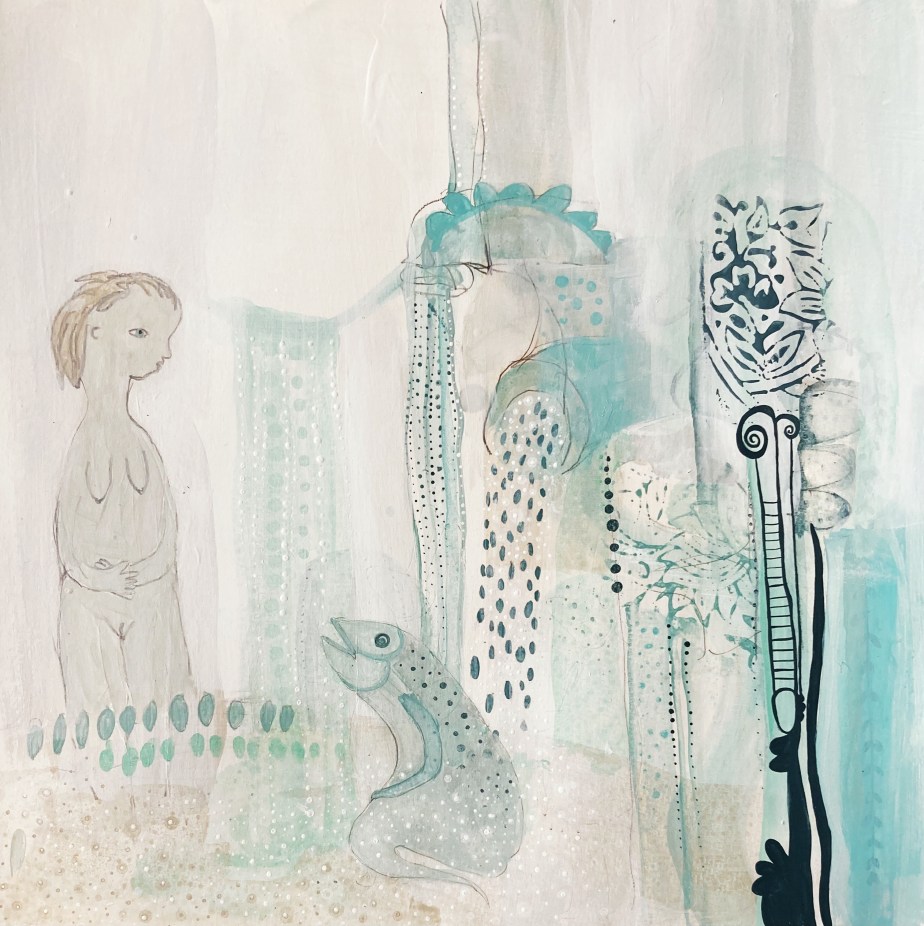
I found this week’s experiments very frustrating. I like some of the results but, overall, I prefer the original painting (above). I used the same techniques this week, all except leaving the paintings out in the rain. Instead, I painted on some old pour paintings (where I’d poured watery acrylic paint on paper). I am now wondering if leaving them in the rain is the missing ingredient. So, before abandoning this line of enquiry completely, I’ll continue with the experiments next week and include the rain aspect – fortuitously, it is due to rain every day! So, we’ll see what happens.
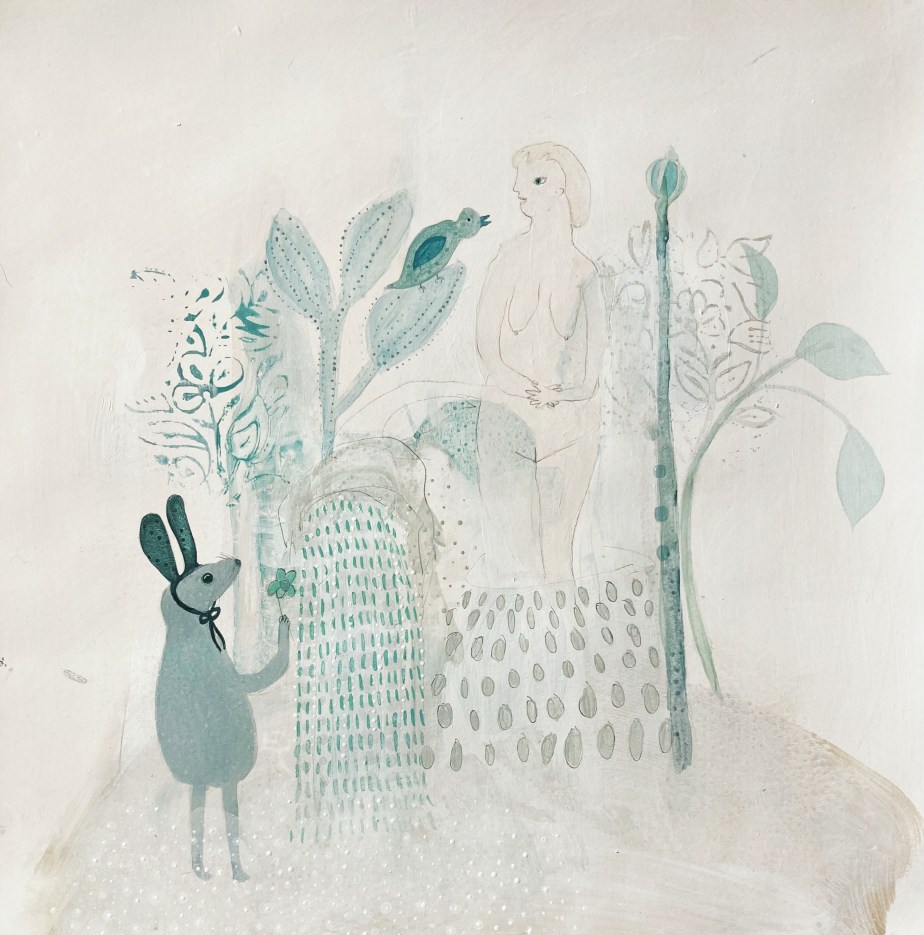
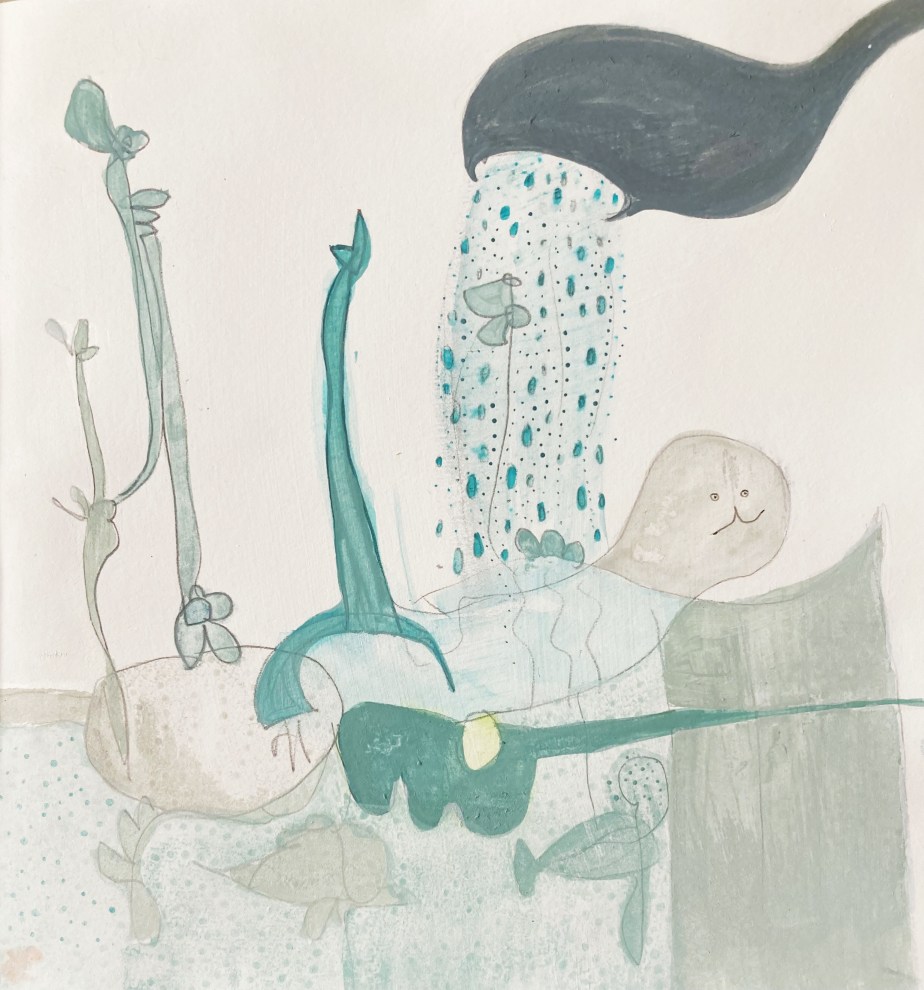
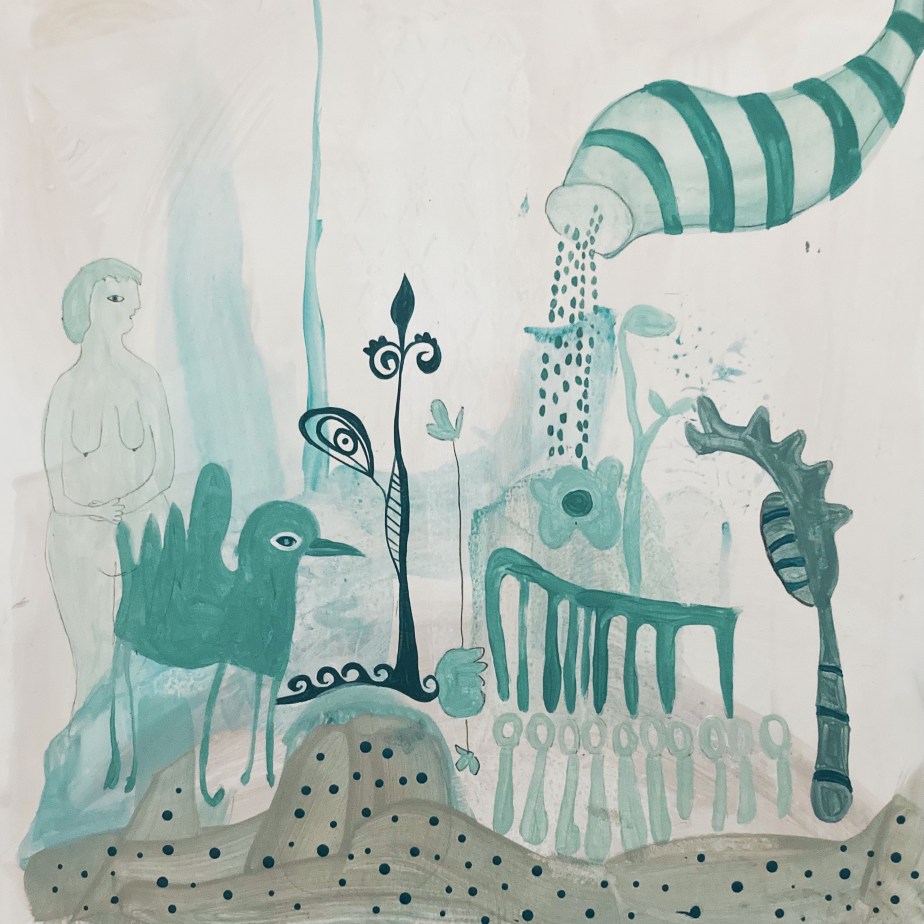
Here are this week’s offerings:
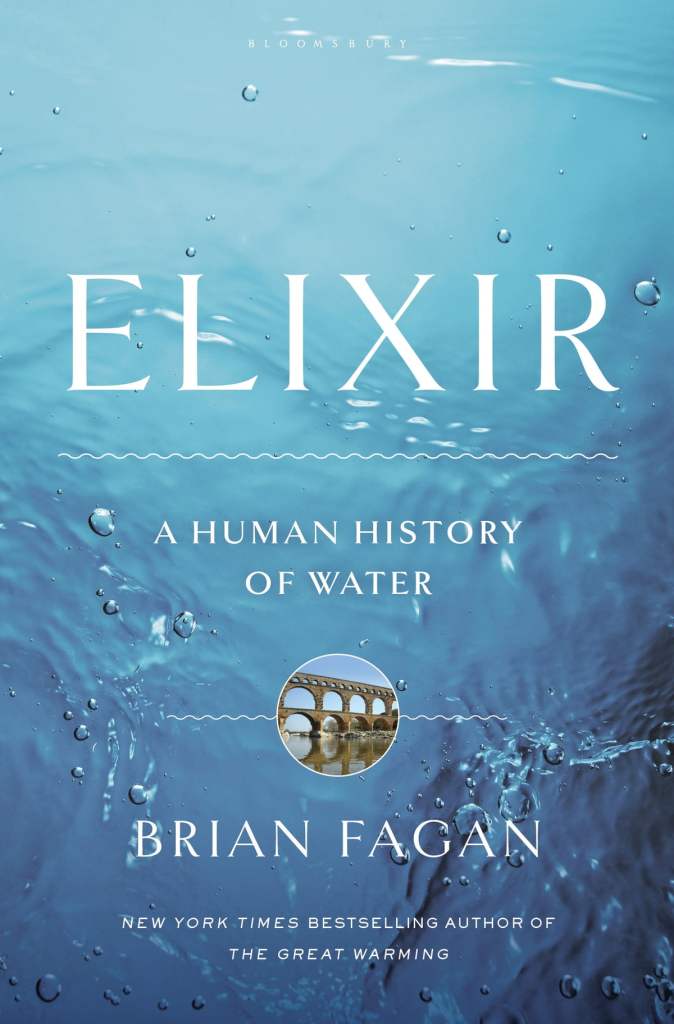
As far as research is concerned, I am reading a wonderful book about water at the moment – Elixir: a human history of waterby Brian Fagan. It is proving to be a brilliant starting point for my research, and I am finding it utterly fascinating. Here is a particular nugget I liked:
“History teaches us that the societies that last longest are those that treat water with respect, as an elixir of life, a gift from the gods. We seem to have forgotten this compelling lesson.”
The old adage “you don’t know what you’ve got till it’s gone”, is very true of a functional home plumbing system. Mine completely broke down last week…and boy have I missed it. It began with the shower water not draining, and quickly moved on to the toilet being blocked. Lucky my fella was on hand, with a plunger in his, which he quickly regretted, and pleaded with me not to enter the bathroom. I could tell by the strangled tone in his voice that he was witnessing something unholy. Naturally, I had to see the unholy thing for myself. I’ll be wearing wellies in the shower from now on.
We were both changed by the experience, but teamwork, two bottles of extra-strength draino, and a bumper pack of industrial cleaning wipes later, and we at least had the bathroom smelling like we might get away with murder. Of course that wasn’t the end, more like the crescendo at the beginning.
A cracked drainpipe was the culprit. A cracked drainpipe under the concrete driveway. Its “nearly fixed” status, more than a week later, has meant more unholiness, a huge pile of dirty clothes, and my already untameable hair being boofier than ever. On the bright side, it has also meant frequent trips to the local pub (when my fella’s been around to drive me, otherwise it’s an hour away on foot along unlit country roads), as well as the chance to ruminate on the wonders of a functional home plumbing system, and what it lends to our perception of ourselves. In all, the experience has left me wondering if distancing ourselves from our waste so efficiently is a key factor in what has long been our sense of superiority over other animals?
One of the most challenging aspects of being a painter, is staring at a blank canvas/sheet of paper and wondering what to paint. To overcome this anxiety-inducing challenge, many artists, myself included, use tried and tested methods, formulas and/or rituals when approaching the creation of new work.
This week we were given the following assignment:
do something with your art practice that might not work.
Take the risk
Post about it on your blog
Such a proposition would strike fear in the heart of any self-respecting perfectionist. To risk attempting something that “might not work” is the very thing the methods etc., mentioned above seek to avoid. Although I am one such perfectionist, I experimented with a couple of new methods of picture-making this week, and here are the results:
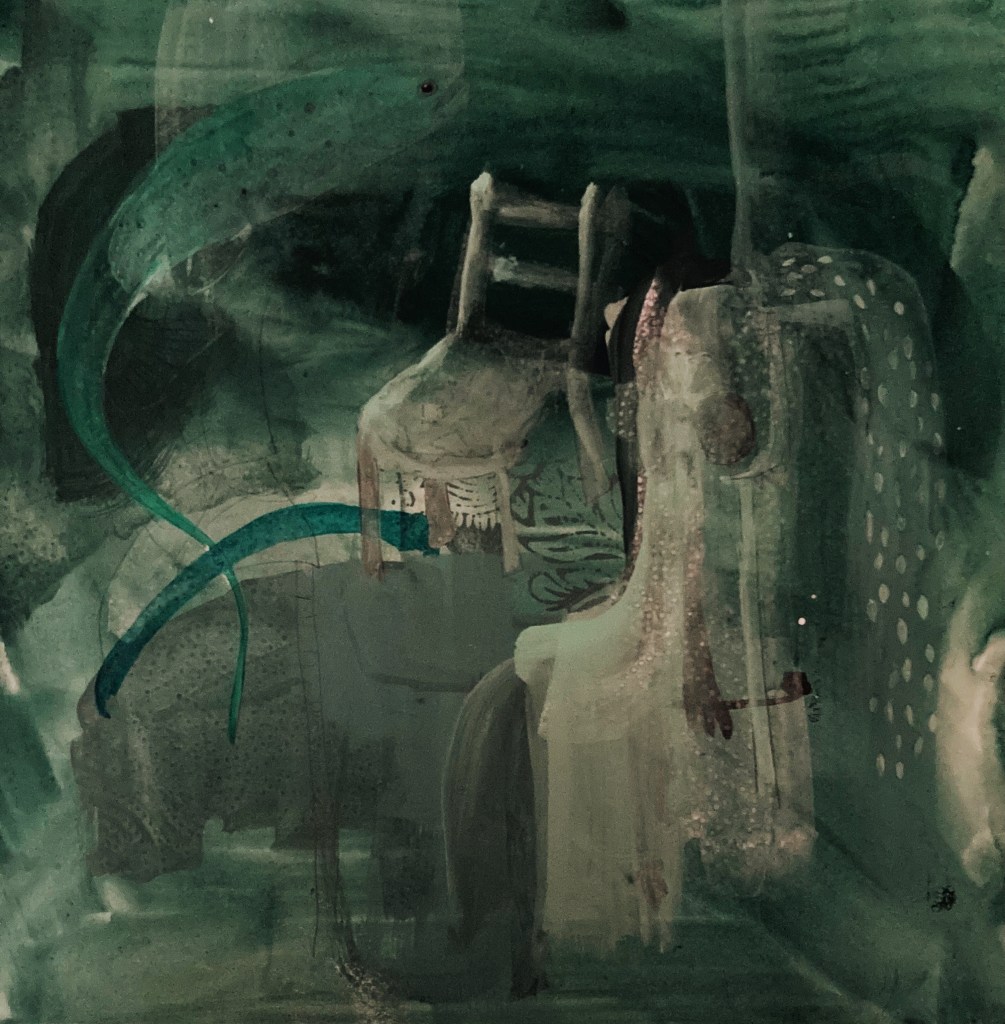
The first painting was the result of a set of coincidences I decided to follow in search of a subject to paint, which is not something I normally do.
I was watching a programme that had a section about lave net salmon fishing.
This got me thinking about the “Salmon of Knowledge” story of Irish mythology (of which I had made a little painting about earlier in the week)
Just as I was thinking about this, a lady called Hazel appeared in another section of the programme, which I thought was a lovely coincidence, as the Salmon in the myth gained all the knowledge in the world by eating hazelnuts.
I messaged my fella to tell him about this lovely coincidence, and he messaged back that he had a relative called Hazel who had been was a Hollywood movie star.
I decided to watch one of Hazel’s movies – The Raven (directed by Roger Corman in 1963) – a comedy gothic horror extravaganza.
My favourite bit was the flying chair near the end of the movie.
Hey presto, a painting of a flying chair (and a blimmin salmon that I couldn’t resist including, but now regret I did).
Hazel’s chair – acrylic on paper 2022
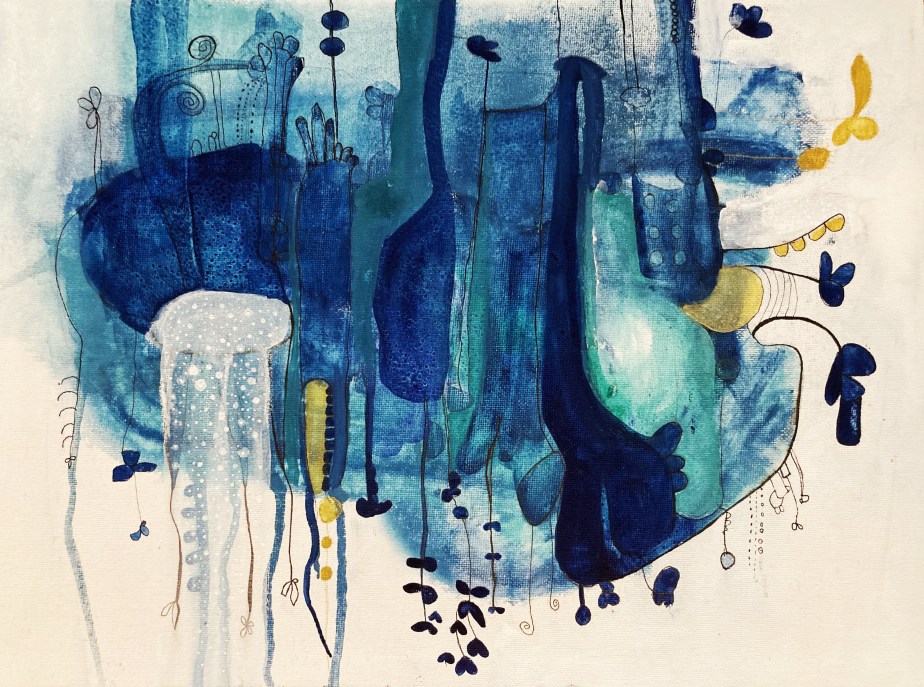
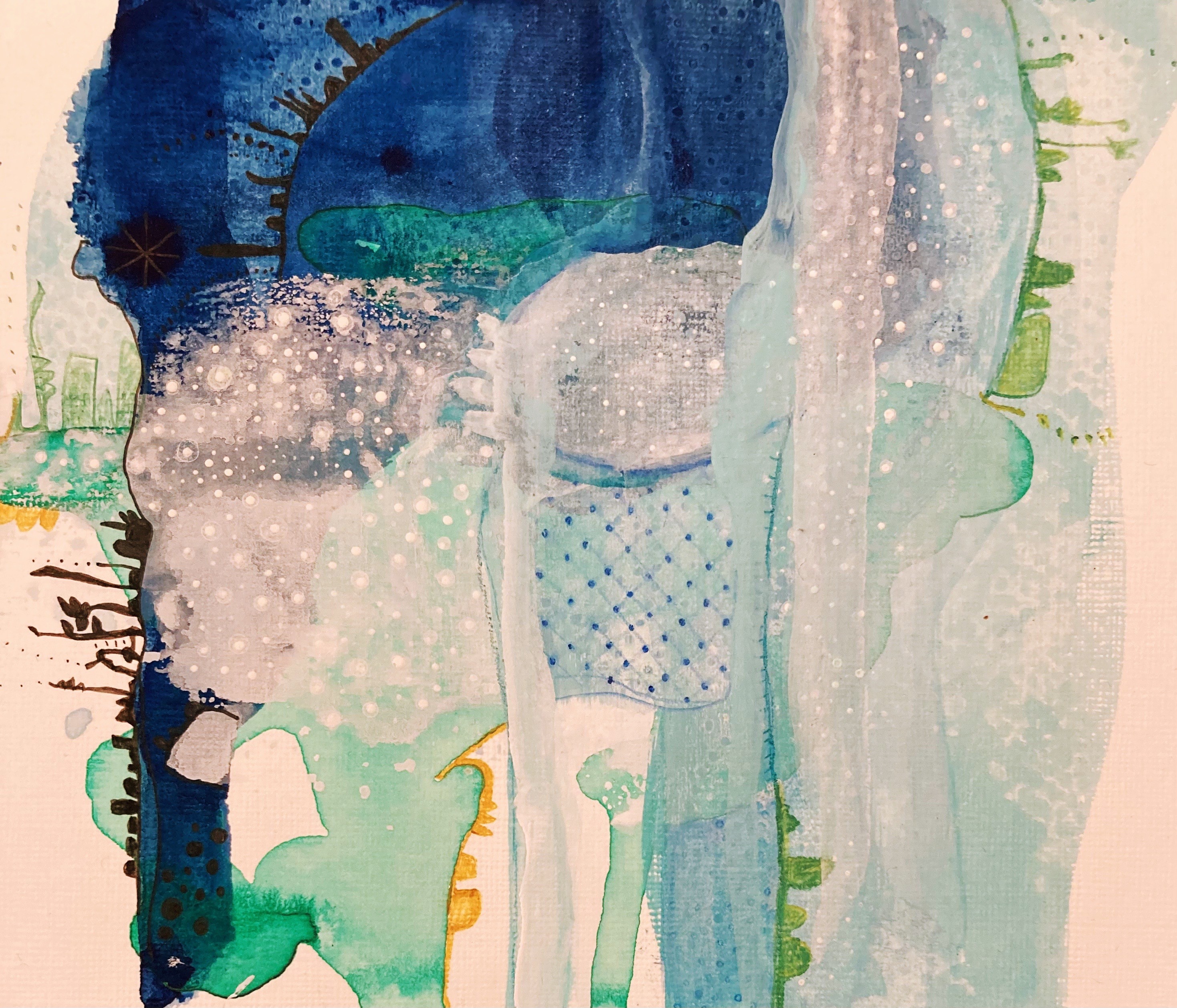
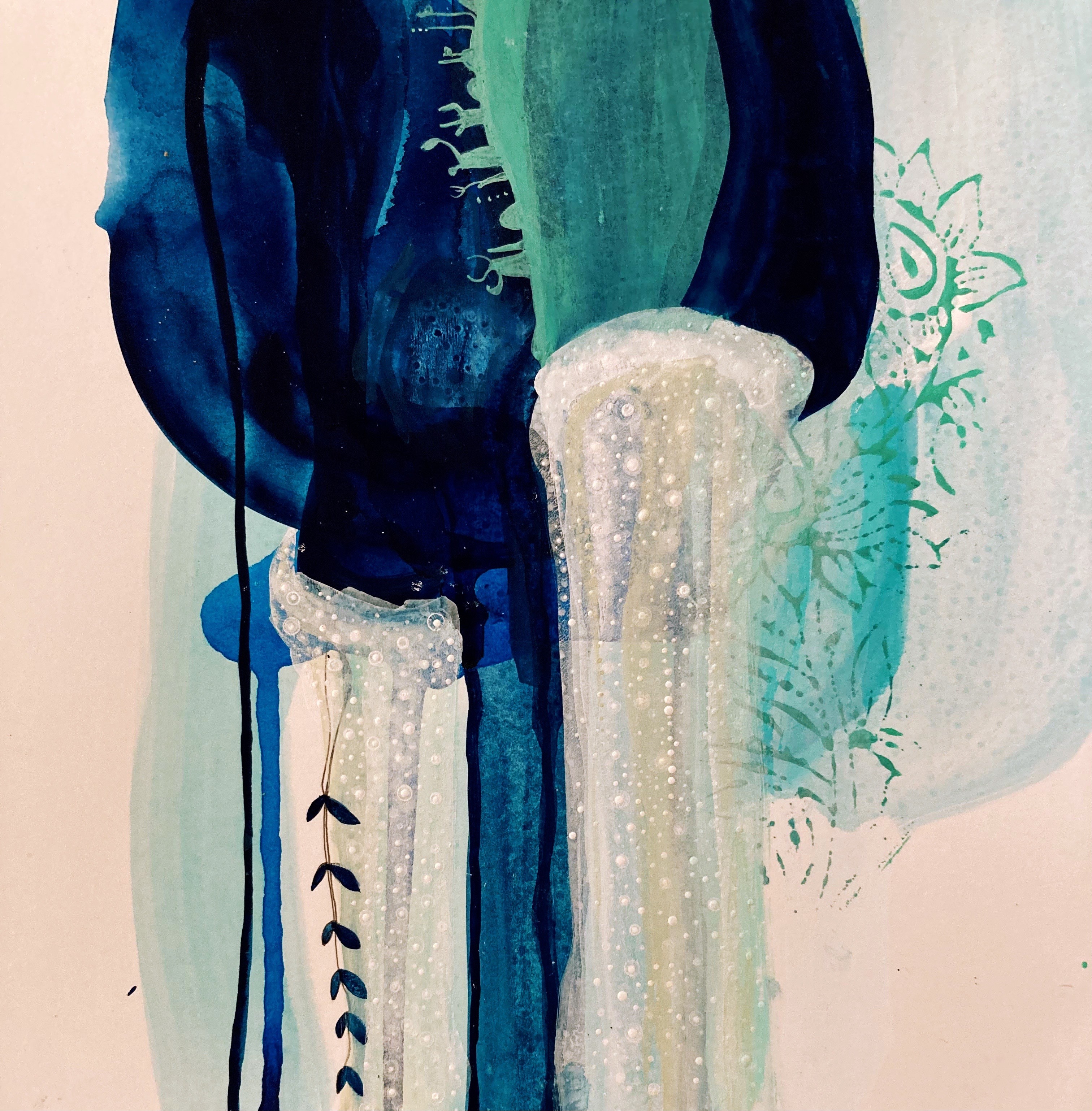
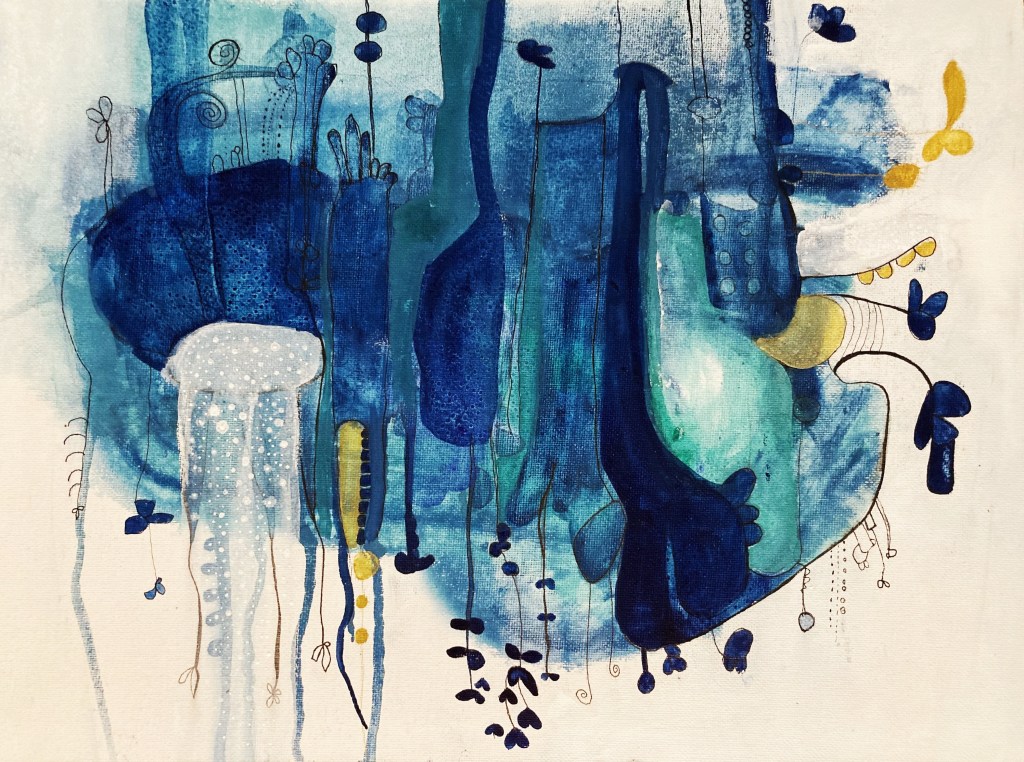
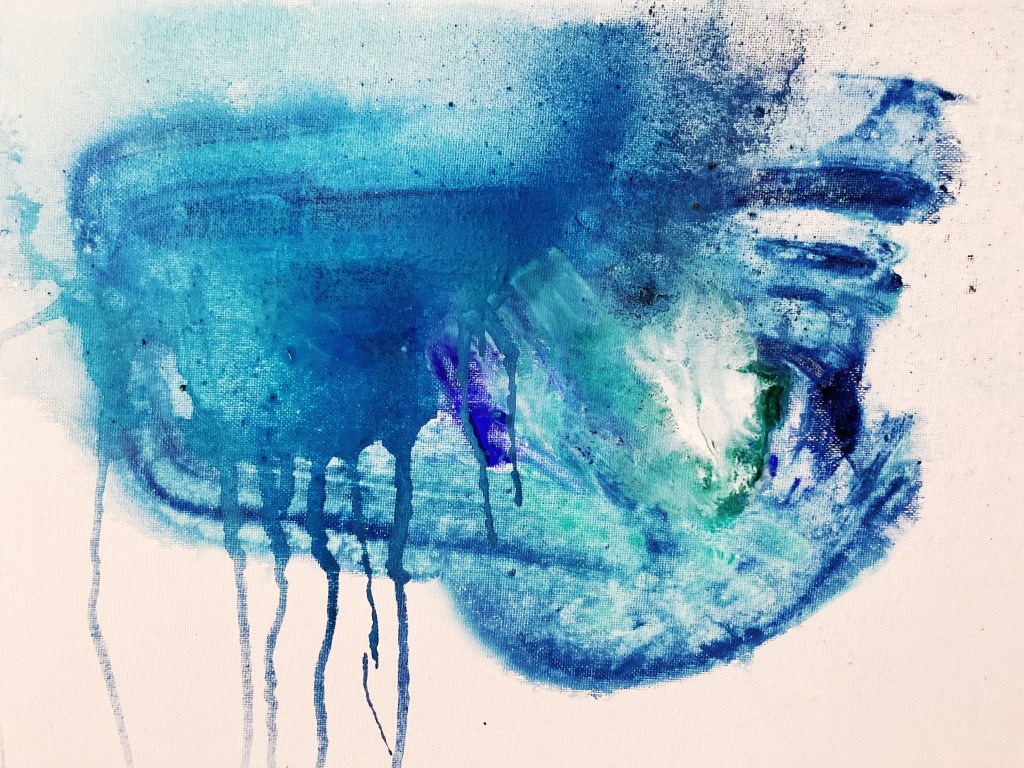
The second experiment I tried, had to do with the thing I am currently most interested in, both intellectually and aesthetically, and that is water. Water features a lot in my work, and I am open to exploring new ways to represent it. So, for this experiment, I decided to veer away from my usual mediums and techniques, and try something new. I also decided that I wanted the work to interact with a natural source of water in some way. So, I smeared gouache (opaque watercolour type paint with a matt finish) on a canvas board and put it out in the rain. Once it was retrieved and dried, I doodled on it a bit (ok, a lot), and here is the result (along with the various stages along the way).
Bodjal fliaghee (rain cloud) – gouache on canvas board
before rain after rain
I really enjoyed the assignment this week. It is always good to explore different techniques, that can then be integrated into work down the line. Personally, I don’t find such exploration easy to do when left to my own devices. So, to have a little push is helpful, as roaming out of one’s comfort zone is almost always worth the risk.
According to Irish mythology, the first thing to come into existence was the hazel tree – whose nuts contained all the knowledge in the world. The hazel tree stood on the edge of the well of wisdom, into which fell 9 hazelnuts. A speckled salmon who lived in the well ate the nuts, thereby gaining all the knowledge in the world. The story then goes on to describe how the hero Fionn mac Cumhaill, in turn, attained all the knowledge in the world. However, it is the imagery of the well, the salmon, and the hazel tree that I love the most, as well as the tantalising prospect of “all the knowledge in the world” being attainable.
I have been thinking about this beautiful Irish myth a lot recently, as I begin the journey of my masters. I doubt I will attain all the knowledge in the world, but I am stood at the edge of a well of wisdom, and its crisp, clear waters are mine for the drinking.
Three months ago I had a dream. I was standing near an open door next to the sea. As I stood there, a seal swam through the water towards me. At first I was apprehensive, as I wasn’t sure what was going to happen. But then, as the seal drew close, it reached out and touched my hand, in a way that can only be described as loving. It was a beautiful dream, and I woke up feeling happy.
Shortly after, my life was thrown into turmoil on multiple fronts and, as my inhumanly-patient fella will attest, I struggled to keep my sh*t together.
The storm has now passed, and where I find myself is nothing short of a miracle – living in my dream house, in my dream location, and with a seal for a friend. If that is not enough, I am also finally fulfilling a very long-held dream of doing my masters in fine art, part of which is keeping this progress journal. It is a privilege to share this journey with whoever happens to follow. I promise to keep the entries short and sweet and mostly about the art…and Fonzie too.
I have a new friend called Fonzie. Fonzie is a grey seal (actually, he is probably 3 grey seals) who lives in the sea in front of my house. I love hanging out with Fonzie and visit with him every day. When I say visit, I mean I stand on the beach looking at him through my binoculars, while he bobs up and down in the water ignoring me.
The Manx word for seal is “raun”, which I was delighted to discover is also the word for “sea dog”. It came as no surprise seals were long-ago thought of as seadogs in these parts, because that is exactly how I regard Fonzie. Despite this long-held impression, seals are not actually related to canines, rather, they are related to bears, racoons, and skunks etc.
My name is Rebecca and I am a seal bore.
Header Image: Fonzie (one from the sketch book) – w/c pencil and acrylic on paper 2022
The Celts had a concept known as anam cara (lit. soul friend). They believed that your soul radiates around you, so that when you come in contact with your anam cara, your respective souls flow into each other. Further, they believed all of nature possesses a soul, so it stands to reason that when you draw near the aspect of nature that you identify as your anam cara, your souls mingle together. With this interpretation in mind, my anam cara is most certainly the sea.
I recently moved into a house called Anam Cara, on a rugged piece of Manx coastline. To say I am happy to be living so close to my soul-mingling friend is an understatement. I am full. My favourite thing to do is to stand and look at the sea, to contemplate its majesty and the fact it birthed all living things.
Some days, standing on the bank, looking at the sea isn’t enough. Some days, I have to be closer to my friend, so our souls can mingle all the more. Today was one of those days.
Header Image: Hello Friend – acrylic on paper 2022



 bexODESSA