Down by the river-cide

While researching the history of the Thames river for my Interim Show work, I came across information about London’s lost rivers, one of which is the Fleet. Technically, the Fleet is not lost, rather it is covered over and now functions as a sewer that spews its effluent-rich waters into the Thames under Black Friars bridge. Fleet Street takes its name from the river (ironic that a conduit of muck should lend its name to a thoroughfare synonymous with the British Press), which was alternatively called the Holborn – derived from the word ‘burn’ meaning ‘river’ or ‘stream’, after which the area of Holborn is named. Once a vibrant London river, with its headwaters in Hampstead Heath, the Fleet is now a subterranean Acheron that London has choked with its waste. It can’t be a good thing to kill a river. I wonder if the Fleet will have its revenge?
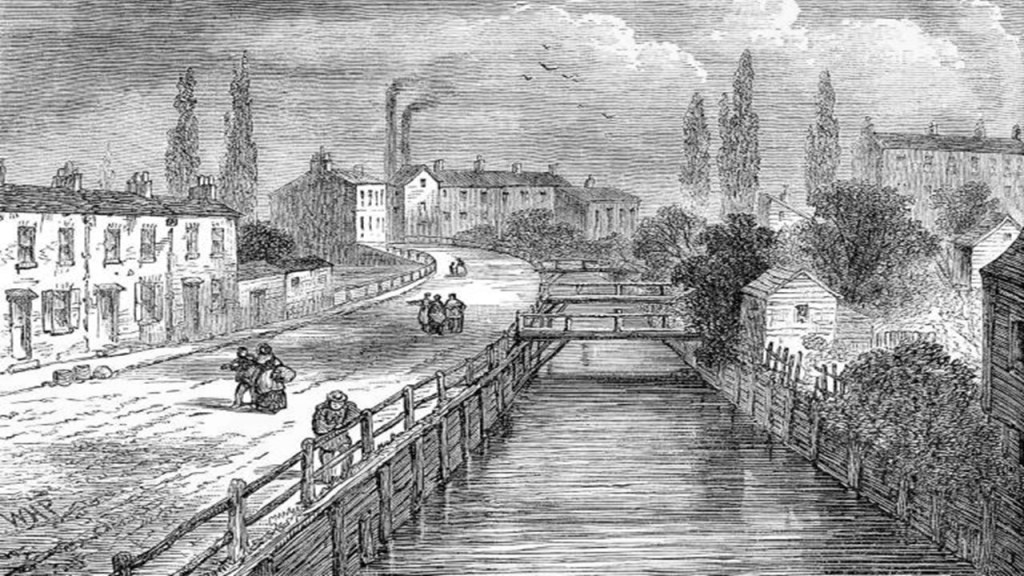

The Fleet river 1810
Covering the Fleet
The Fleet as a sewer

Along with the Fleet, I have been learning a lot about the Thames. The best source of information so far is a book by Peter Ackroyd, called “Thames – Sacred River”. It is beautifully written and utterly riveting 😉 .

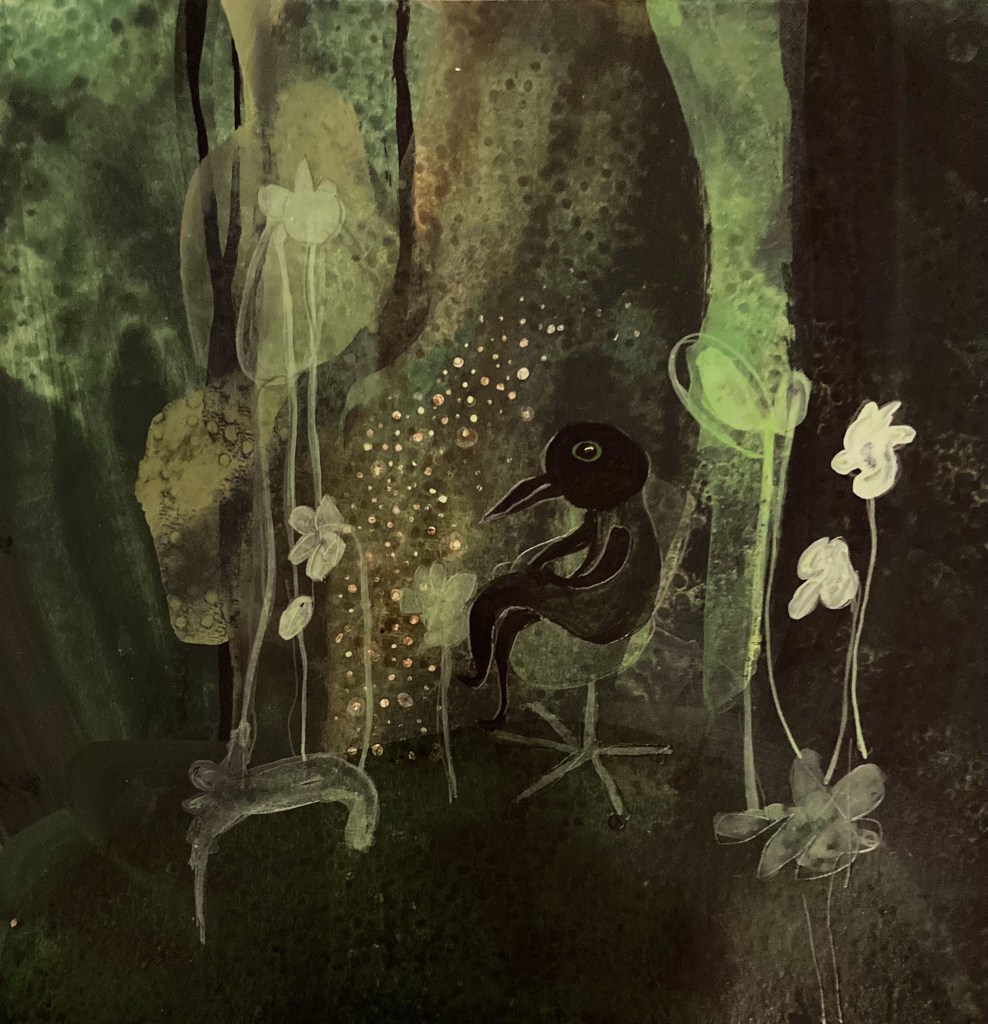
Never mind a single painting for the show, I think I could get a whole body of work out the subject, I am completely captivated. For now though, I will stick with the painting I have in mind. It is somewhat of a departure from the work I normally do, but it is a direction I have been wanting to go in for a while now (namely figurative). As such, it’s all a bit new and scary, but I guess that is why I chose to do an MFA, to be challenged and to develop my work. I am still not sure what style I would like to use for the figures in the painting, so I have just been experimenting this week. The header image is one such experiment.

When I go to London in March, I’d love to spend some time with the Thames, walking on its banks, crossing its bridges, perhaps even taking a boat ride on it. I also wouldn’t mind doing a spot of mudlarking – it would be great to find a little treasure lurking in its mud – though that might take some forethought, as a I believe you need a permit to do it.

Speaking of mudlarking, here is a video I made for The Wisdom Daily a while back, about London’s most famous mudlark.

“In the midst of chaos, there is also opportunity”

A family crisis descended this week, yet, despite the chaos, I managed to keep up with my coursework and painting practice, and even made some progress. Here is a rundown of what I have been up to this week:

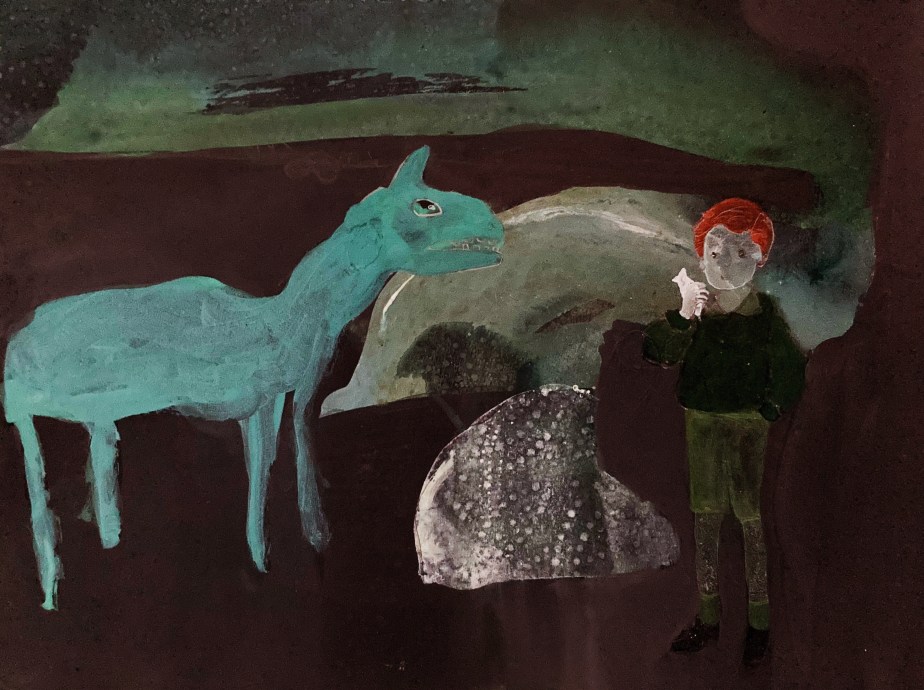
I have been loving the switch to a green pallet. It’s a very satisfying colour to paint with, and has plenty of scope for exploration. I am just painting small ‘acrylic on paper’ works, but hope to scale-up to large canvases once I have a handle on the pallet, and a better idea of the direction I want to go in. So far, I have found green to be a much better representative of “underwater/underground” than blue, and I like that it has a darker, more mysterious vibe. Here are a couple of successful paintings from this week:

As well as painting with green, I have been reading all about it in two wonderful colour books my sister bought me. I highly recommend both books; they really get the juices flowing regarding colour.

I have been settling into my new studio, and it now feels like home. It functions well for both of the painting projects I have on-the-go at the moment. One being the experimental underground/water paintings, as mentioned above, and the other, one of my big oil paintings (working title “Ann”) that I will go into more detail about at a later stage. Both require different things from a studio space, and I am now able to move between the two with ease.

I had book club (not the naughty one) again this week. This time we had a Ted Chiang reading “The Evolution of Human Science“. To be honest, I found it a bit confusing. It was written in the form of a scholarly, scientific article, and I wasn’t sure if it was fiction or not (which I’m guessing was the author’s aim), and which I was pleased to discover was, because it was about meta-humans superseding humans, and making the latter irrelevant. I also discovered that the reading group I have joined is a “post-humanist” one. I am not sure that I am a post-humanist, mostly because I don’t understand what post-humanism is. But, the other people in the group are clever and interesting, so I think I’ll keep going.

According to the Oxford Research Encyclopaedia:

Posthumanism is a philosophical perspective of how change is enacted in the world. As a conceptualization and historicization of both agency and the “human,” it is different from those conceived through humanism. Whereas a humanist perspective frequently assumes the human is autonomous, conscious, intentional, and exceptional in acts of change, a posthumanist perspective assumes agency is distributed through dynamic forces of which the human participates but does not completely intend or control.

Naturally, I am still none the wiser.

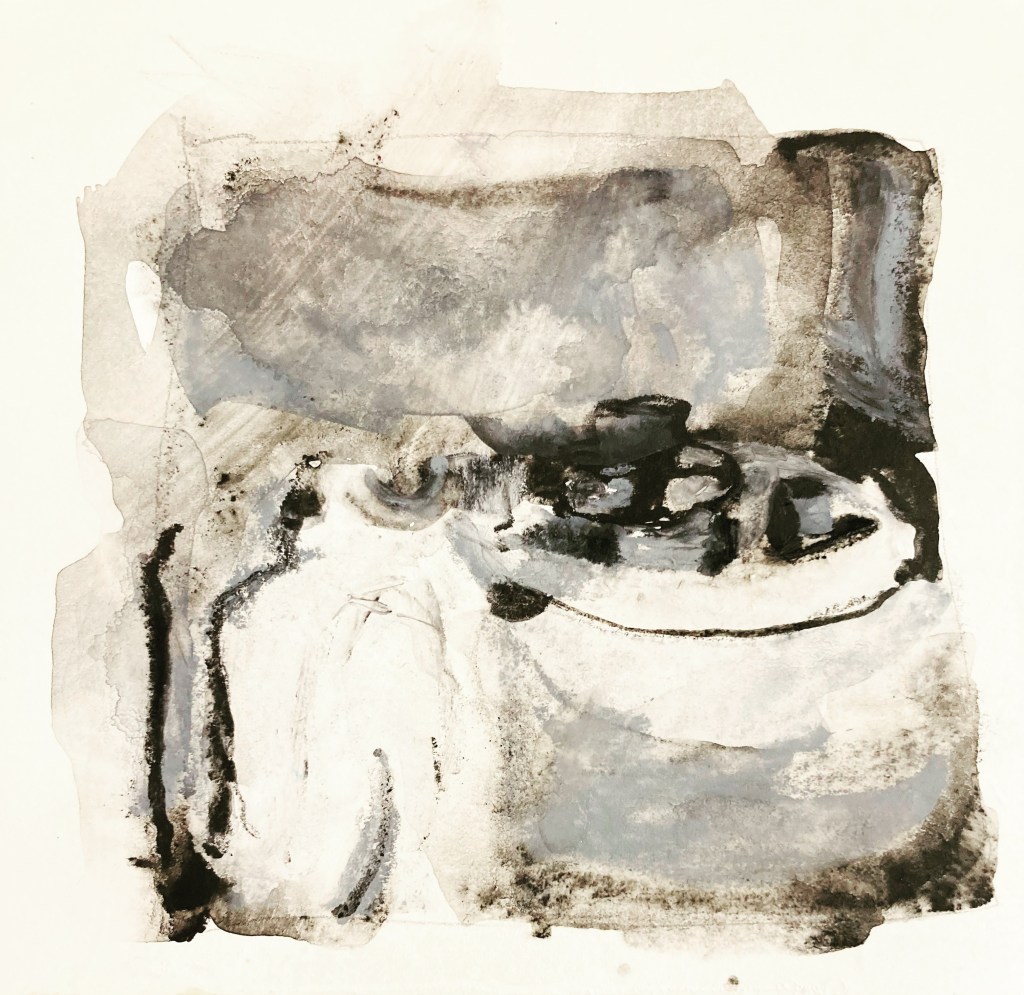
My drawing class this week was cancelled, I’m guessing due to the teacher strikes. However, here is something I drew in last week’s class on light and shade.

Despite how stressful the last week has been, 3 things have brought me great solace:

  1. Painting (naturally)
  2. My amazing, kind-hearted, supportive, patient, generous, capable (an undervalued but bloody fantastic quality), cute as a baby animal, and extremely funny boyfriend;
  3. Seeing Fonzie.

Seriously, watch this video and just see if all your troubles don’t melt away:

Wait for it..

Title quote: Sun Tzu

Not quite as much fun as The Naughty Book Club

I once belonged to a reading group called The Naughty Book Club, which consisted of drinking mojitos and reading such literary classics as Goldilocks and the Three Barons. I thoroughly enjoyed the experience, so, when the opportunity to join a UAL reading group arose, I jumped at the chance.

The first instalment was last week, and despite the absence of liquor and X-rated reading material, I really enjoyed it. It was a mixed group of students and alum from the various UAL art schools, including my own, Central Saint Martins. The reading in question was a chapter from Robin Wall Kimmerer’s celebrated book Braiding Sweetgrass.

The chapter was titled Learning the Grammar of Animacy. A simple definition of animacy is the state of being alive and animate. When animacy is understood in the context of language, it gets more complicated, as Wikipedia describes:

Animacy is a grammatical and semantic feature, existing in some languages, expressing how sentient or alive the referent of a noun is.

It was this latter definition of animacy that the reading in question was concerned with. The main thrust of the chapter concerned what the author saw as the arrogance and failure of English to describe nature as sentient, and the consequent disconnection from animals/nature. Rather, English differentiates between humans (sentient) and animals and nature (non-sentient) primarily through the use of pronouns – such as she/he and it respectively. Not all languages do this, including the Anishinaabe language she has ancestral connections to, and which she talks about learning in the chapter.

I liked the author’s lyrical way of writing and found the points she made very thought provoking. Although I don’t share her antagonism towards English, I can relate to her struggle with learning her ancestral language. I am currently learning one of mine, Manx, which is part of the Gaelic language family. As anyone who has tried to learn Irish or Scottish can attest, Gaelic languages are not for the faint hearted! I could also relate to the sadness she expressed regarding the deliberate measures taken to destroy her cherished language and its assured death if future generations do not take up the mantel and learn it.

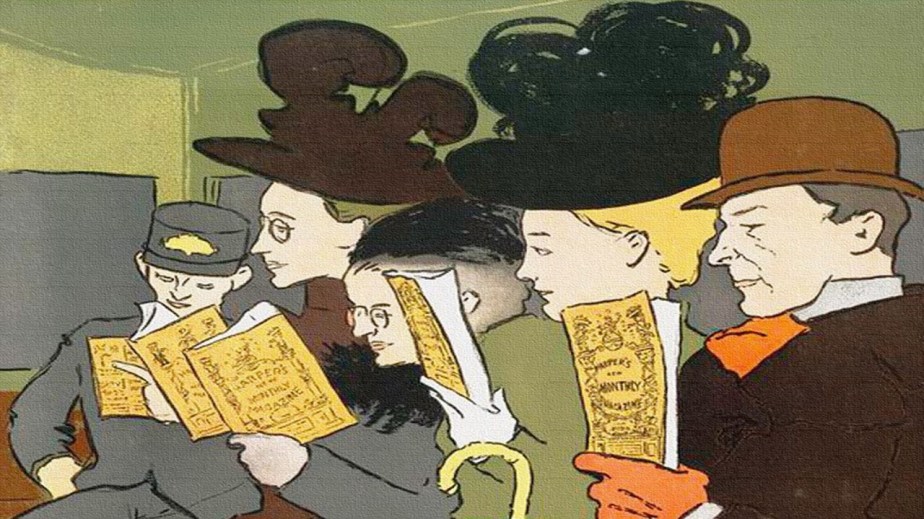
Header Image: People reading books (1895) by Edward Penfield.