When applying for this course, I was required to write an artist’s statement, which I began with the following paragraph:
I have a multi-discipline art practice that includes painting, collage, and film. Although the work I produce within these different disciplines inform each other in terms of style and/or content, their respective outcomes are, to date, relatively separate. One of my aims for the course, would be to produce a more coherent body of work that draws on each of these disciplines, with the hope of creating a more synergistic outcome.
I assumed that such coherence and synergy would emerge while on the course through the process of deliberate and systematic making, and to a great degree it has. However, the experience of the last 2 years has enabled me to truly see my work, which to my surprise and delight has revealed the coherence and synergy already inherent in it. This was particularly made clear to me when making the 5 minute process video for the course.
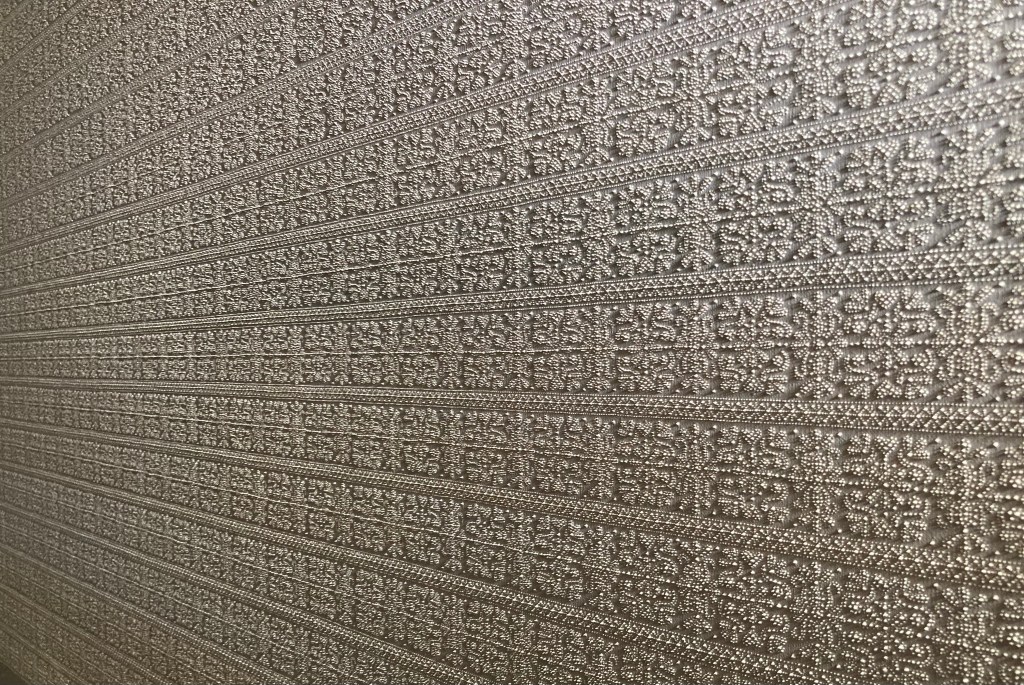
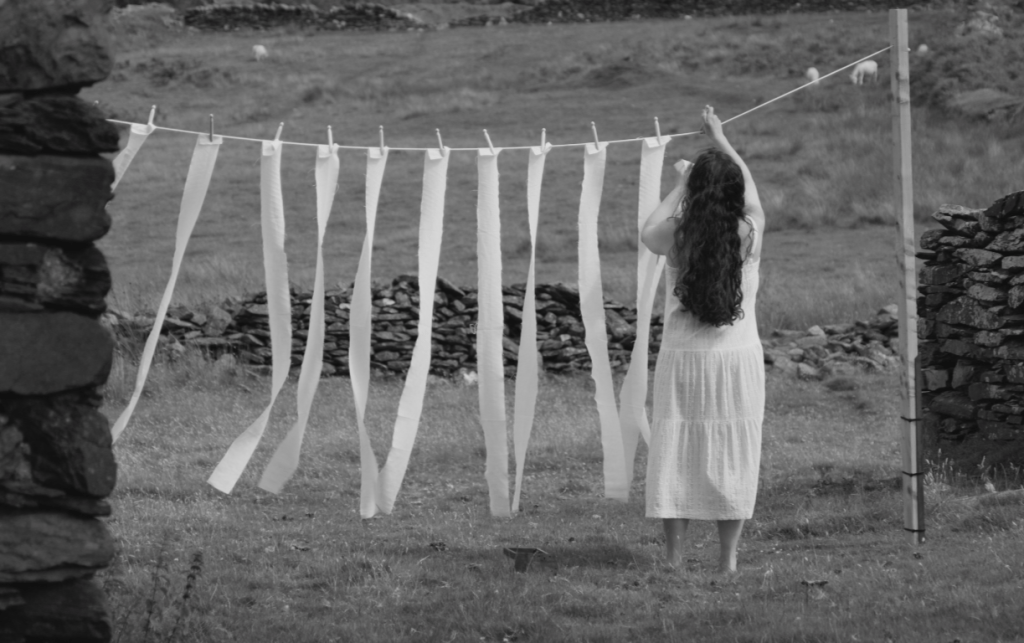
When I look at the painting Anileis in relation to the film Nullipara (which I made in preparation for the course, and which depicts a scared well fertility ritual), I see not only the aesthetic similarities, but also how Nullipara acts as a harbinger of the process I was about to undertake, that is, releasing the painting style of Anileis, in order to give birth to something new.
SOMETHING NEW
My practiced-based research has revolved around the idea of confluence (the meeting and running together of two or more things). I explored various confluences with in my work, the most important being the challenge to find the confluence between my two, seemingly divergent, painting styles.
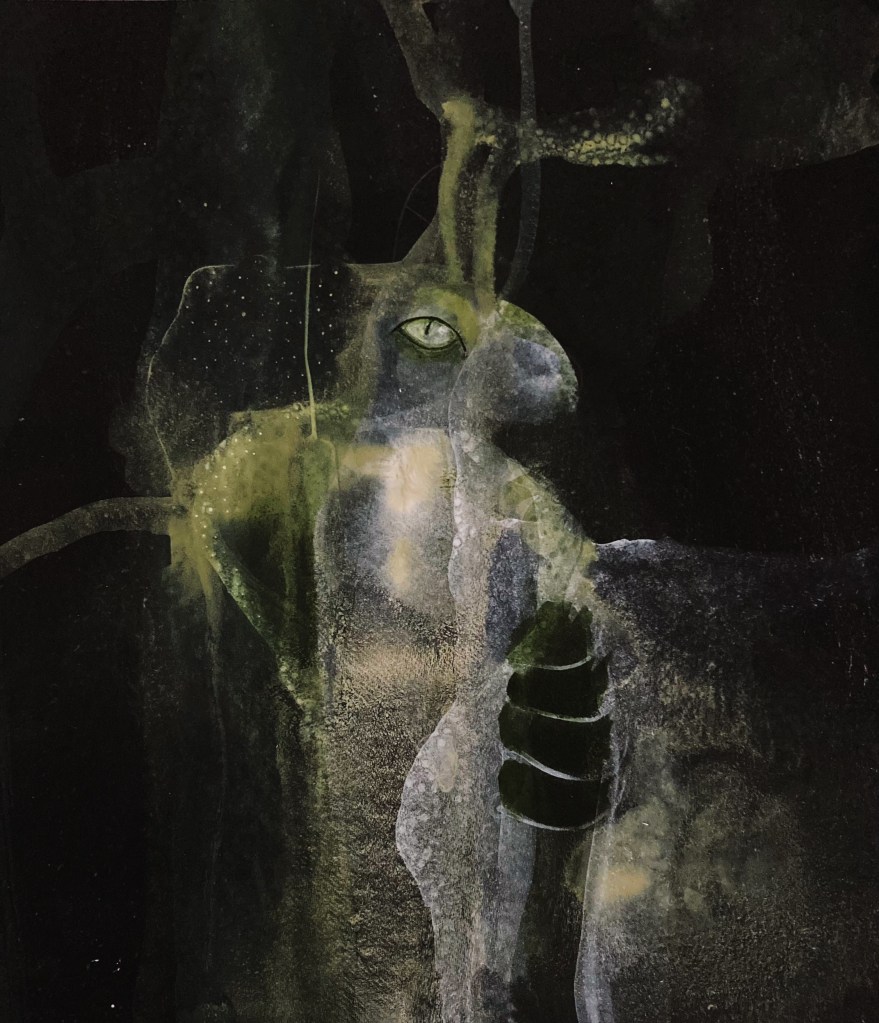
I had a number of artistic breakthroughs during this process, but none more important than the following painting:

This painting visually encapsulates the moment my two painting styles finally began to flow together in a comprehensive way. Examples of these two styles are Anileis and Awineyr (below). While I love these paintings individually, and can see they are strong examples of their respective styles, they both have a staticness about them, whereas, when bought together, as in the painting above, a flow and dynamism is present. That is not to say I think the above painting is better than the two below (which are the results of years of hard work), but that the above style of painting (with similar hard work) has the potential to be better/greater than the sum of its parts.
FREEDOM TO FAIL
One of the greatest gifts this course gave me was the freedom to fail. I had big plans for my research project, which was to be based on my research paper.

I had decided to produce a series of paintings based on the Ars Moriendi, entitled The Art of Drowning. The idea was sound and utterly engaging, and I certainly gave my attempt at the first painting my all. But, alas, I failed miserably. It was a painful and disorientating experience, but my visual language in my new way of painting simply wasn’t developed enough to take on such a big task.
FINDING THE CONFLUENCE
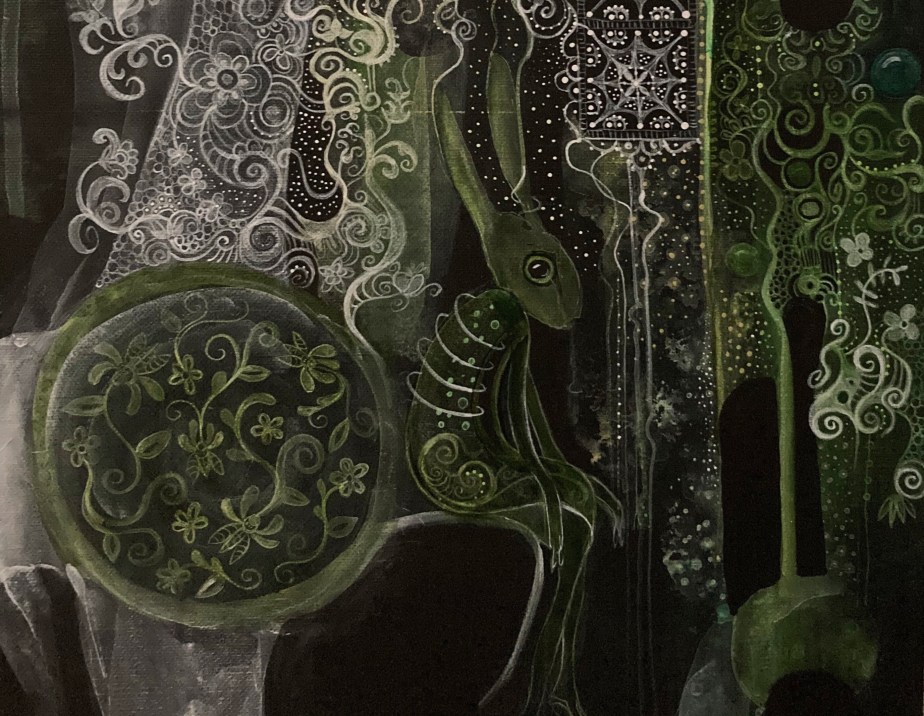
Once I made the decision to abandon the Art of Drowning project (for now), I was free to focus on developing my visual language and finding the confluence between my two painting styles without the pressure of also trying to depict complex ideas and struggle with a huge canvas.

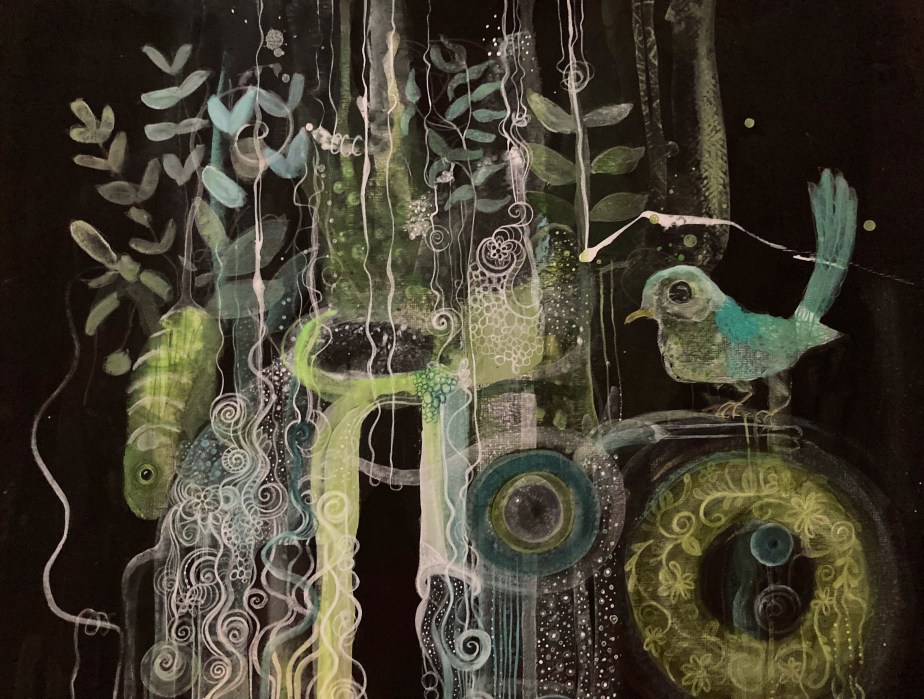
VISUAL LANGUAGE
Developing my visual language instead of forging ahead with the project was one of the best decisions I made on the course. I am enjoying working on the well painting for the grad exhibition, and am paying close attention to what works and what doesn’t. The time spent developing this kind of painting will hopefully prove invaluable when I eventually do come to work on the project.
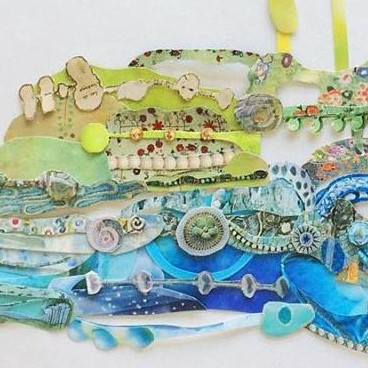
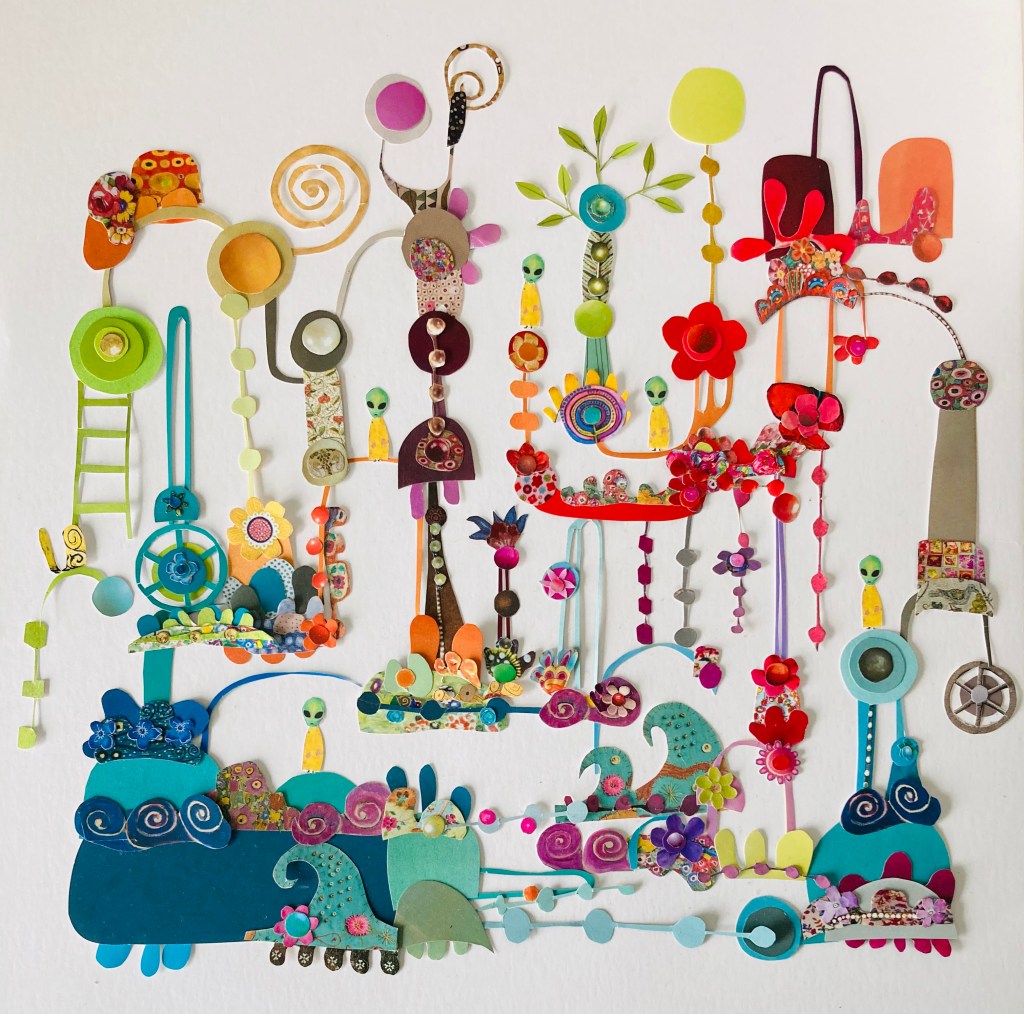
As the well painting has developed, I have been delightfully surprised how much my previous collage work is reflected in the compositional style. It seems I have a certain way I like to put things together and a fondness for particular motifs, indeed, I think it is fair to say, I have a visual language.
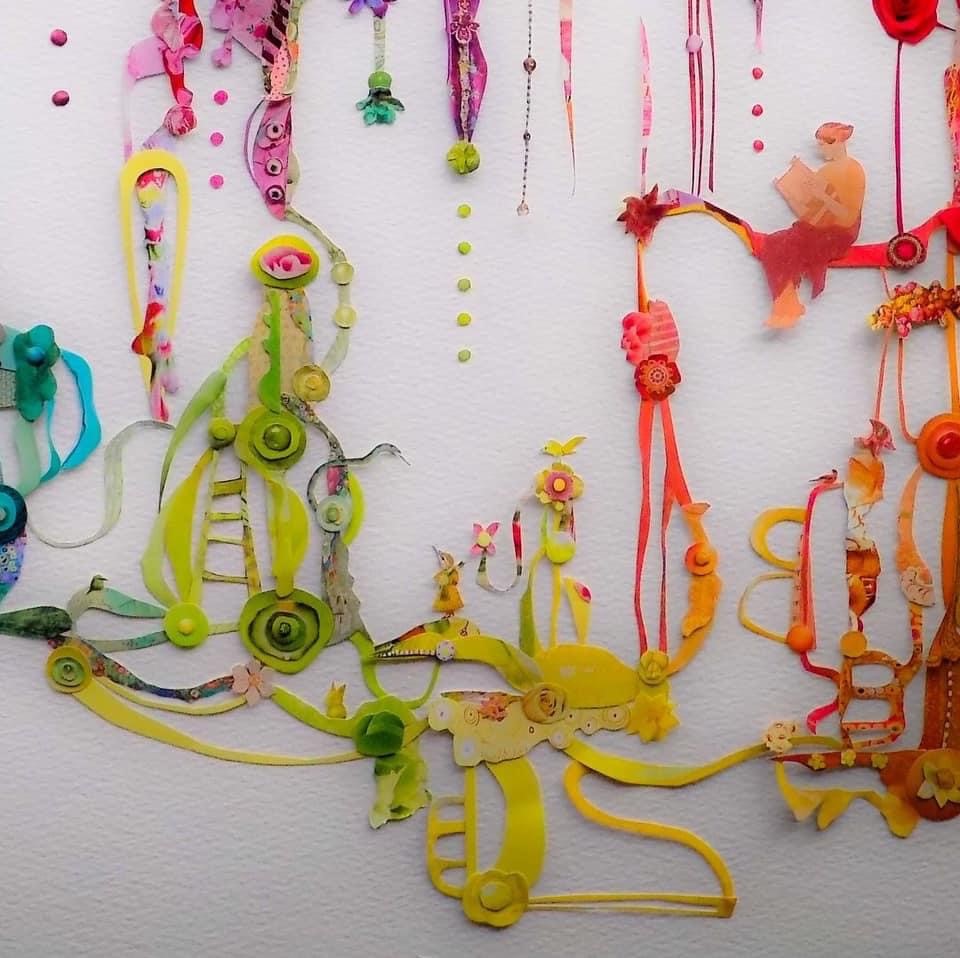
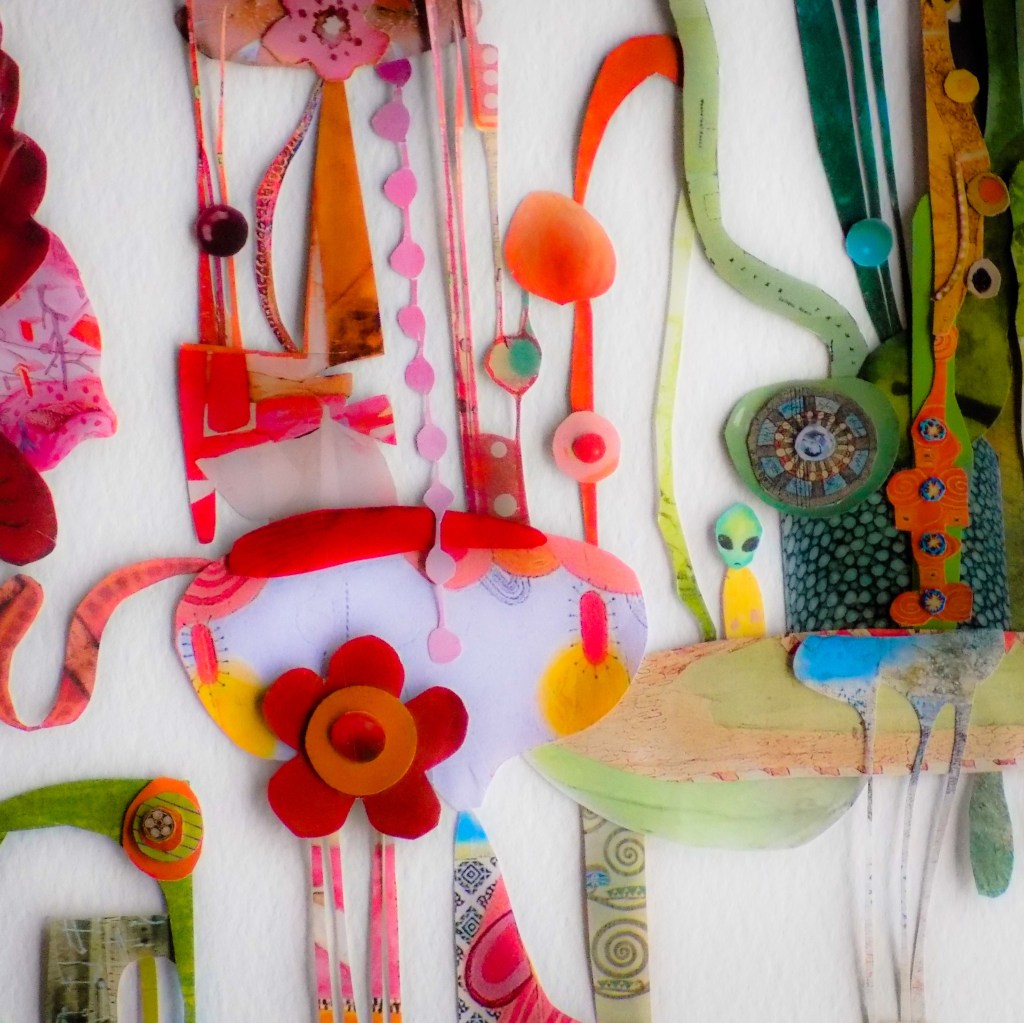
ON REFLECTION
As I near the end of my masters, and reflect on my triumphs and failures, I feel proud of the work I have done and what I have achieved. I have found the coherence and synergy in my art practice as a whole, and have a greater understanding of the artist I am. I am utterly devoted to what I do, and will continue to do it for as long as I live and breathe.
BEYOND CSM
My chief goal beyond the course, in terms of my art practice, it is to work on The Art of Drowning project. Whether this is in the context of a PHD, or own my own, remains to be seen. I think the PHD route would be a good fit both for the project and for me as an artist. I always thought I wanted to be a successful commercial artist, but I now accept that I paint way too slow for that be a viable option. Perhaps my best bet is to try and find an institution (educational that is) that will let me squirrel away in a corner and paint. That’s the dream!
I would also like to apply for art residencies that would help further research interests.
RESEARCH
Research has been an integral part of my masters experience, as I have sought to explore various aspects of the human experience as it relates to water, in an historical, psychological, and mythological context.
Books
Fagan, F. (2011) Elixir: A human history of water. London: Bloomsbury Publishing.
Ackroyd, P. (2007) Thames: Sacred river. London: Random House.
Green, M. J. (1992) Dictionary of Celtic Myth and Legend. London: Thames and Hudson.
Eliade, E. (1978) A History of Religious Ideas: From the Stone Age to the Eleusinian Mysteries. Vol. 1. Chicago: The University of Chicago Press.
Heinz, S. (1997) Symbols of the Celts. New York: Sterling Publishing.
Carr-Gomm, S. (1995) Dictionary of Symbols in Art: The illustrated key to Western painting and sculpture. London: Duncan Baird Publishing.
Articles
Reid, M, (2022) River Gods, Lake Monsters, and the Abiding Power of Myth: How ancient (and not so ancient) cultures thought about water purity and contamination. Science History Institute. Available at: https://www.sciencehistory.org/distillations/river-gods-lake-monsters-and-the-abiding-power-of-myth (Accessed: 20 November 2022).
Beck, H. (2015) The River-Goddess in Celtic Traditions: Mother, Healer and Wisdom Purveyor. Hal Open Science. Available at: https://www.sacred-texts.com/neu/celt/rac/rac15.htm (Accessed: 20 November 2022).
Witzel, M. (2015) Water in Mythology. Daedalus. Available at: https://www.amacad.org/publication/water-mythology (Accessed: 15 September 2022).
Videos
Peedom, J. (2021) River. Available at: https://www.imdb.com/title/tt14222534/ (Accessed 7 October 2022).
Kelly, P. (2020) Where Didi Earth’s Water Come From. Available at: https://www.youtube.com/watch?v=vjDnh7zfO98&list=PLQm7Z7KFDDn6r0ch0Yv2E446GnxTblD0a&index=39 (Accessed 21 October 2022).
PBS Eons (2022) Where Did Water Come From. Available at: https://www.youtube.com/watch?v=AUAEBjlROWQ&t=613s (Accessed 19 December 2022).
Arthus-Bertrand, Y. & Pitiot, M. (2014) Planet Ocean [UK] – the film. Available at: https://www.youtube.com/watch?v=eH1s9GCqPKo&list=PLQm7Z7KFDDn6r0ch0Yv2E446GnxTblD0a&index=41 (Accessed: 21 October 2022).
Hares
During during my final term, I became especially interested in hares, which are a feature of the main painting I will be showing at the graduation exhibition. The following books enabled me to explore this interest in hares further.
Evans, G. E. & Thompson, D. (2017) The Leaping Hare. London: Faber & Faber Limited.
Gregory, C. (2012) Brown Hares in the Derbyshire Dales. Sheffield: Vertebrate Publishing
Lewis-Stempel, J. (2019) The Private Life of the Hare. London: Penguin Random House
Taylor, M. (2017) The Way of the Hare. London: Bloomsbury Publishing.
 bexODESSA