I am really starting to consolidate my thinking for my research project. After next week, I will start writing posts specifically about that. The project will be my main focus going forward. I am really excited about it, and am finding it very engaging. In the meantime, here are the painting experiments I did this week, again just trying different things and beginning to think about the elements I want in my project paintings.
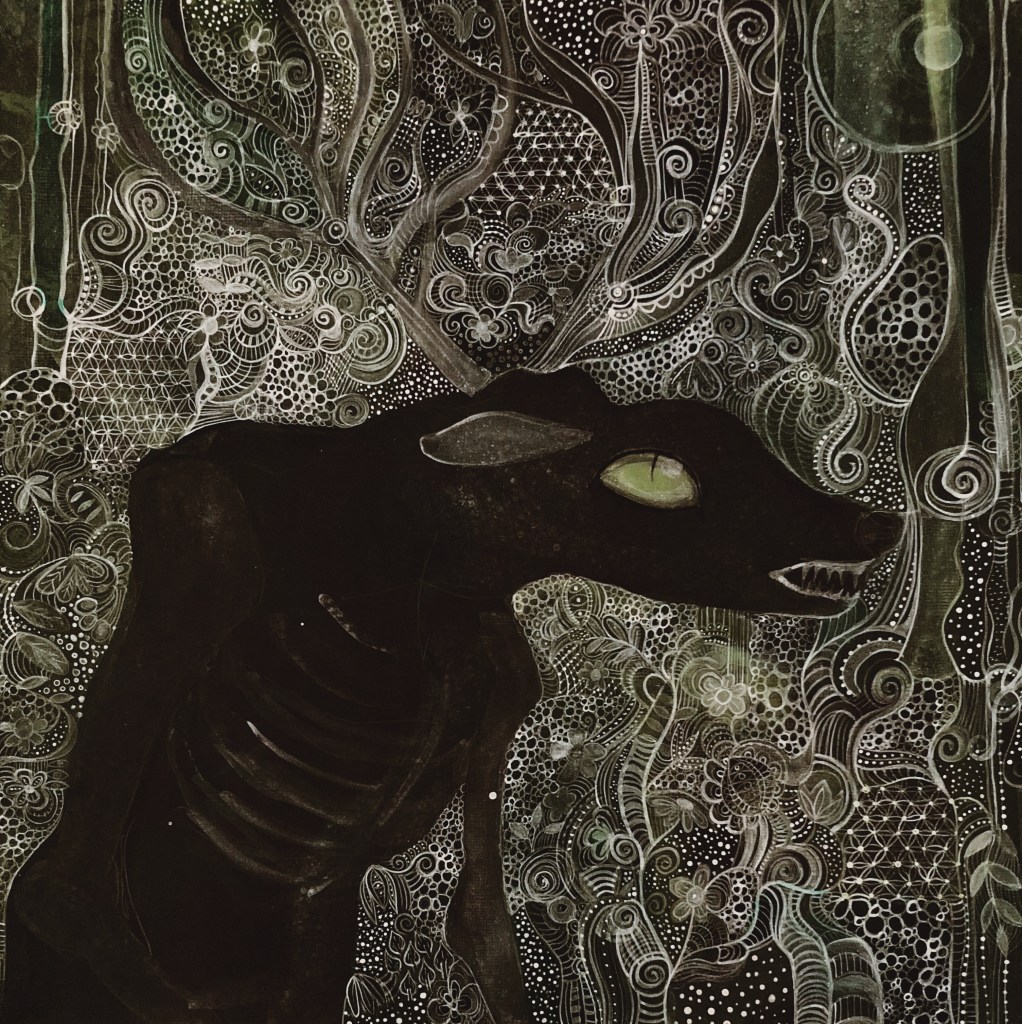
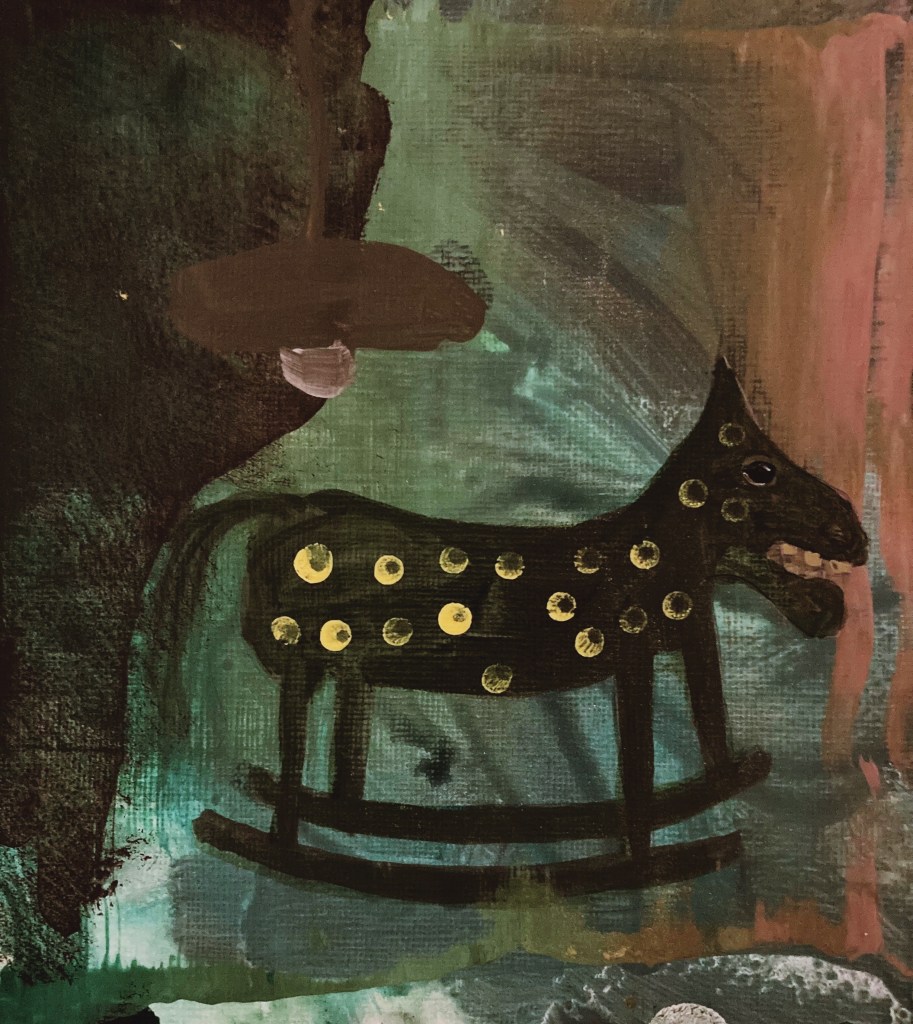
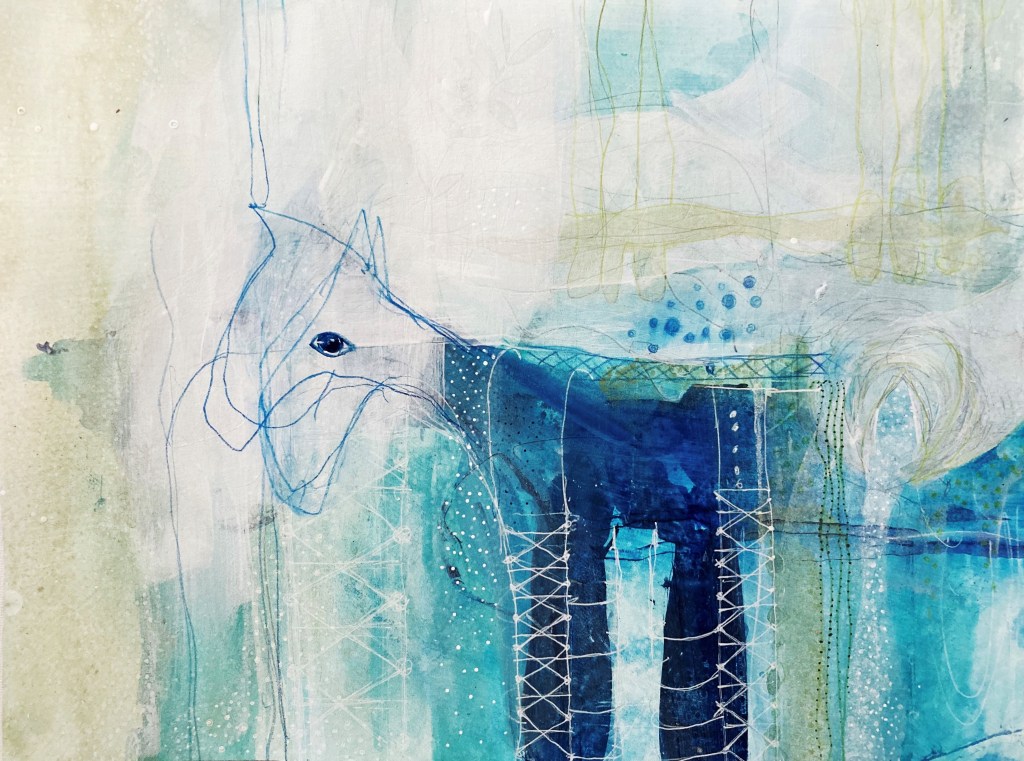
No.75 – Just trying out some more lace ideas with this one. I love the horse and the lace, just not together.
Tuesday, 13th June
No.76No.77
No.76-77 – More lace experiments. I’m definitely not keen on the lace directly on the animals/figures. The palette is really coming together.
Wednesday, 15th June
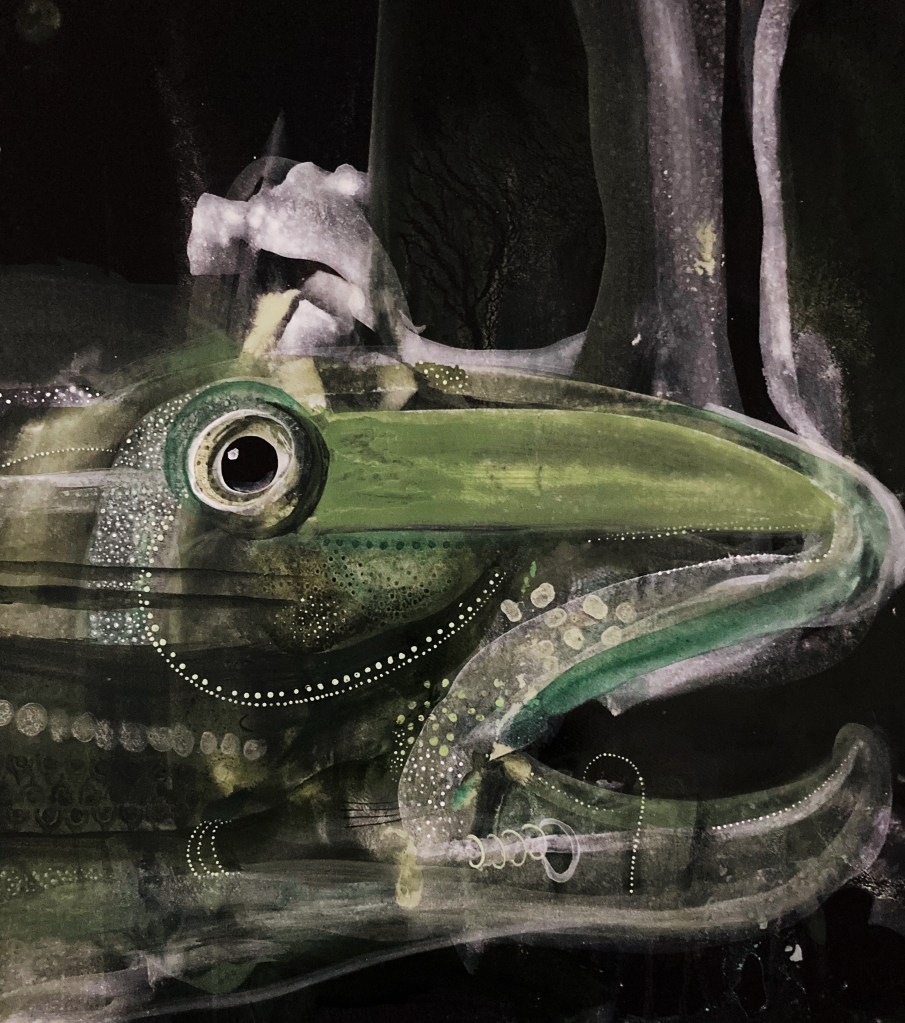
No.78
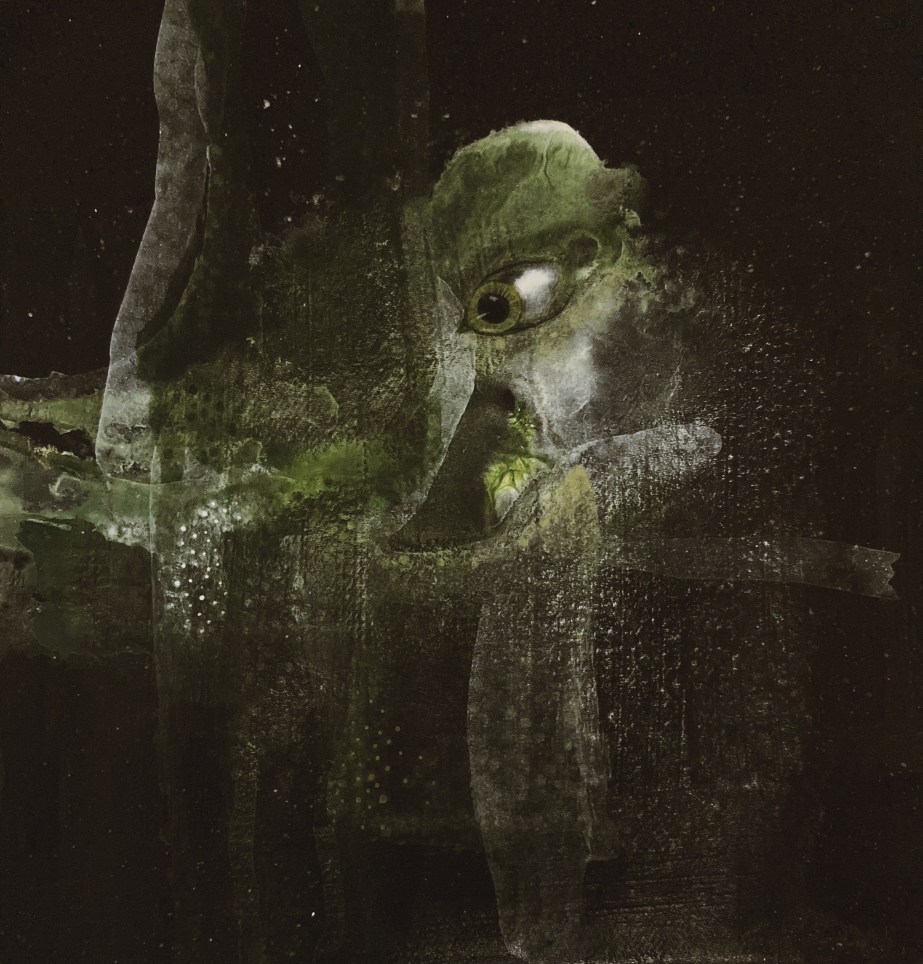
No.78 – I love this frog, and prefer it to the one above. I definitely prefer creatures etc to be suggestive of something, rather than explicitly so.
Thursday, 15th June
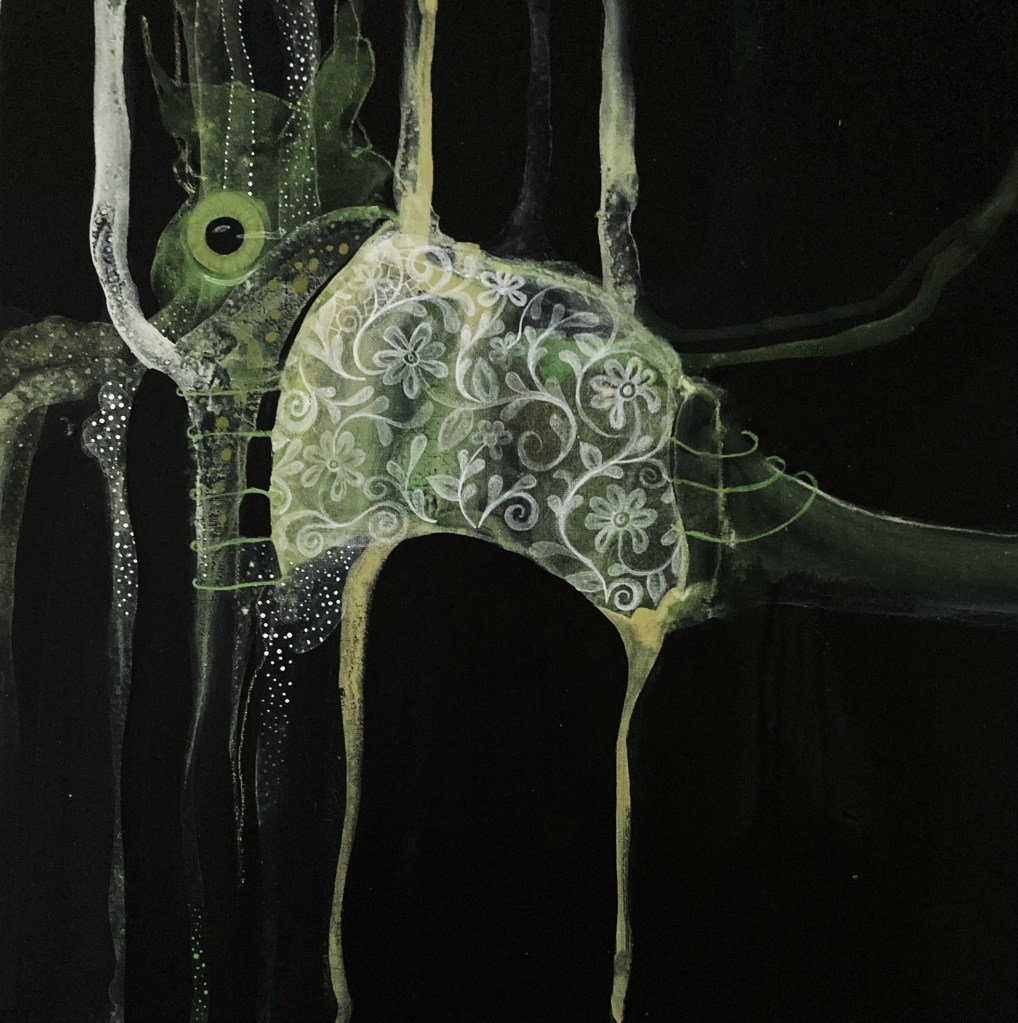
No.79
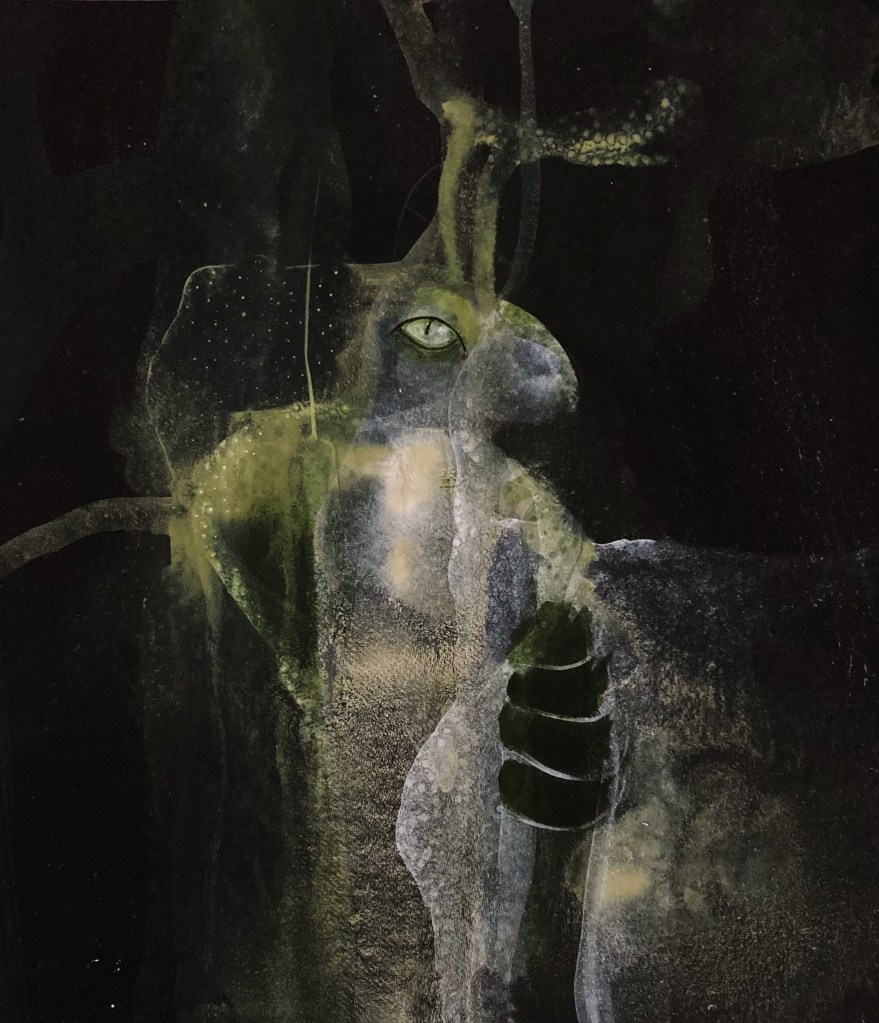
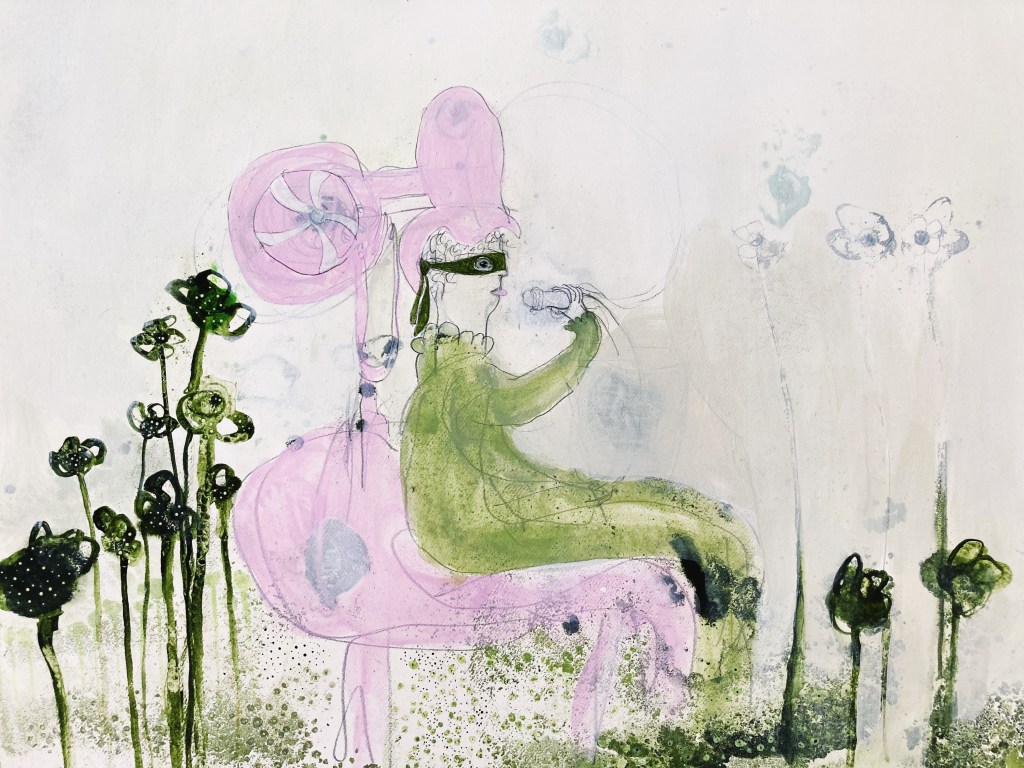
No.79 – I love this painting too. I like the lace here, as it looks like a covering, rather than directly on the creature. I also like how weird the creature is.
Friday, 16th June
No.80
No.80 – I painted this on the last day of my first year of my masters. I feel like I have made real progress with the figurative paintings, and I’m loving every minute of it.
Sunday, 18th June
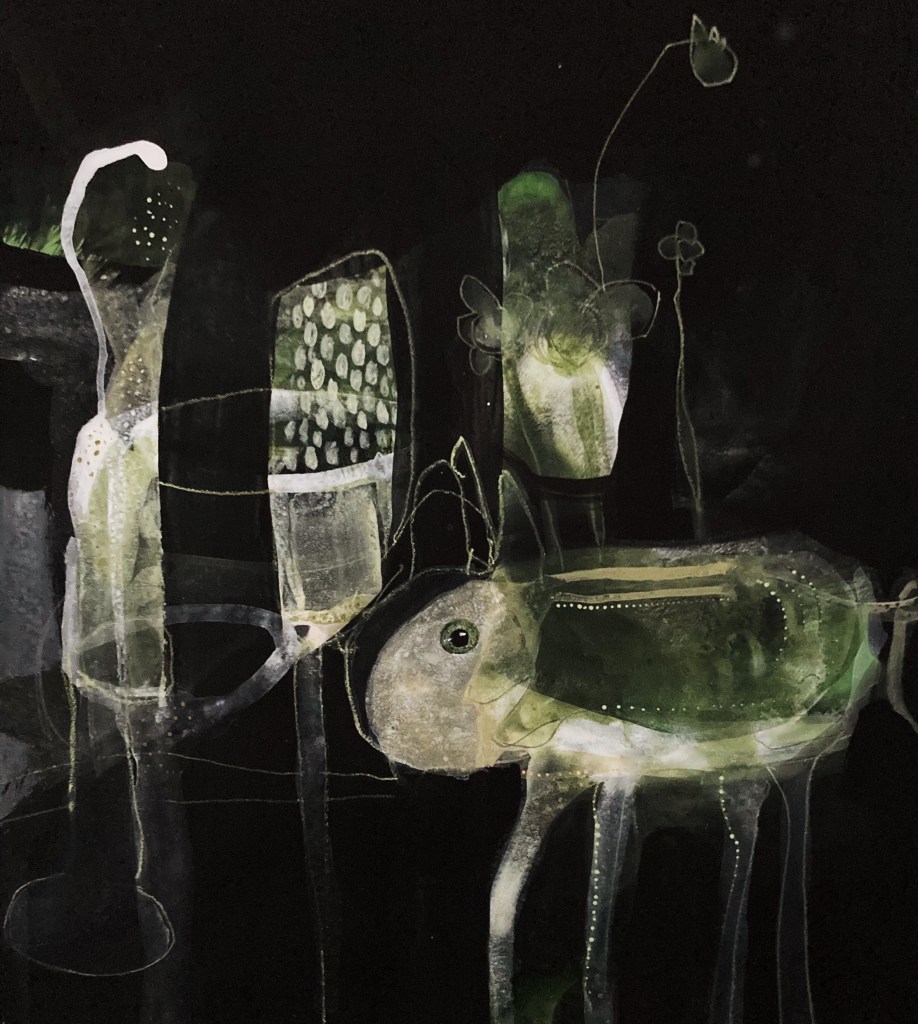
No.81
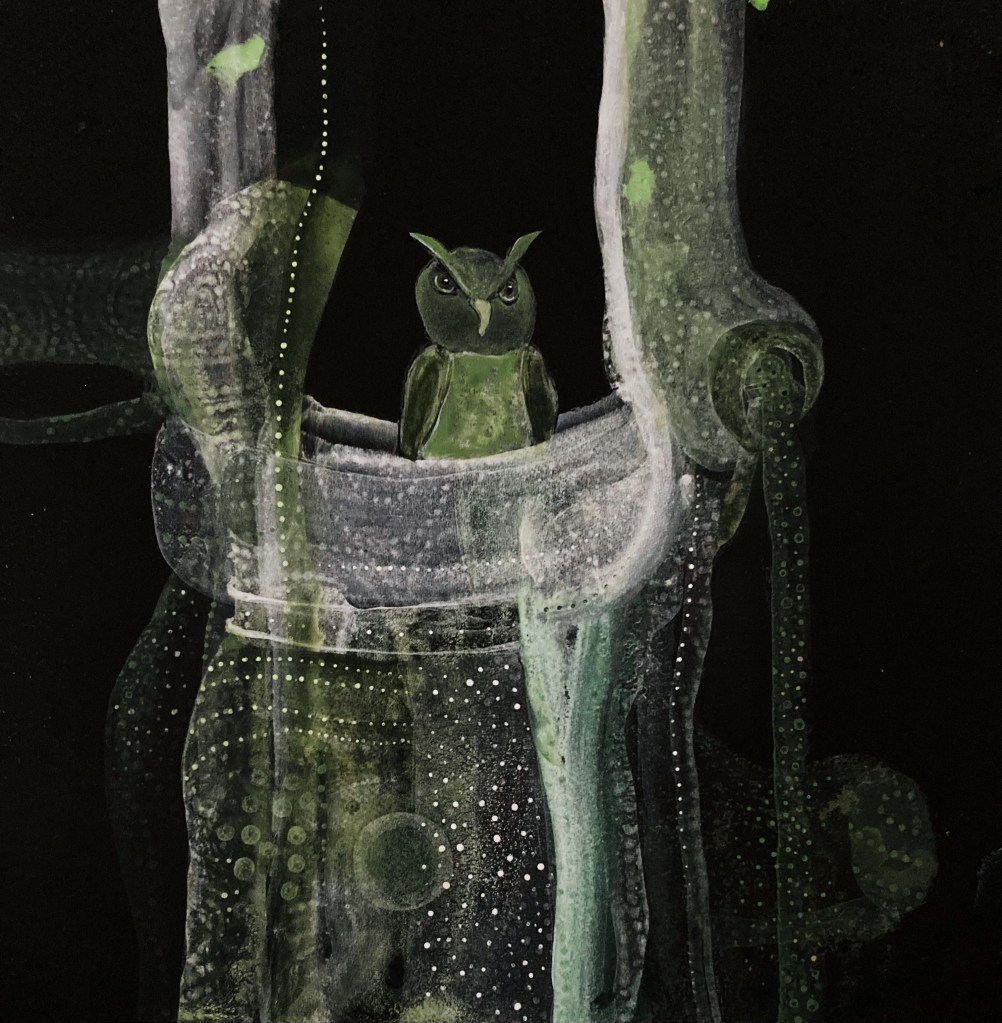
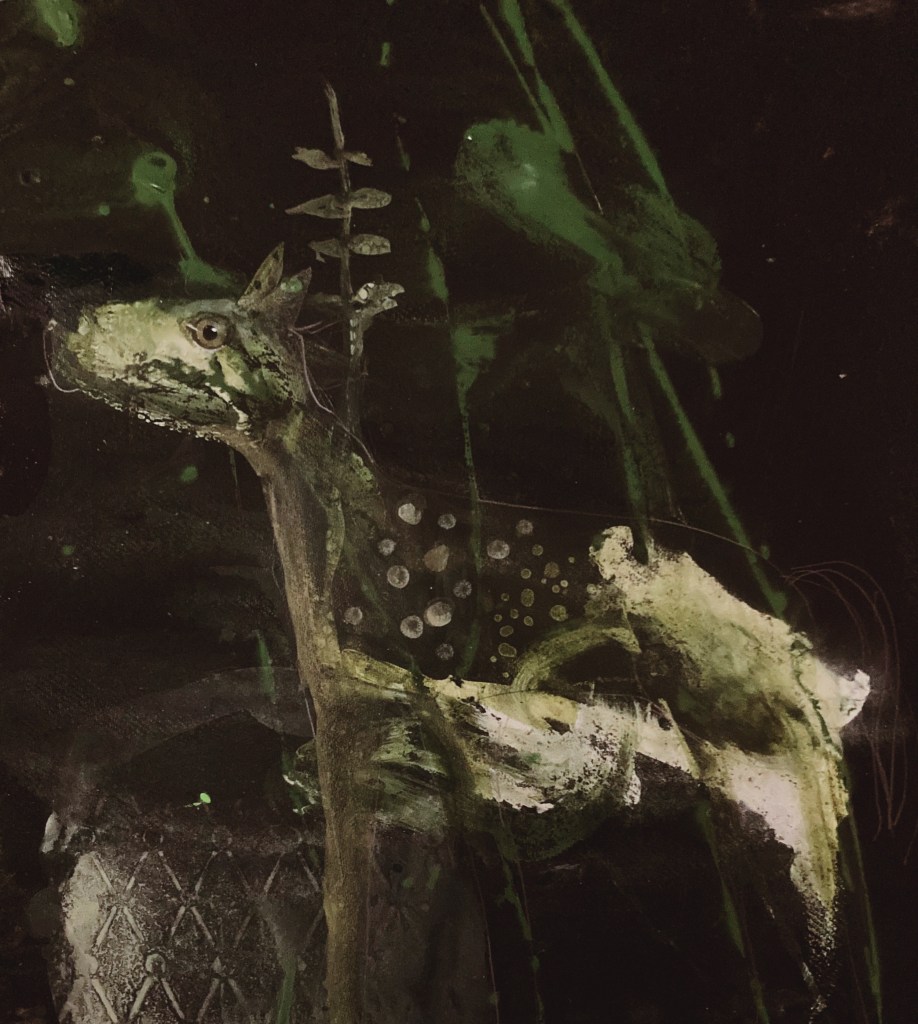
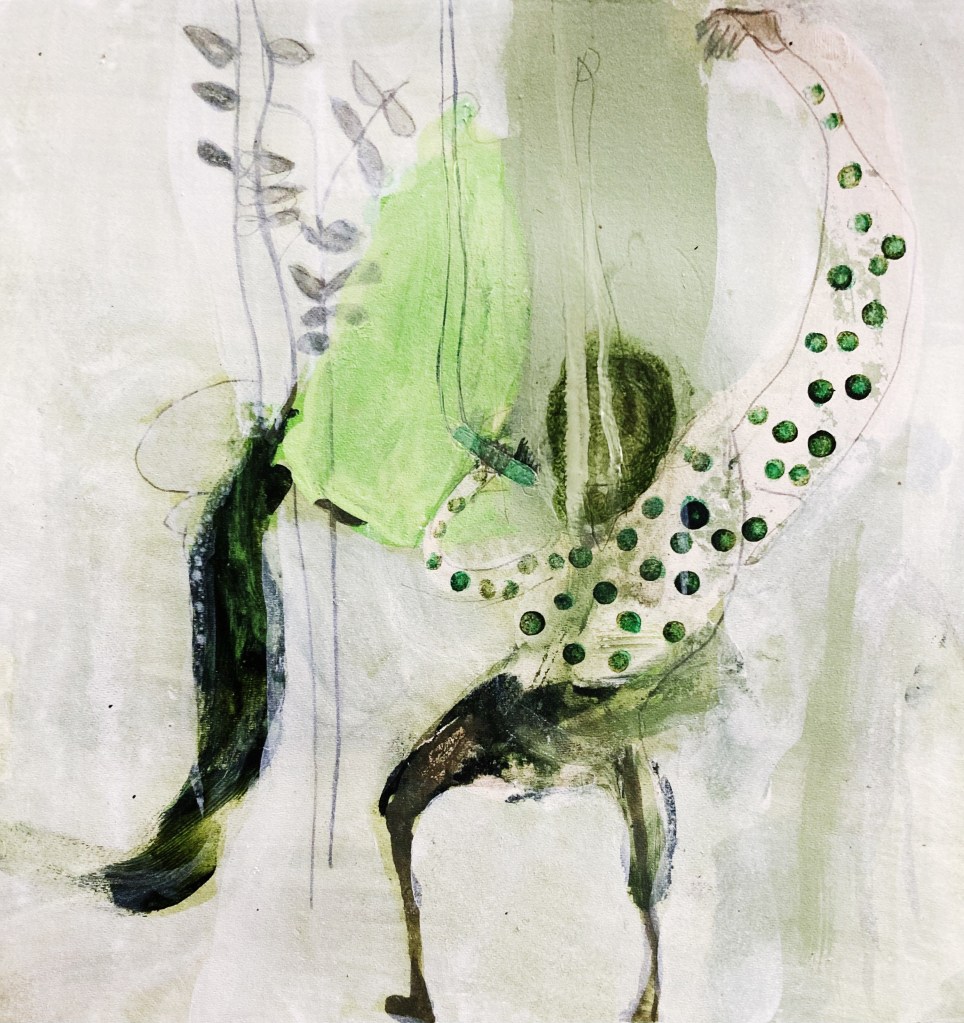
No.81 – I absolutely adore this painting, and have called it “Colin the long-legged guinea pig”. I’ve begun adding Indian Yellow to the palette, and love what it brings to these paintings.
No.65 – This painting felt like another breakthrough. I can really see the potential in this kind of work. Painting bigger definitely allows for more detail. This is a very exciting process. Sea underpainting.
Tuesday, 6th June
No.66No.67
No.66 – This is a sea-painting on canvas (30cm x 30cm) – just trying different things. This type of painting takes well to canvas, which is good.
No.67 – Another sea-painting (on paper). Rather than paint an entire big painting just yet, thought I’d do close-ups of certain aspects. Again, I like the amount of detail that can be used in bigger work.
Wednesday, 7th June
No.68No.70No.69
No.68-70 – These were some unfinished small paintings I had lying around, so I finished them off. I like aspects of them, but it’s definitely more enjoyable painting bigger.
Thursday, 8th June
No.71
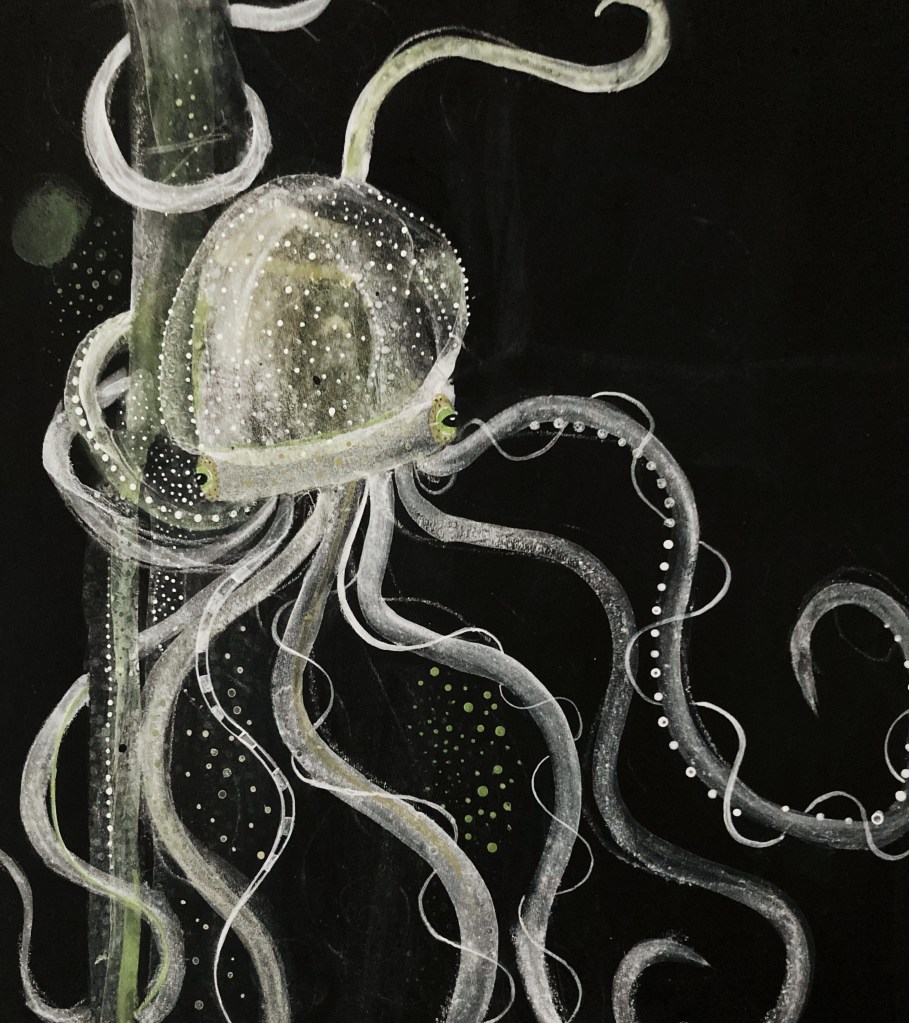
No. 71 – This is another painting I had lying around. It was initially of something different. The only part I liked was what is now the octopus’ head – so I kept that and painted out the rest and added the tentacles. It was pleasant to paint.
Friday, 9th June
No.72
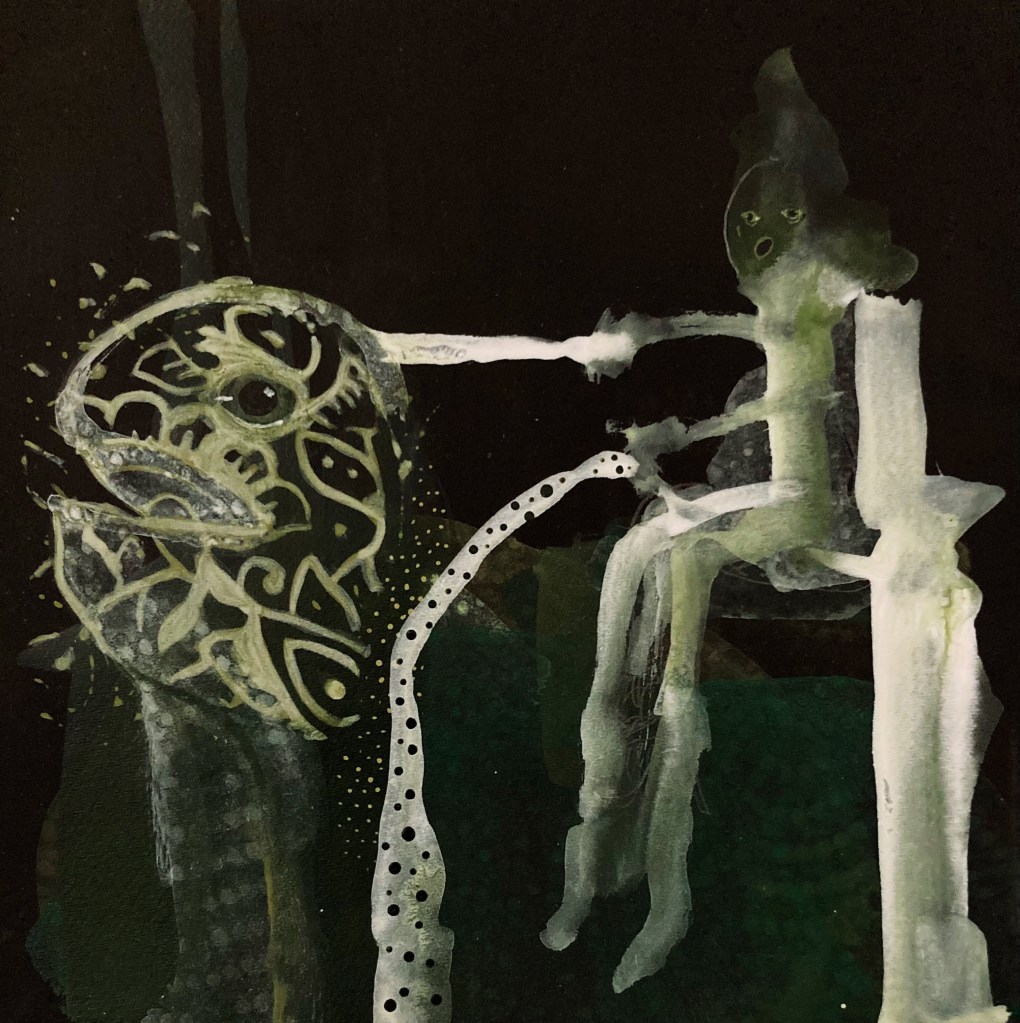
No.72 – I spent the morning at a pre-op appointment with my Mum, for her hip replacement, so I painted this in the afternoon. Rather than a sea underpainting, this underpainting was done by spraying seawater. I love this painting. I’ve often thought that the white in these dark paintings look like bone. The lace overlay is another breakthrough – I’m thrilled it looks great with these paintings. I will definitely explore these two elements (bones and lace) in the coming days.
Sunday, 11 June
No.73No.74
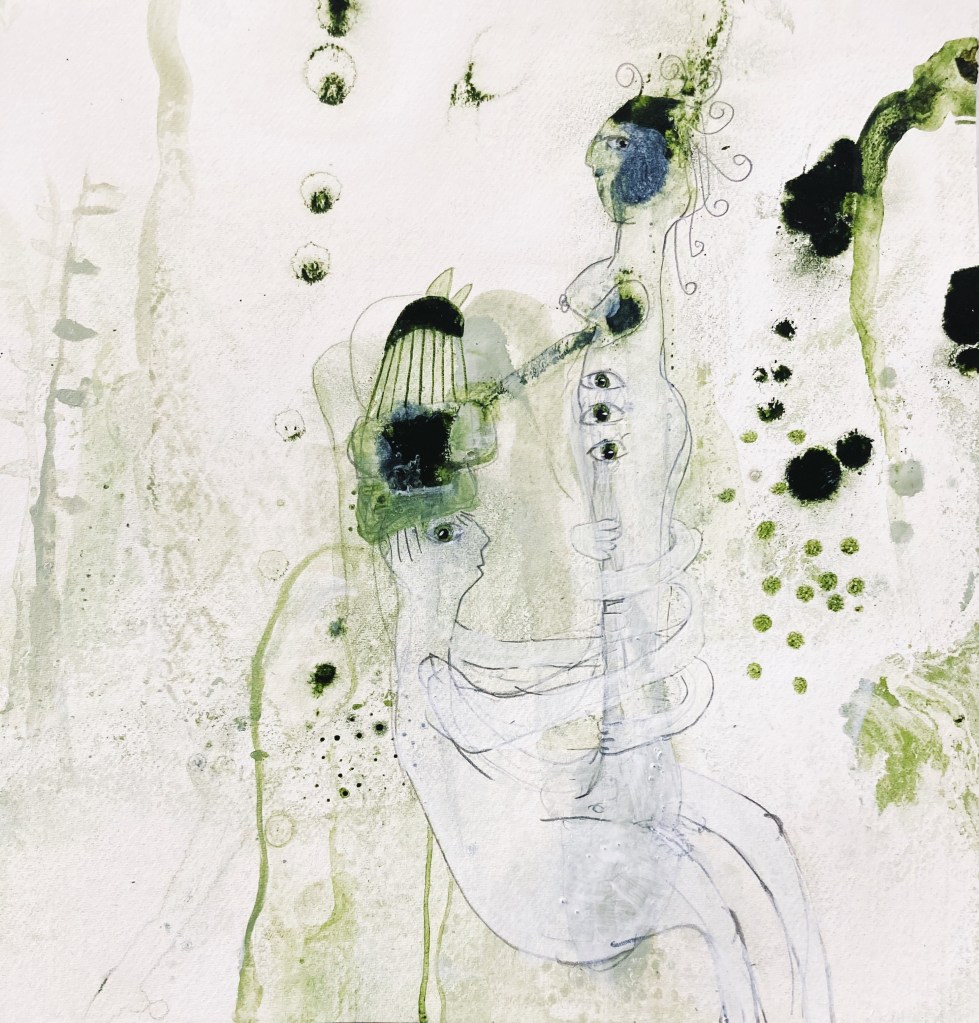
No.73-74 – In these paintings I was exploring the lace overlay further (minus the bones), I absolutely love the results. I especially love how the underpainting shows through, giving the effect that the lace is see-through. There’s a deep connection between lace and the sea for me. I also think it adds a mystical aspect to the paintings, plus it is a pleasure to paint – so it’s a win all round!
I have new neighbours, Kylie and Jason and their little baby, Harold. They live in the Point of Ayre foghorn. I realised Kylie and Jason had a chick a couple of evenings back when I heard him squawking inside a hollow in the foghorn. Then last night, my fella and I saw Harold for the first time, it was beyond exciting. I wasn’t able to get a photo of Harold, as we didn’t want to get too close, but here is some footage I managed to get of Kylie and Jason last week.
The painting breakthroughs kept coming this week. A distinct style for the green paintings is emerging, and I love it. I feel like I have been given a small glimpse of what the paintings can be, and although I take nothing for granted, and realise there is still a possibility I can’t pull them off, I have reason to be hopeful.
The main focus again has been painting bigger. With the drawing practice I have been doing, it has proved much easier than I thought it would be. It’s also far more interesting painting bigger, as it allows for more detail.
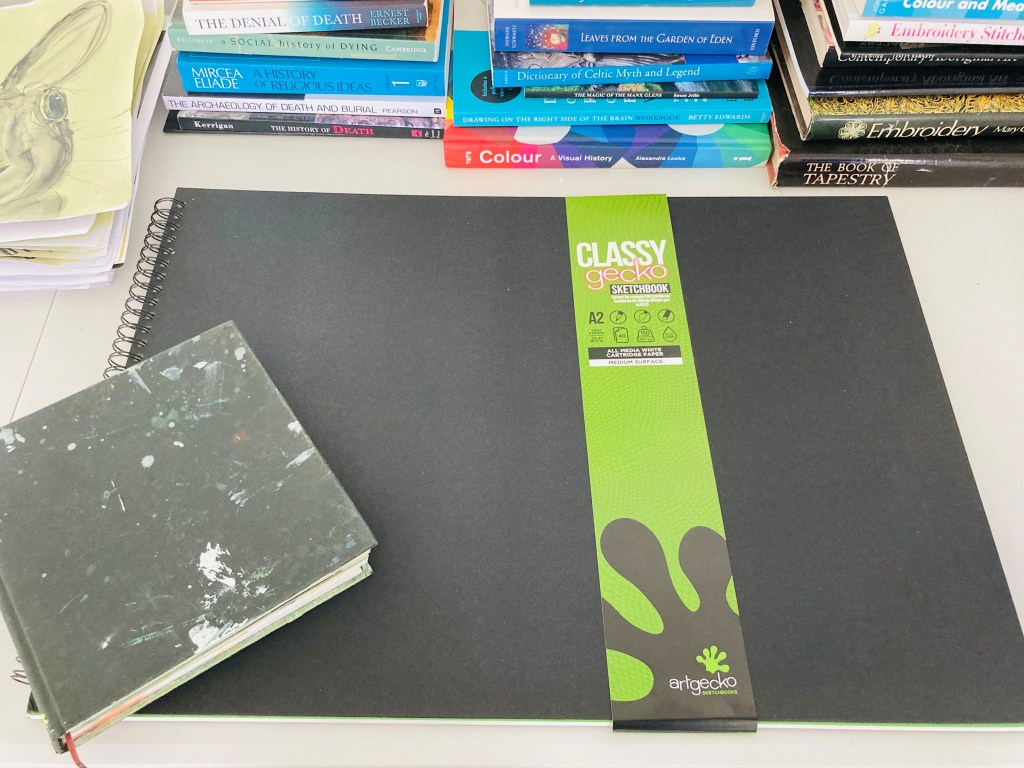
To help with the bigger drawings, I bought a ginormous sketchbook, and so far I have found drawing big just as easy as drawing small.
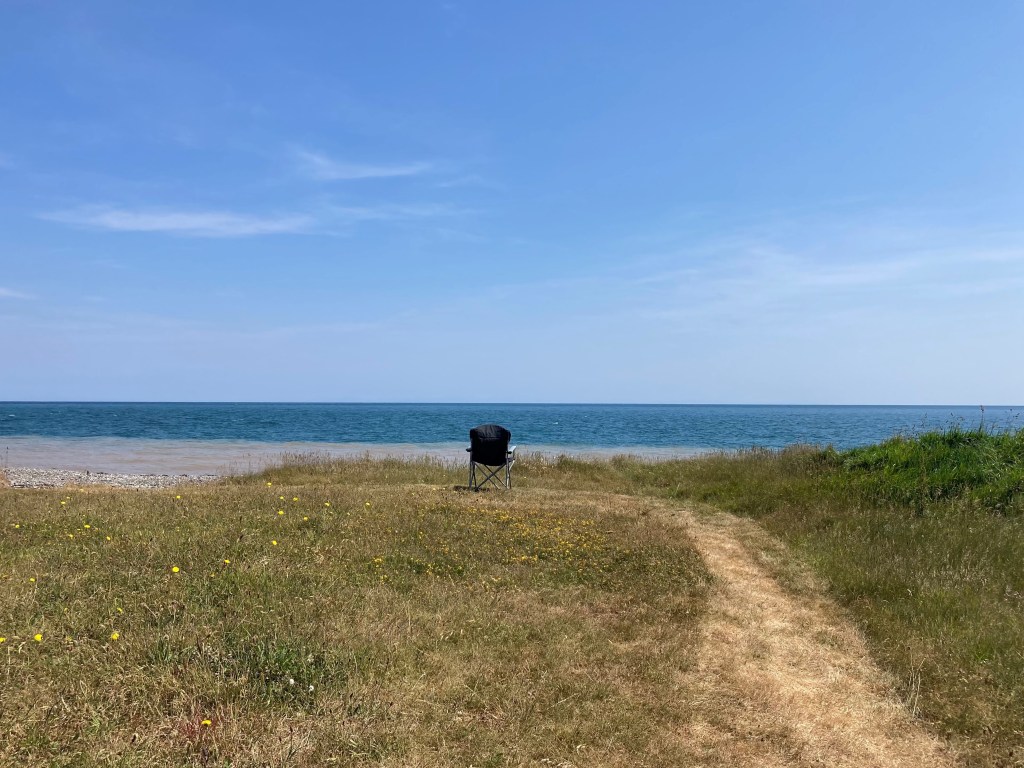
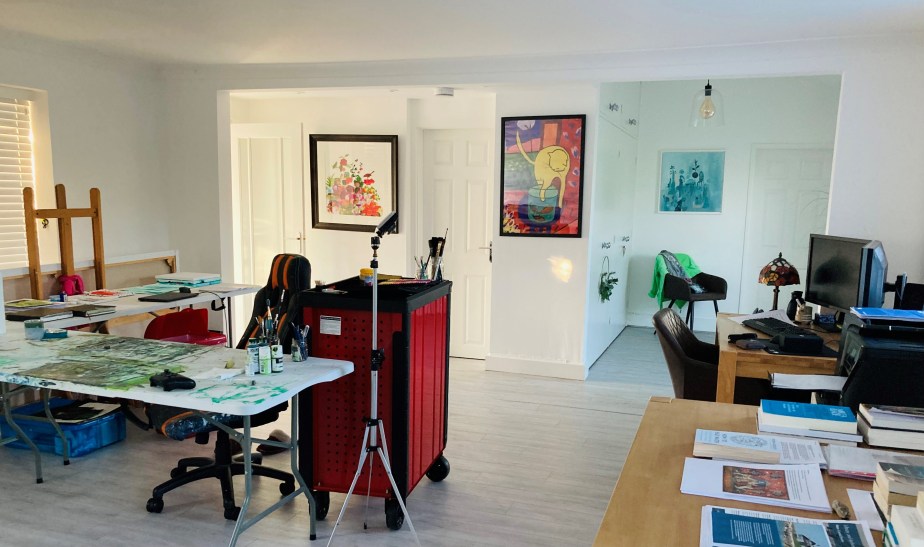
I have also started a daily reading discipline, without which I would never get through all the books/papers I have to read for my research paper this summer. Don’t feel too sorry for me though, as this is where my reading discipline takes place.
I had a painting breakthrough this week, which is always a double-edged sword. On the one hand there was a huge sense of excitement and relief, like I am finally getting somewhere and all my previous hard work on this particular project appears not to be in vain. On the other hand, it’s like the bear in the children’s song who reaches the top of the mountain, and what does it see? Another mountain! That’s exactly how it felt, I was momentarily thrilled at the progress I made and the paintings I produced, but I was soon brought back to earth when I realised how far I still have to go to achieve the paintings I want to.
The paintings I did this week are just little snippets of what I hope to be much larger paintings. Scaling up is no easy task, and when it comes to figurative painting, I am yet to manage it, but I will surely to keep trying. One thing is certain after the week I’ve had, the drawing discipline I started at the beginning of the year is definitely paying off.
I’ve also been busy this past week writing the overview of my research paper, so our tutor can see what we intend to write about and give us feedback and guidance. I decided to do mine on the Ars Moriendi, the medieval dying how-to-manual that I mentioned in my last post. It hurt the old brain cells to do, but it was definitely worthwhile, as I now have a clear direction for the paper, which will make it much easier to write over the summer. I actually think I’ll enjoy writing it, as it is a fascinating subject, and has already sparked some interesting conversations with friends and family.
You can read my overview here if you have the time and/or inclination.
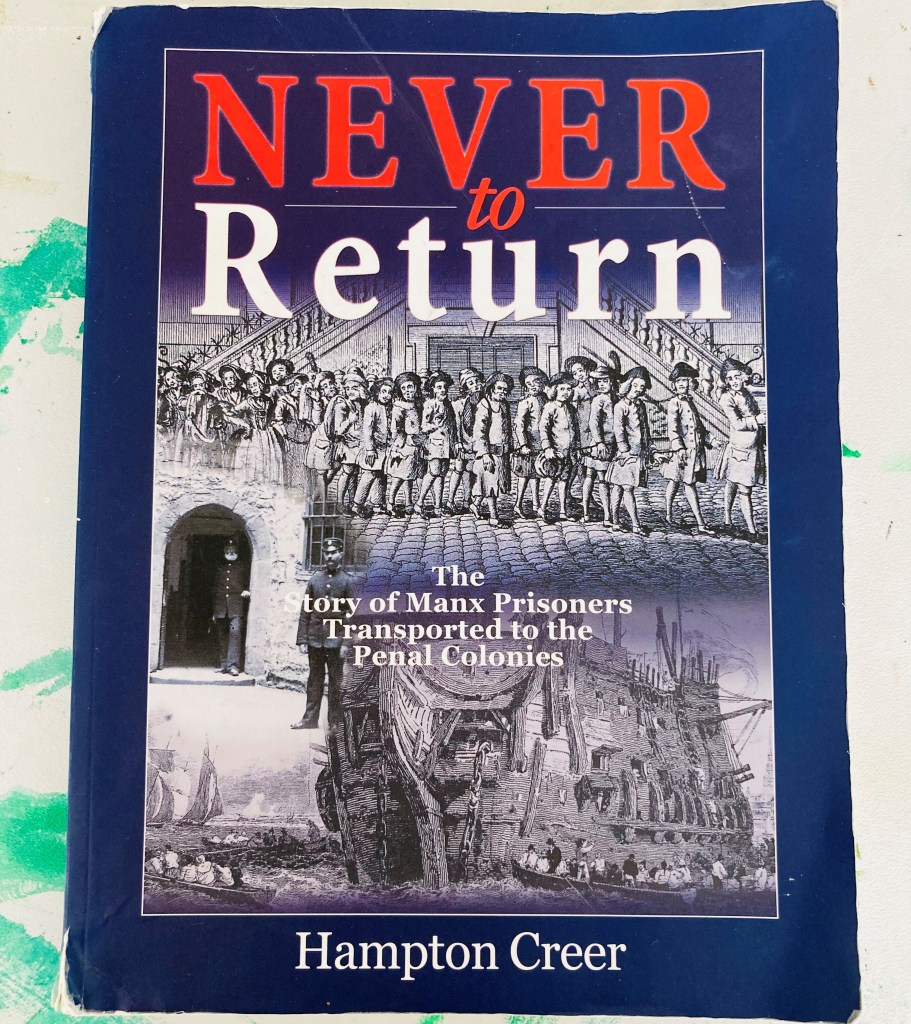
In other news, my fella and I have decided to make a documentary about Ann’s story. To begin the process, we had a pre-interview meeting with Hampton Creer, the author of “Never to Return”. It was such a privilege to meet him and his lovely wife Joy.
I absolutely love his book, it is beautifully written, and is a page turner from start to finish. It was also very special, because it was from his book that I first learned about Ann and was inspired to do a painting about her. We had a wonderful time talking all about penal transportation and other aspects of Manx history, such as witches. Once the TT races are over in a couple of weeks, my fella and I will return and interview him on camera.
No.26 – I really like this image, and think it would be a good way to paint Mrs Quick for the Thames flood painting. I like the idea of her having a young face behind a mask with a crone-like nose. I think I will also paint her with an old, gnarled hand, perhaps hanging over the bed.
No.27 – this is a sea painting. I like the dynamism the sea marks give the painting, and I love the eye.
Tuesday, 16th May
No.28No.29
No.28 – I love this painting. It too has a dynamism from the sea that is typically absent from my paintings.
No.29 – I really like this one too. Again, it just emerged from the marks left by the sea. It is definitely a helpful starting point for the type of figurative paintings I want to do.
Wednesday, 17th May
No.30No.31No.32
No.30-32 – These weren’t sea paintings, but I did use quite a bit of water. Just little experiments.
Thursday, 18th May
No.33
No. 33 – I love this one. The sap-green paint doesn’t do well in the sea though.
Friday, 19th May
No.34
No.34 – I really like this one, especially the contraption. Again the sap-green went funny in the sea. I want to have phalluses in my figurative paintings, though not as explicit as this (more as a fertility symbol).
Sunday, 21 May
No.35No.36
No.35-36 – Interestingly, these two are not sea paintings and, as such, have lost the dynamism of the others. I really like some elements of them, but they are a bit over-thought and rigid.
No.37
No.37 – I also painted this during the week. It is handy painting things like this when I loose the thread of the figurative paintings – which happens quite often. I’d like to keep developing this kind of work.
I had a very productive week in the studio, and am finding my feet with the figurative paintings. I am still very much at the experimental phase, but am slowly discovering the kind of paintings I want to make.
Here are two of the paintings I did this week. I like them both, however, the one on the right has an underpainting that I made with the sea, and I think it adds a greater sense of dynamism. I definitely think a dynamic underpainting is the way forward. I don’t like figurative paintings that look too finished or realistic, except for the eyes.
The main focus of the course at the moment is the research paper we each have to write. I haven’t got much further than a vague notion of a topic, death. So far I have been looking into memento mori (a medieval artistic convention designed to remind people they will die), memorial art (which is right up my alley artistically), or ars moriendi (a medieval instruction book on how to die). Not very cheery, true, but death is a topic I am very interested in, both as a painter and a mortal. I will to have to pick a lane soon, as we have 1,000 word overview due next week.
I actually had a dream last night about doing my research paper on the Ars Moriendi. The book is from the mid-15th century, and instructed a person in how to have a “good death”, which basically consisted of letting a group of angels and demons battle it out for your soul on your deathbed, in the hope that your soul (which was depicted as a mini-you that popped out your mouth when you died) got to go with the good guys. The likelihood of that happening depended on answering a series of questions. Didn’t get the questions answered in time? Sorry, that’s eternal damnation for you! The book was wildly popular throughout Europe, and peasant and king alike were subject to its teaching.
One of the woodcuts from the Ars Moriendi.
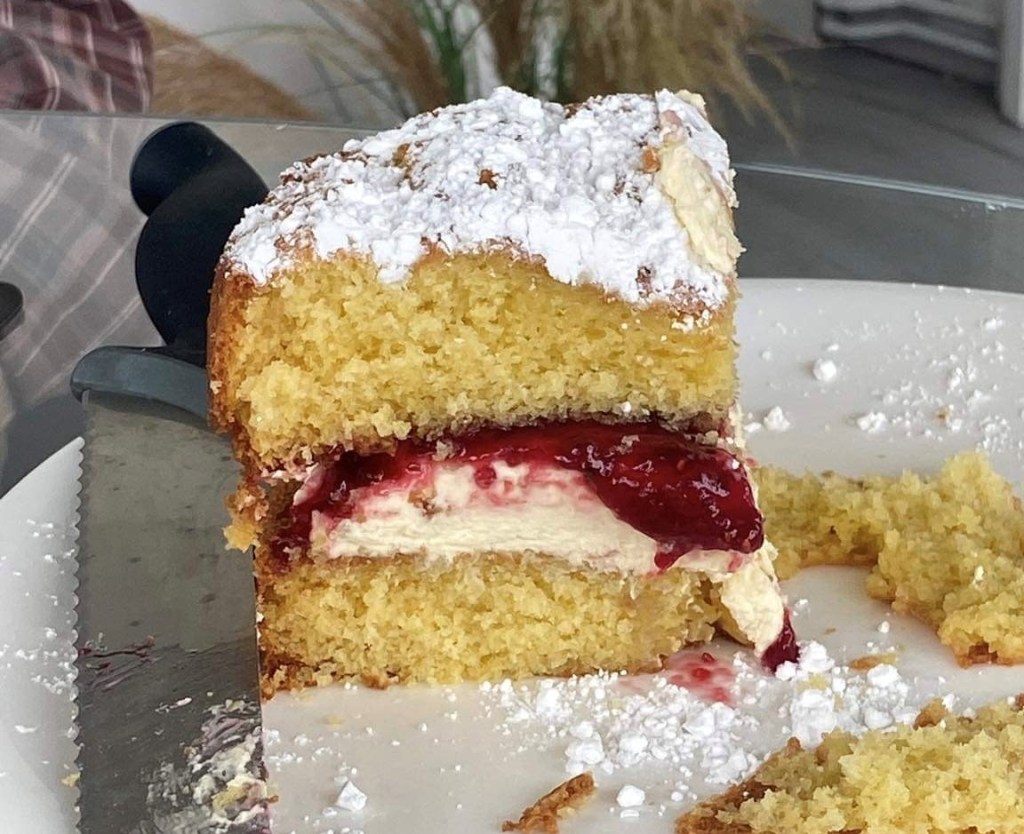
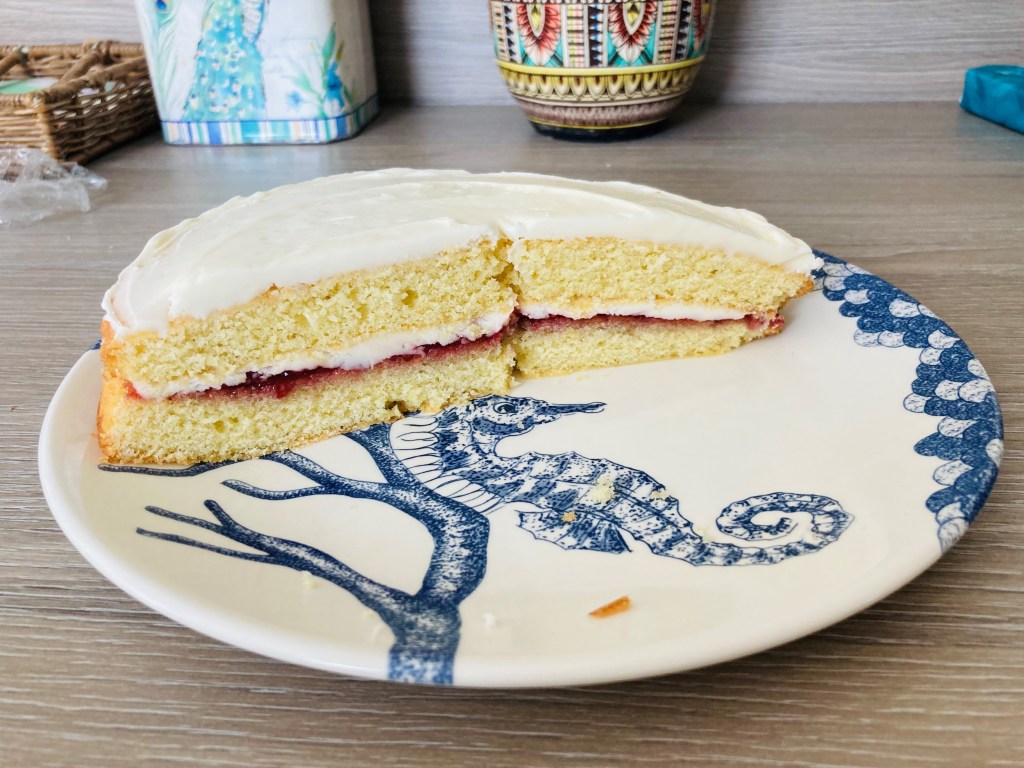
My sister was on the Island for a few days, which was lovely. We had a family bbq at Anam Cara on the Sunday, and I showed them the Ann painting. It made my tender-hearted sister cry, which was either a sign that the painting is beautiful, or the Eurovision hoolie at my brother’s the night before was too much for her. My fella did me proud and didn’t burn the sausages, and made the most glorious Victoria sponge, which almost made me cry. Below is the only photo we have of the whole event, but to be honest, I reckon its the thing we’ll all remember the most. It was a damn good cake!
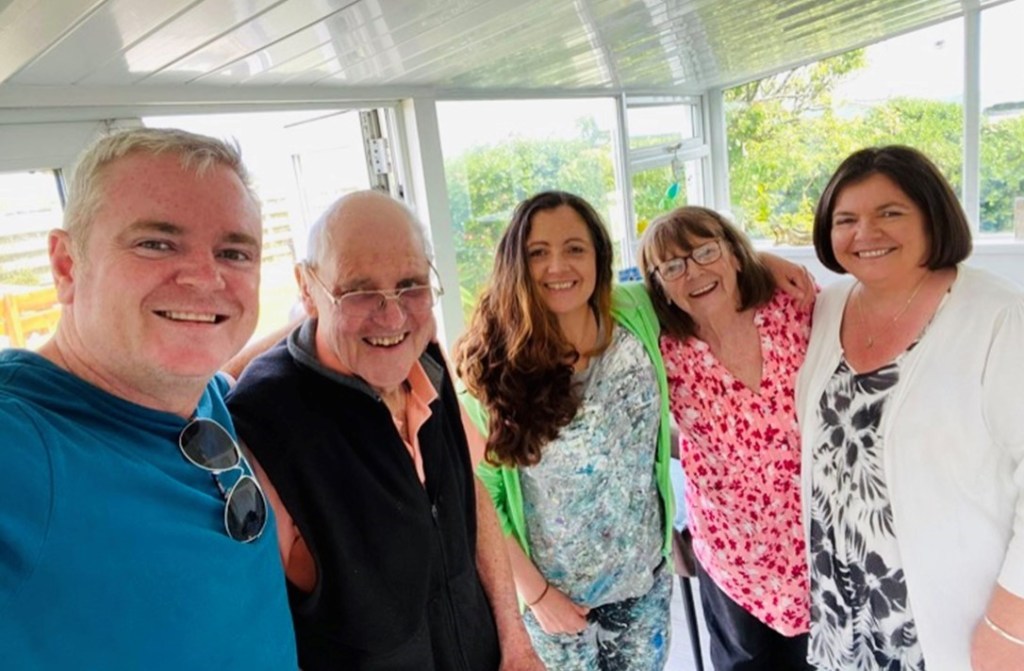
Thankfully, we did manage to get some photos of us all when the gang popped out later in the week. We had a lovely time just sitting there chatting, and marvelled at the fact that we were still sitting there chatting after all these years.
My fella is in Rotterdam for work this week and I miss him terribly, not just for his cake baking abilities. Though, it would be reason enough, as I had a go at a Victoria sponge and I don’t know what kind of WI witchery he used in his, but mine came out flat as a pancake. Still, the jam and icing has made it edible.
It was another good week in the studio. For most of it I carried on with the seawater paintings, which was very enjoyable. However, I took a break from them on the weekend and returned to the figurative paintings.
I still feel like I am a long way from figuring out what kind of paintings I want them to be, so I think the best thing I can do in the meantime is to keep experimenting. It’s like the big little-man said:
Inspiration does exist, but it must find you working.
Pablo Picasso
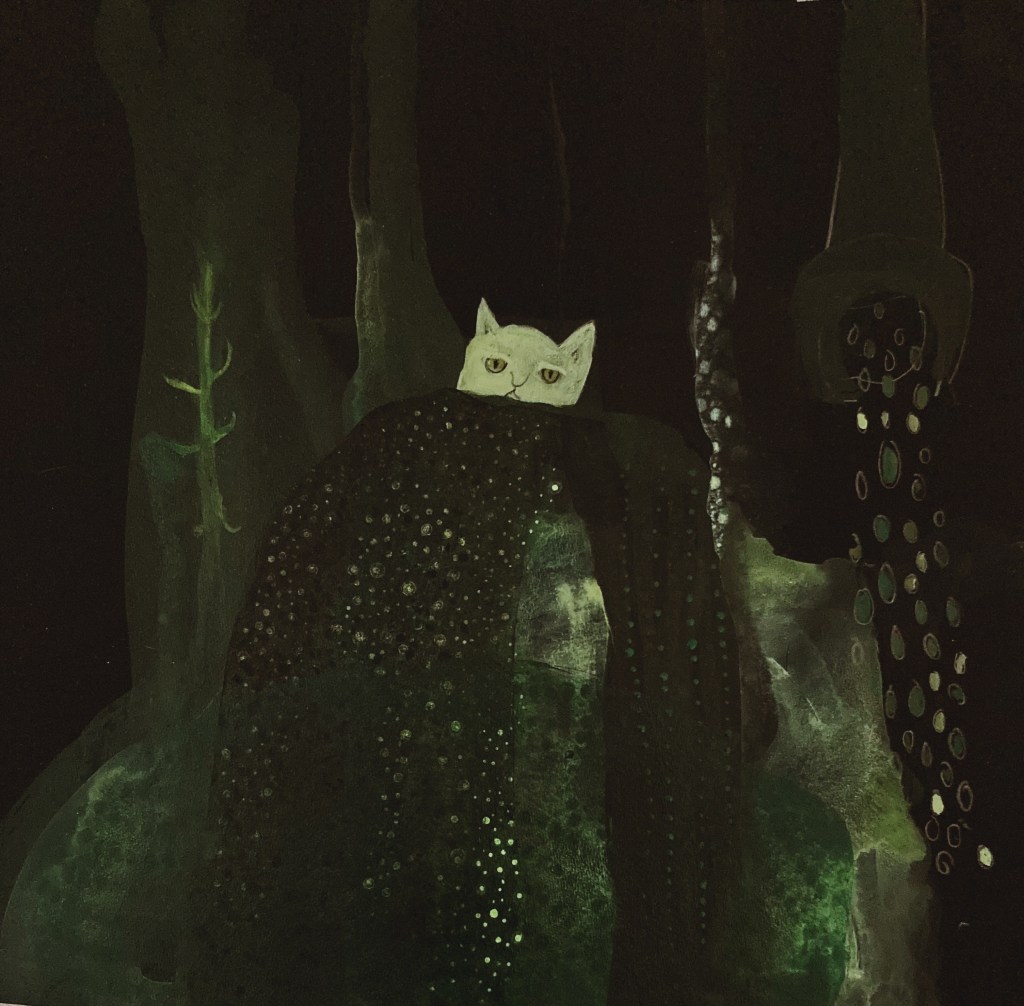
To that end, I’ve been noodling around with some small paintings to see what might pop out. It turns out, an owl and a pussy cat!
The most important thing I can do to achieve my goal for these figurative paintings, is draw, which I am still doing every day. This week I drew birds, and I have say, they are my favourite thing to draw so far.
Drawing in general still has the sense of an arduous task about it, but drawing birds brings it close to pure enjoyment. They are such delightful creatures, and have so much character.
By way of demonstration, when I was drawing birds outside on Thursday, one left a little gift on my page, which I took to be a very good sign indeed!
While on the subject of birds, I thought I’d share The Wisdom Daily video I made this week, until I remembered I made it about a fish not a bird. But it’s such an amazing fish, I may as well share it anyway.
All and all it has been a good week in the studio. I continued with the sea paintings, and ranged far and wide with my experiments, with various degrees of success. One element that kept cropping up was bubbles. That’s because I have been learning about them and watching them.
Sea foam is made up of bubbles, and they are what helps the sea breathe. The sound a wave makes when it crashes is the sound of the individual bubbles being formed, and the tone of each bubble tells you what size it is. I think this fascinating, mysterious, and beautiful, and I love watching them come in and out of existence.
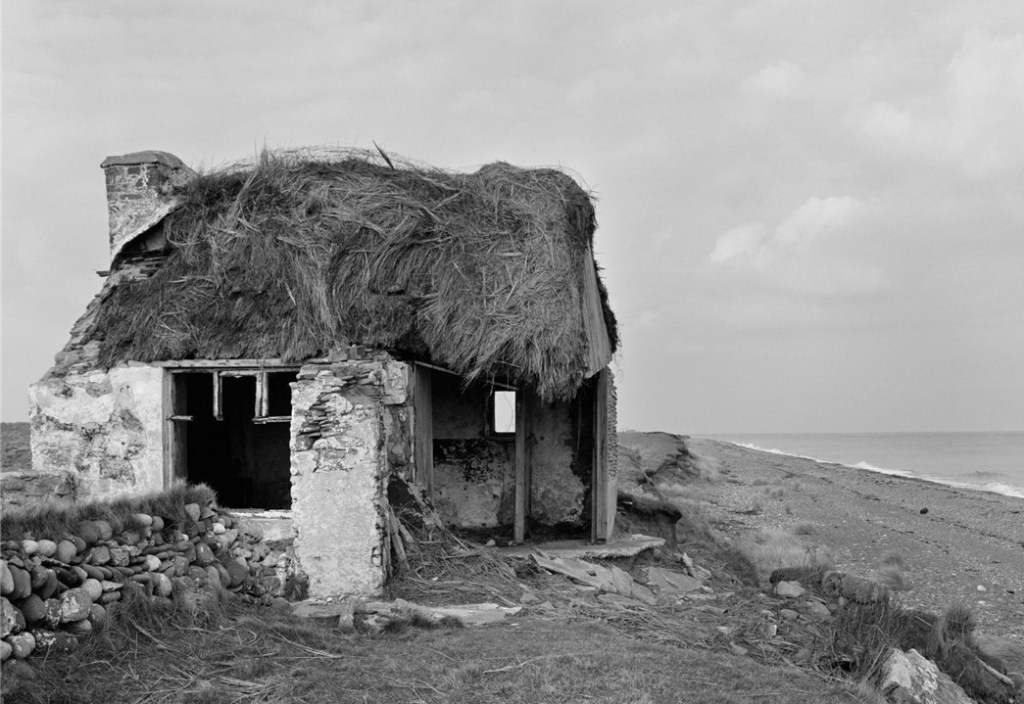
I have been thinking a lot about the power of the sea, something that is inescapable when you live so close to it. I came across a beautiful photo that demonstrates just how powerful it is. It was taken by renowned Manx photographer, Chris Killip, in the early 1970’s, and shows a house being taken by the sea at Cranstal, Bride (the same stretch of coast I live on). I think it is a sobering and romantic image.
For me, it is a memento mori (Latin: remember you shall die), which was a type of medieval painting that depicted various objects that reminded people they will one day die – such as skulls, hourglasses, rotting fruit, wilting flowers and, of course, bubbles. I think Killip’s photograph is an especially poignant memento mori in this day and age, with global warming and the predicted rise in sea levels etc., making coastal erosion and its attendant destruction a present and coming reality. As with sea related disasters, such as tidal waves, death can come upon a person suddenly with little or no warning, but for most, as with coastal erosion, death creeps upon us slowly, diminishing our life force a little at a time, until there is nothing left. It may not be everyone’s cup of tea, but I think it’s worth bearing that in mind.
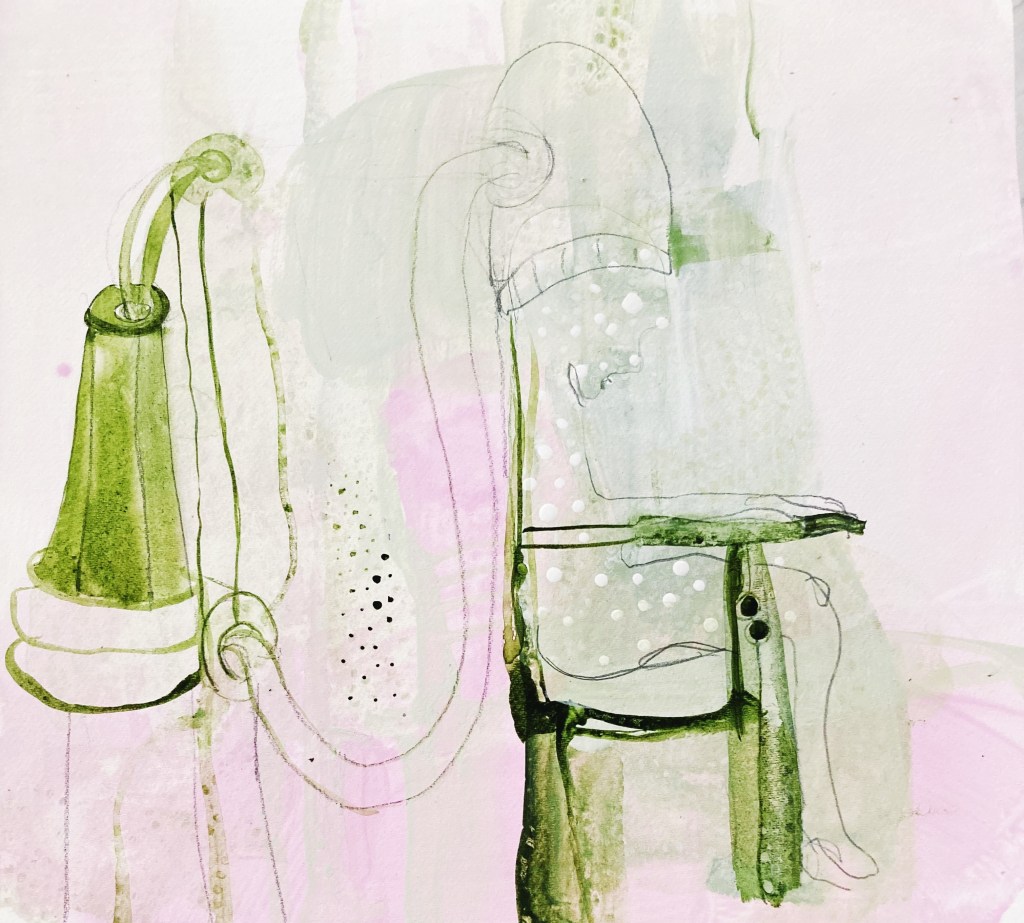
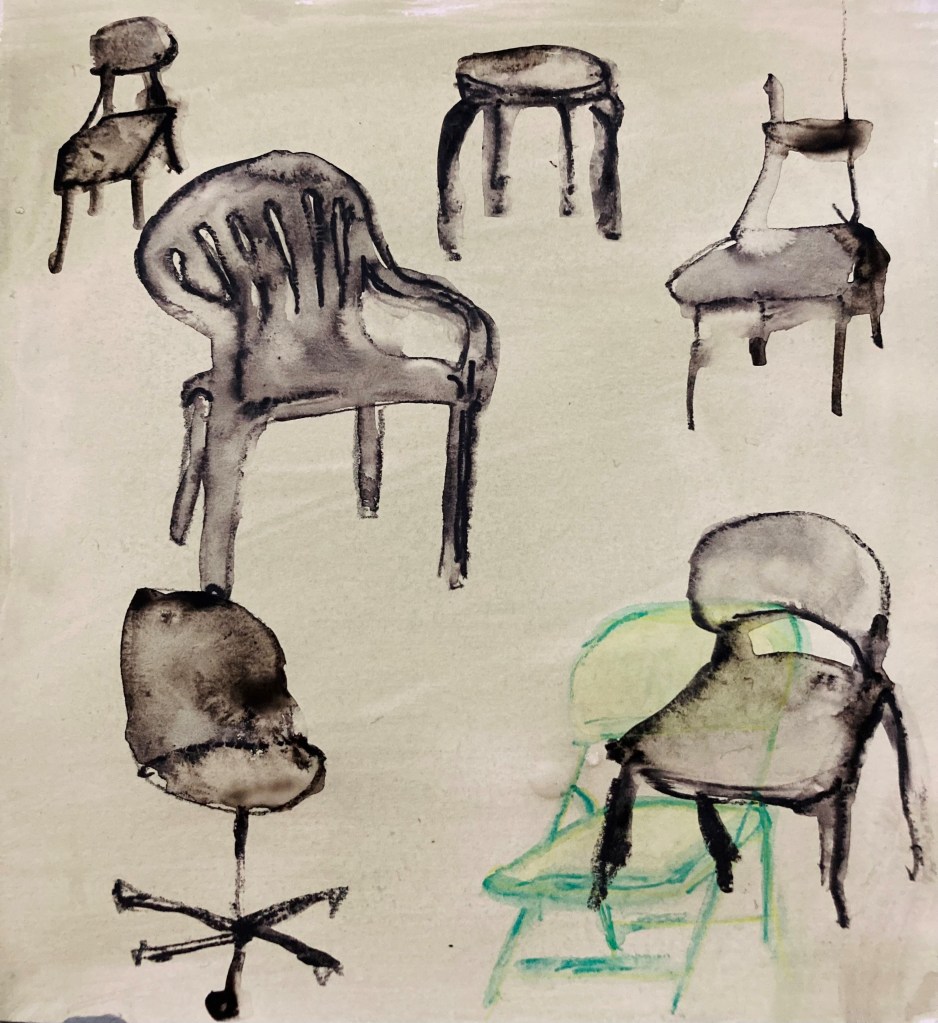
In other news, I continued drawing chairs this week. My favourite to draw are white-plastic lawn chairs. They are tricky to get the knack of, but I really love them for some reason. I have certainly sat in my fair share of them.
I thought it might be a good idea to create a weekly post (that I add to daily) of my painting experiments for the confluence project, a kind of visual-log of my progress.
NB: unless otherwise stated, all paintings are acrylic on paper
Monday, 24 April
No.1No.2No.3
No.1 – I like the colours and balance.
No.2 – I like the light, and the highlights on the horses legs.
No.3 – Although flatter than the other 2 paintings, I like the smooth finish on this one. I also like the white line drawings.
Tuesday, 25th April
No.4No.5
No.4 – I like the falling water (it has a mystical quality, which is appropriate for water). I also like the bird’s eye. I want the eyes in my paintings to be soulful and convey emotion.
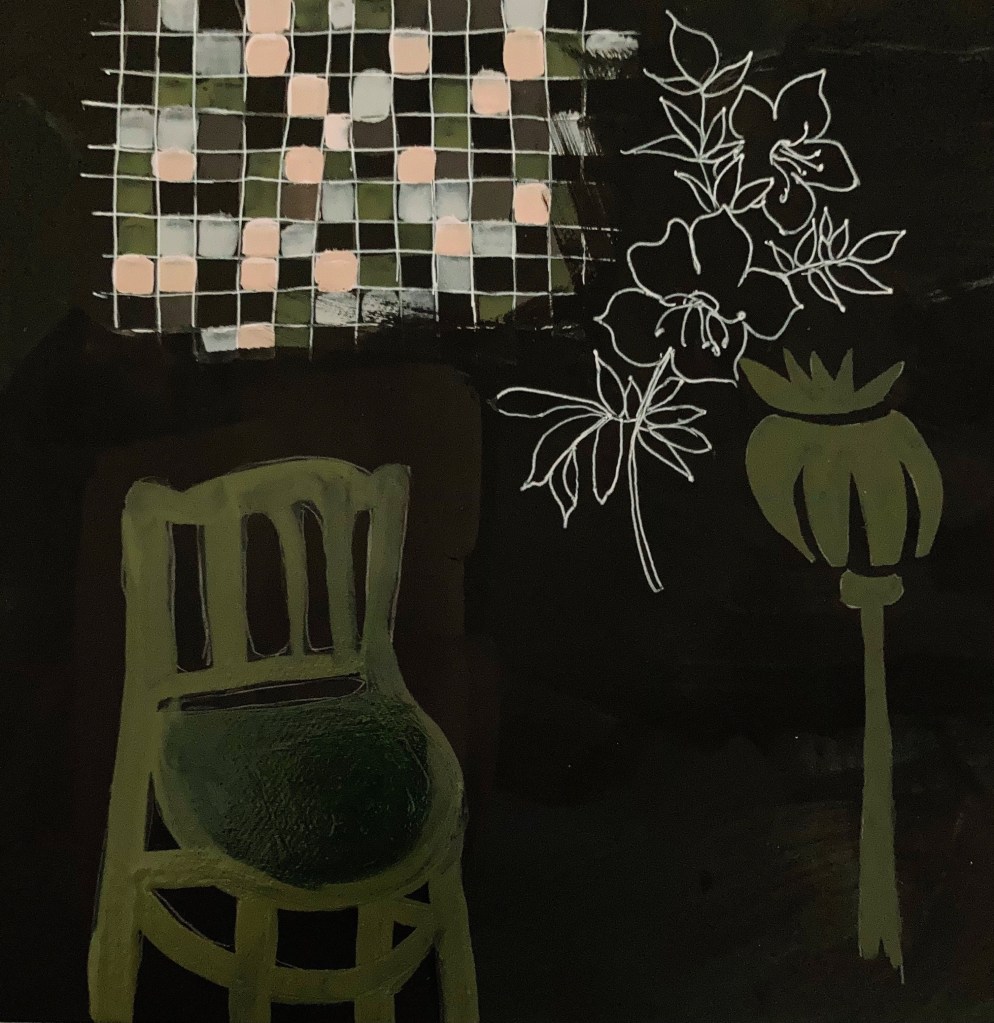
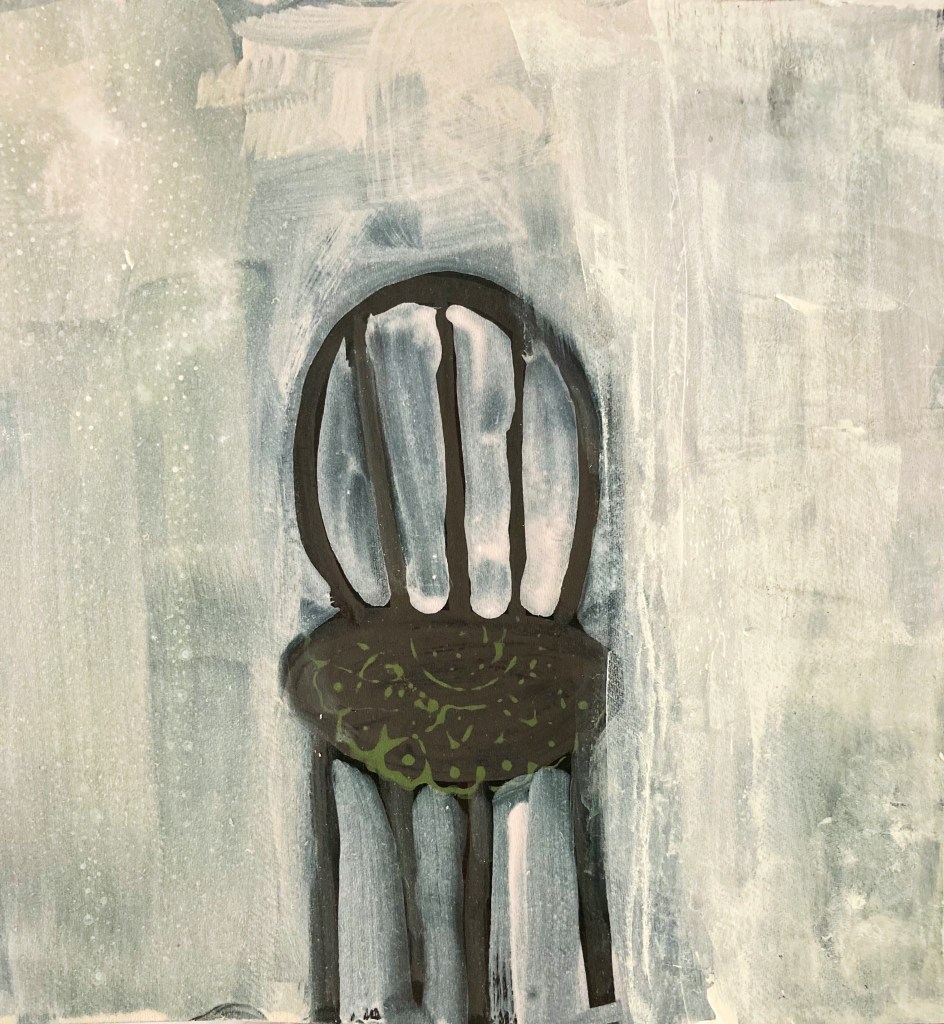
No.5 – I love the grid, especially the white outlines. I also like the chair (for some strange reason I love chairs in paintings…I wonder if it has to do with the fact that a chair is usually the example given when discussing Plato’s world of forms). Although I do like the white line drawing, I think I prefer a more abstract drawing, like no.3.
Wednesday, 26th April
No.6No.7
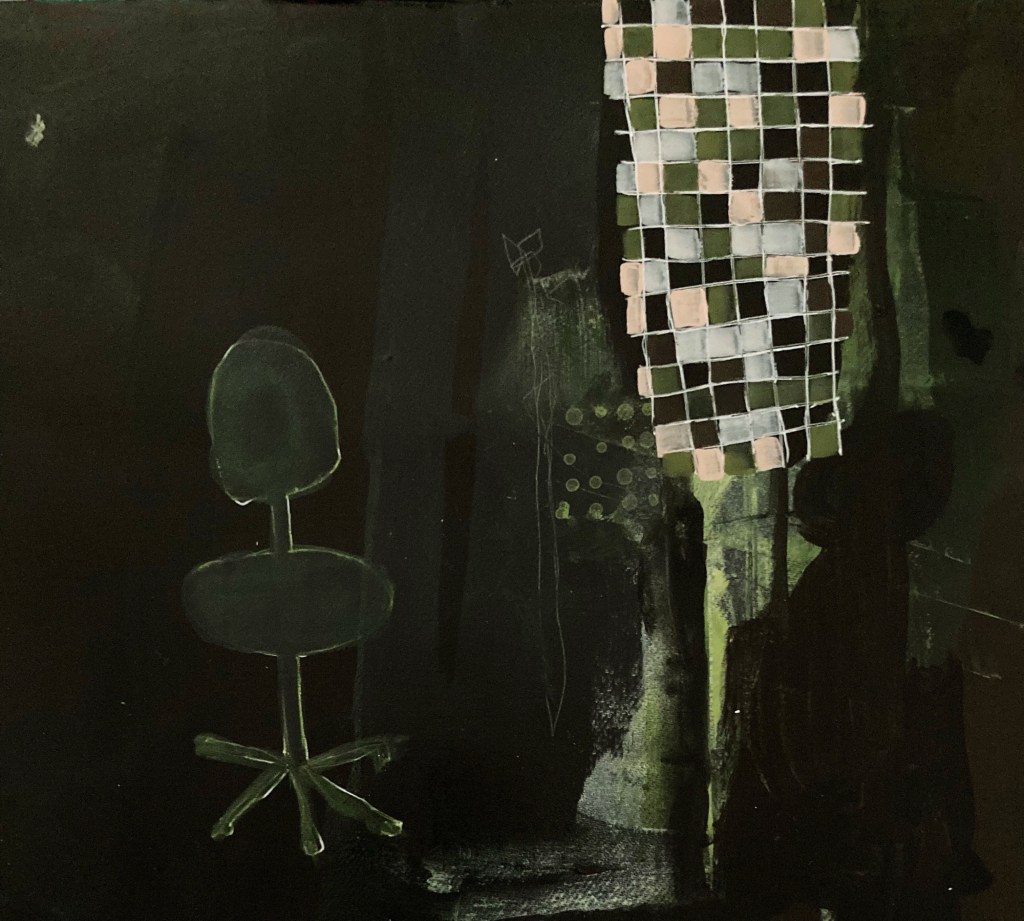
No.6 – This is my favourite so far, everything about it works for me. I think the grid is gorgeous, the inspiration for it was from a photo a friend in NZ posted of Instagram of a building in Wellington. She did her masters thesis on Hecate, the goddess of crossroads. I was just reading about Hecate and crossroads the other day. A river confluence is a type of crossroad, hence why they were seen to be imbued with power. I thought it might be interesting to represent a river confluence in my paintings with this grid, as opposed to an actual depiction of two rivers meeting.
I also like this type of chair, and think it looks good in a painting. Palette good.
No.7 – I love cranes and industrial machinery, especially those involved with water. In general, I find cross-hatching aesthetically pleasing. I think a crane (or in this case an oilrig), will work better as a line-drawing in a painting than flowers (as No.5 above).
Thursday, 27 April
No.8No.9
No.8 – I absolutely love this painting. It is about death, as symbolised by the following: the grid – confluence (entrance to the underworld); apples = seeds of new life (the Celts buried people with apples – a tradition that is thought to go much further back); material = (the veil between this world and the next). The palette is great.
No.9 – I really like the white colour, which I made using Titan buff and a touch of orange and magenta. It is the salmon-looking colour I have been using in the grid. It goes really well with green and brown.
Friday, 28th April
No.10
No.10 – This is a gear shift from the other paintings this week. It was such a beautiful day, so I decided to take some paper and paint down to the sea. Similar to the rain paintings last term, I then painted into the marks made by the water. There are still elements from the other paintings present, such as the horse, water, and carne motif. I’m not as keen on the palette, although I guess it suits this type of painting. I would be interested to see it with a palette like No.8. It was wonderful to paint with the sea, and I would like to do more of that over the summer.
Sunday, 30th April
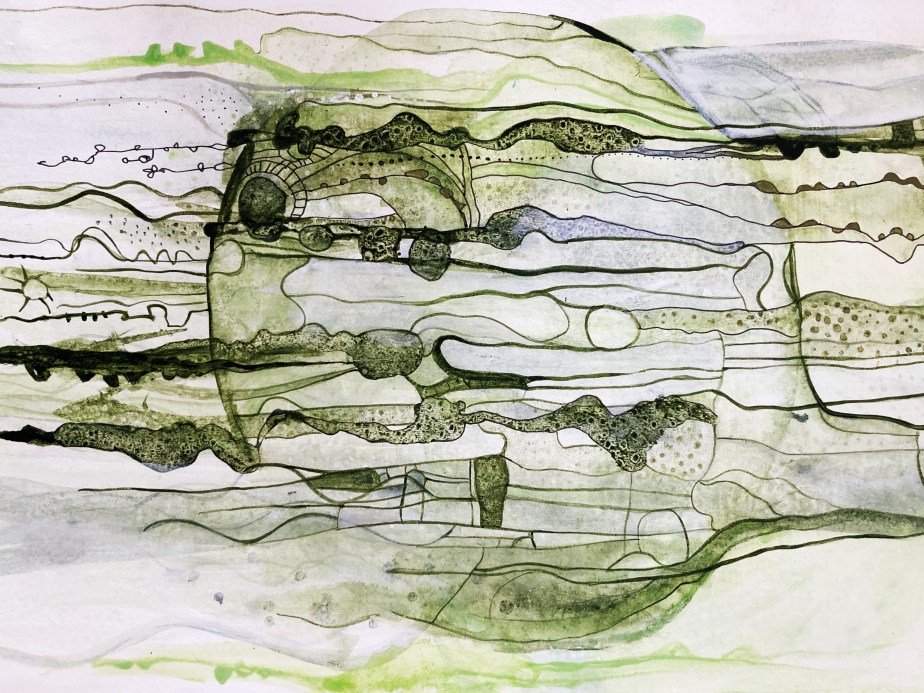
No.11 – This is another sea painting from Friday, that I then painted into. I love how the organic shapes made by the sea, leant themselves to the final image. It is also interesting how the sea paintings are akin to the rain paintings from last term. I think I should explore this style further. Ultimately, I’d like to merge the two styles together.



























 bexODESSA