A word salad is defined by the Cambridge dictionary as:
a mixture of words or phrases that is confused and difficult to understand.
Borrowed from psychiatry, where it describes the unintelligible speech of those afflicted with particular psychiatric disorders, a word salad has come to be used to describe a style of academic writing or speech that is unintelligible to the uninitiated (and sometimes even the initiated). Often touted as the panicle of the academic word salad is the writing of philosopher and literary theorist Prof. Judith Butler. It’s not hard to see why with gems like this:
The move from a structuralist account in which capital is understood to structure social relations in relatively homologous ways to a view of hegemony in which power relations are subject to repetition, convergence, and rearticulation brought the question of temporality into the thinking of structure, and marked a shift from a form of Althusserian theory that takes structural totalities as theoretical objects to one in which the insights into the contingent possibility of structure inaugurate a renewed conception of hegemony as bound up with the contingent sites and strategies of the rearticulation of power.
Further Reflections on the Conversations of Our Time, published in the scholarly journal Diacritics (1997)
Personally, I find the above completely inaccessible and it hurts my head to even try. Unless Butler is being deliberately obtuse, and there is no “there there”, I assume an expert is needed to teach the meaning of what is being said, because knowing the language in which the ideas are being expressed is simply not enough. Of course, this is nothing new, the history of western philosophy is littered with great thinkers whose ideas were pretty much incomprehensible in their lifetimes, and remained so until greater minds rehashed and broke down the ideas over the years, making them accessible to average-Joes like me. So, who knows, in 100 years everyone might comprehend Butler.
There is an anomaly to my aversion to Butler’s word saladrey, that is a lecture Butler gave at a symposium called Topography of Loss, about Doris Salcedo’s 2017 The Materiality of Mourning exhibition at the Harvard Art Museums. The lecture was titled Shadows of the Absent Body, and I have to say it was the most powerful, mind-expanding, and heart-wrenching art lecture I have ever heard. On the surface, much of it is incomprehensible. However, the ethereal way Butler strings words together seem to perfectly reflect the theme of the exhibition, that is the terror and loss of disappeared people.
One of the best things about the lecture, was it introduced me to Doris Salcedo’s work, and allowed me to access it and fall in love with it in a way that I wouldn’t have were it not for Bulter’s sublime word salad. I am deeply inspired by Salcedo’s The Materiality of Mourning exhibition, particularly the textile piece below.

I would like to make a textile piece for my Ann project, to be shown with the painting. The idea I am toying with is something related to the clothes the transportation system officials required be sent with each prisoner, the list of which I found in Ann’s court records.
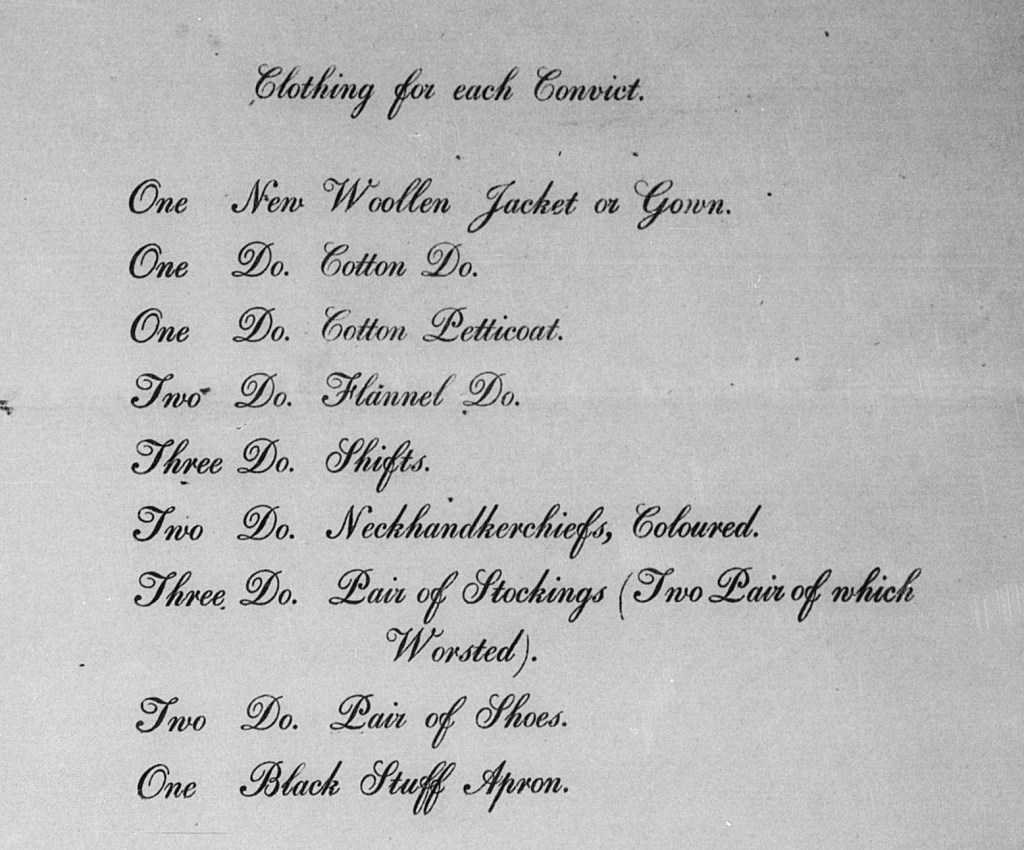
I am also thinking of including the list of the female convicts who were on the Amphitrite, all of whom died when it was shipwrecked. I think the contrast between the beautiful penmanship of the writing and the terrible fate that awaited the woman on the list is both poignant and haunting.
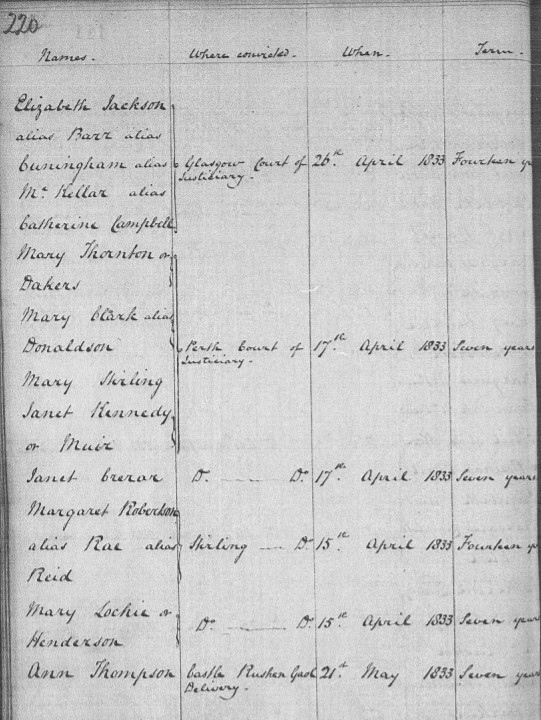
I’m not quite sure how I will marry the two together, but as soon as I have finished the Ann painting, I will start experimenting with different ideas and fabrics etc. Who knows, maybe something will come to me in a dream in the meantime.



 bexODESSA